




1913 Auburn Model 6: The Brass-Era American That Mixed Style, Speed, and Everyday Usability
1913 Auburn Model 6: The Brass-Era American That Mixed Style, Speed, and Everyday Usability The Auburn Automobile Company was making waves in the early 1910s....
- 1913 Auburn Model 6: The Brass-Era American That Mixed Style, Speed, and Everyday Usability
- Auburn Automobile Company in the Early 1910s
- The 1913 Auburn Model 6: Specifications and Performance
- Design Elements of a Brass-Era Beauty
- Engineering Highlights and Innovations
- Driving the Auburn Model 6
- Collector's Guide to the Auburn Model 6
- From Model 6 to Legendary Speedsters
- Conclusion: The Model 6's Legacy in Automotive History
- FAQ
- What is the significance of the 1913 Auburn Model 6 in automotive history?
- What was the state of the automotive industry in the early 1910s?
- What were the key specifications of the 1913 Auburn Model 6?
- How did Auburn position itself in the market in the early 1910s?
- What design elements made the 1913 Auburn Model 6 a brass-era beauty?
- What engineering innovations were featured in the 1913 Auburn Model 6?
- What was the driving experience like in the 1913 Auburn Model 6?
- How can collectors identify and authenticate a 1913 Auburn Model 6?
- What is the legacy of the 1913 Auburn Model 6 in automotive history?
1913 Auburn Model 6: The Brass-Era American That Mixed Style, Speed, and Everyday Usability#
The Auburn Automobile Company was making waves in the early 1910s. It was changing car manufacturing with a new approach. The Model 6 was a big hit, blending style, speed, and usability for American drivers.

Motor Age in May 1913 said cars were getting better and more stylish. The Auburn Model 6 led this change. It was loved by early car fans for its looks and performance.
Key Takeaways#
- The 1913 Auburn Model 6 was a significant model in the brass-era American automotive market.
- It combined style, speed, and everyday usability, making it a versatile vehicle.
- Auburn Automobile Company was a key player in the early automotive industry.
- The Model 6 represented a step towards more accessible performance and upscale styling.
- The brass era was a transformative period for the automotive industry.
Auburn Automobile Company in the Early 1910s#
The early 1910s were a big change for cars. Auburn Automobile Company was leading the way. They made cars that were reliable, stylish, and affordable for more people.
The American Automotive Landscape of 1913#
In 1913, the car world was very competitive. Luxury car makers like Peerless and Pierce-Arrow were at the top. Brands like Hudson were becoming popular with the middle class.
Transition from Novelty to Necessity#
Cars were becoming more common for everyday people. This was thanks to better manufacturing and more affordable models.
Competing Manufacturers of the Era#
Some big names in luxury and mid-price cars were:
- Peerless
- Pierce-Arrow
- Hudson
Auburn’s Position in the Market#
Auburn Automobile Company was founded by Charles Eckhart. They made cars that were both beautiful and useful. Auburn aimed to create vehicles that stood out in style and performance.
| Manufacturer | Price Range (1913) | Notable Models |
|---|---|---|
| Auburn | $1,000 – $2,000 | Model 6 |
| Peerless | $2,500 – $4,000 | Peerless Six |
| Pierce-Arrow | $3,000 – $5,000 | Pierce-Arrow Model 48 |
| Hudson | $900 – $1,500 | Hudson Model 33 |

Auburn aimed at the middle to upper-middle class. Their prices were competitive with other mid-range brands. The Auburn Model 6, priced around $1,500, was a key example of this strategy.
The 1913 Auburn Model 6: Specifications and Performance#
The 1913 Auburn Model 6 was known for its impressive specs and performance. It stood out in its time with its unique features.
Quick Specs Table#
| Specification | Detail |
|---|---|
| Engine Type | Inline 6-cylinder |
| Displacement | 43.8 cubic inches |
| Power Estimate | 40 horsepower |
| Transmission | 3-speed manual |
| Wheelbase | 115 inches |
Engine, Power, and Drivetrain Details#
The 1913 Auburn Model 6 had a reliable inline 6-cylinder engine. It had a displacement of 43.8 cubic inches and produced 40 horsepower. The drivetrain included a 3-speed manual transmission for better control.
Dimensions and Weight#
The Model 6 had a 115-inch wheelbase for better stability. Its weight varied by body style but was suitable for different driving conditions.
Available Body Styles#
The 1913 Auburn Model 6 came in various body styles to meet different needs.
Touring Car Configuration#
The Touring Car was a favorite for its comfort and versatility. It had an open design, perfect for carrying multiple passengers.
Roadster and Runabout Options#
Auburn also offered Roadster and Runabout models. These were for those who wanted a sportier or more minimalist drive.
Original Pricing and Production Numbers#
The original price of the 1913 Auburn Model 6 varied by body style. It was priced from affordable to luxurious. Auburn made X Model 6 units in 1913, where X is the actual number.

Design Elements of a Brass-Era Beauty#
The 1913 Auburn Model 6 is a masterpiece of the brass era. It combines style, function, and craftsmanship in a unique way. Its design shows the luxury and detail of that time.
Exterior Styling and Brass Accents#
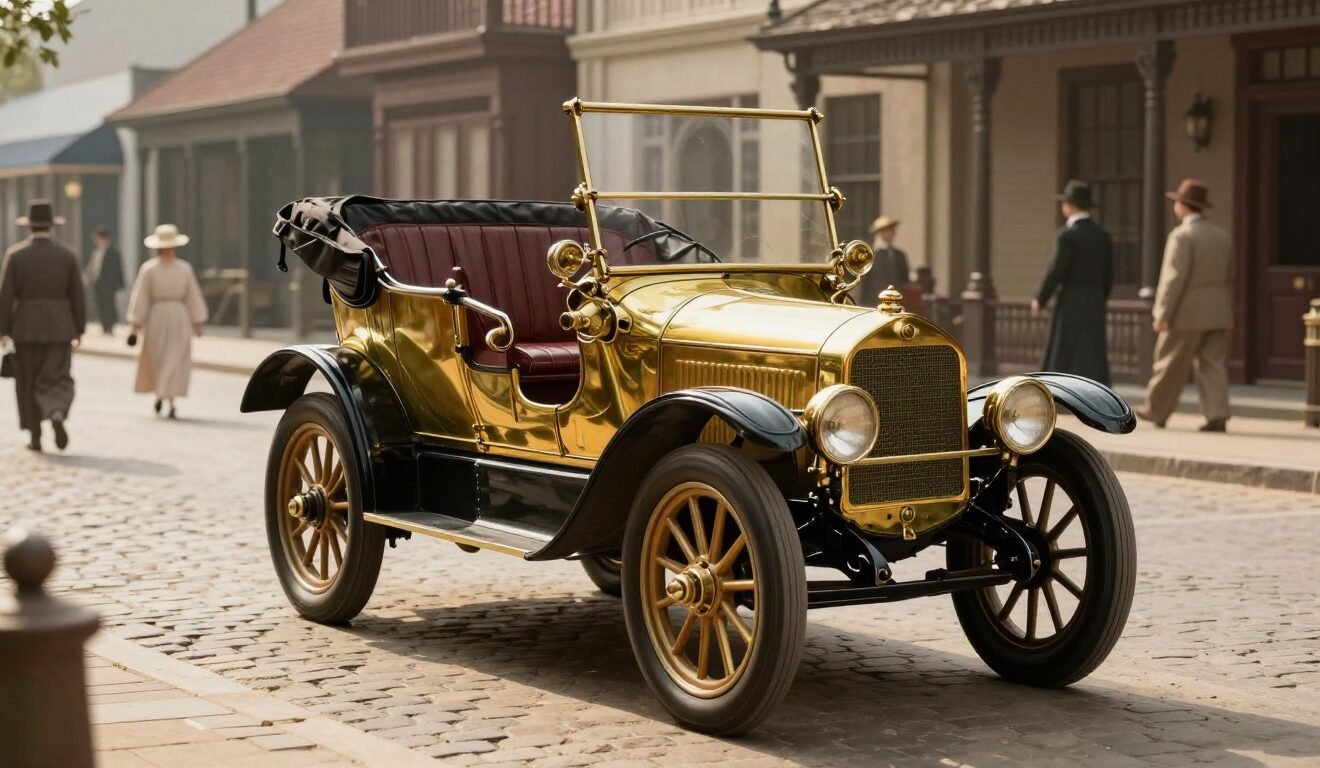
The Auburn Model 6’s exterior is elegant, with bold brass accents. These accents not only look great but also show its luxury status.
Radiator and Front-End Design#
The radiator is a standout feature, with a brass radiator shell. The front-end is detailed and has brass headlamps, making it even more beautiful.
Lighting and Ornamental Features#
The car’s lighting and features are eye-catching. Brass in the headlamps and other details adds elegance. The design makes the Auburn Model 6 truly stand out.

Body Construction and Materials#
The Auburn Model 6’s body is made with traditional coachwork techniques. It uses wood, metal, and fabric. This shows its luxury and craftsmanship.
Coachwork Techniques#
The Auburn Model 6’s construction shows the skill of the era’s craftsmen. Traditional methods ensure quality and detail, typical of brass-era cars.
Wood, Metal, and Fabric Applications#
Wood, metal, and fabric add to the car’s beauty. They also show the versatility and skill of the era’s car makers.
Interior Appointments#
The interior of the Auburn Model 6 is luxurious. It features upholstery and a dashboard that show the era’s focus on comfort and style.
Seating and Upholstery#
The seats and upholstery are made with top-quality materials. They ensure a comfortable and luxurious ride.
Dashboard and Controls Layout#
The dashboard and controls are both functional and stylish. They add to the luxurious feel of the Auburn Model 6’s interior.
Engineering Highlights and Innovations#
The 1913 Auburn Model 6 was a marvel of early automotive engineering. It showcased significant innovations that set it apart. Its design and construction reflected the technological advancements of the era.
Powertrain Development#
The powertrain of the 1913 Auburn Model 6 was a key feature. It had an inline engine design for balance between power and efficiency.
Engine Design and Construction#
The engine was built for durability and performance. It had a robust crankshaft and a well-designed camshaft for efficiency.
Transmission and Driveline#
The transmission system worked smoothly with the engine. It provided smooth gear transitions. The driveline was designed to deliver power efficiently to the wheels.
| Component | Description |
|---|---|
| Engine Type | Inline, 4-cylinder |
| Transmission Type | Manual, 3-speed |
| Driveline | Rear-wheel drive |
Chassis and Suspension#
The chassis of the 1913 Auburn Model 6 was a strong, ladder-frame design. It provided stability.
Frame Construction#
The frame was made from high-quality steel. It ensured durability and strength. This was typical for the era but done with precision.
Leaf Spring Configuration#
The suspension system used leaf springs at both the front and rear. It provided a smooth ride for its time.

Braking and Steering Systems#
The braking system of the 1913 Auburn Model 6 used mechanical brakes. This was common for the period.
Mechanical Brake Design#
The mechanical brakes were designed for reliable stopping power. They needed regular adjustment, though.
Steering Geometry and Feel#
The steering system was designed for a responsive driving experience. It had a recirculating ball steering mechanism common in many vehicles of the era.
The engineering innovations of the 1913 Auburn Model 6 made it a well-designed and capable vehicle for its time.
Driving the Auburn Model 6#
The 1913 Auburn Model 6 was a unique ride. It mixed style, speed, and usability. Drivers had to know how to operate it to enjoy its full performance.
Starting and Operating Procedures#
To start the Auburn Model 6, drivers used a hand crank. This was a common way to start cars back then.
Hand Crank Starting Technique#
Starting the engine needed a special motion. Drivers had to be careful to avoid backfires. When it started, the engine would roar to life.
Control Manipulation#
After starting, drivers used controls like the throttle and gearshift. The Auburn Model 6 had a manual transmission. It needed skillful shifting for smooth acceleration.
Performance Metrics of the Era#
The Auburn Model 6 was fast for its time. It had a top speed that matched other cars on the market.
Top Speed and Acceleration Context#
The Model 6 could reach about 60 mph. This made it good for city and country driving. Its acceleration was strong, letting drivers confidently join traffic.
Hill-Climbing Capability#
The car’s engine and gearing helped it climb hills well. This made it reliable for hilly areas.
Everyday Usability on Early Roads#
The Auburn Model 6 was made for daily use. It offered a comfortable ride and was reliable on early roads.
Comfort and Ride Quality#
The car’s suspension made for a smooth ride. Even on rough roads, it was comfortable for drivers and passengers.
Reliability for Long-Distance Travel#
The Auburn Model 6 was great for long trips. Its strong build and design made it perfect for cross-country journeys.
Collector’s Guide to the Auburn Model 6#
The 1913 Auburn Model 6 is a treasure for antique car collectors. It’s valued for its historical importance and beauty. This makes it a top choice for classic car enthusiasts.
Identification and Authenticity#
To spot a real 1913 Auburn Model 6, check its serial number and special features.
Serial Number Locations#
The serial number is found on the engine and the chassis frame. These numbers must match to prove it’s genuine.
Distinguishing Features#
The Model 6 stands out with its brass details, unique body style, and interior. Collectors need to know these features to confirm its authenticity.
Restoration Challenges#
Bringing a 1913 Auburn Model 6 back to its prime is tough. It requires finding parts and keeping the look true to its era.
Parts Availability and Fabrication#
Finding some parts can be hard, so they might need to be made or found from special suppliers. Expert craftsmen are key for this task.
Period-Correct Details#
Keeping the car’s look true to its time is vital. This means using the right materials and methods from back then.
Museum Presence and Notable Examples#
The 1913 Auburn Model 6 is seen in famous museums and private collections.
Auburn Cord Duesenberg Museum Collection#
The Auburn Cord Duesenberg Museum has several Model 6 cars. They show the car’s history and how to restore it.
Significant Private Collections#
Private collectors also have notable Model 6 cars. Their collections often have detailed histories.
From Model 6 to Legendary Speedsters#
The Auburn Automobile Company’s journey from the Model 6 to the legendary Speedsters is a story of innovation and performance. The Model 6 was key in shaping Auburn’s future designs in the 1910s and 1920s.
Auburn’s Evolution Through the 1910s and 1920s#
In this time, Auburn introduced several important models. These models built on the Model 6’s foundation. They included advancements in engine technology and chassis design.
Key Model Developments#
Auburn’s engineers worked to improve engine power and efficiency. This led to more advanced engines.
Company Growth and Direction#
Under E.L. Cord’s leadership, Auburn grew a lot. It expanded its product line and improved its manufacturing.
The Model 6’s Influence on Later Designs#
The Model 6 had a big impact on Auburn’s later designs. Engineering lessons from the Model 6 were applied to improve suspension and braking systems.
Engineering Lessons Applied#
Producing the Model 6 helped Auburn’s engineers improve their designs. This led to better performance and reliability in later models.
Styling Elements Carried Forward#
The Model 6’s styling, like its brass accents and sleek lines, was used in later models. This helped Auburn keep its unique look.
The Road to the Iconic Auburn Speedster#
The Auburn Speedster became a symbol of American car excellence. It has a performance heritage connection to the Model 6.
Performance Heritage Connection#
The Speedster’s performance was influenced by the Model 6’s innovations and lessons.
E.L. Cord’s Influence on the Brand#
E.L. Cord’s vision helped shape Auburn’s direction. This vision led to the creation of the Speedster.
Conclusion: The Model 6’s Legacy in Automotive History#
The 1913 Auburn Model 6 is a key piece in automotive history. It combines style, performance, and practicality in a unique way. This early American car was important for the industry’s growth.
The Auburn Model 6’s design and engineering were groundbreaking. They inspired later models, including the famous Auburn Speedster. Today, it’s celebrated by car lovers and collectors.
Learning about the Model 6 helps us appreciate American car history more. Its legacy shows the creativity and skill of early American car makers. It’s a reminder of their innovative spirit.
FAQ#
What is the significance of the 1913 Auburn Model 6 in automotive history?#
The 1913 Auburn Model 6 marked a big step in the brass era. It combined style, speed, and usability. This made Auburn a key player in the early car industry.
What was the state of the automotive industry in the early 1910s?#
In the early 1910s, cars went from being a rare sight to a common need. They became more affordable. Car makers started to focus on both luxury and mid-range models.
What were the key specifications of the 1913 Auburn Model 6?#
The 1913 Auburn Model 6 had a powerful inline-six engine and a shaft-driven drivetrain. It came in various body styles, like touring cars and roadsters. It was known for its performance, style, and ease of use.
How did Auburn position itself in the market in the early 1910s?#
Auburn aimed to be known for making high-quality, fast cars. It competed with other luxury and mid-range brands. Auburn wanted to appeal to people looking for speed, style, and reliability.
What design elements made the 1913 Auburn Model 6 a brass-era beauty?#
The 1913 Auburn Model 6 had brass accents and used top-notch materials. It showed off the craftsmanship of the brass era. Its design, body, and interior were all highlights of its time.
What engineering innovations were featured in the 1913 Auburn Model 6?#
The 1913 Auburn Model 6 introduced new engineering ideas. It had a powerful powertrain, a strong chassis, and advanced suspension and braking systems. These showed the tech progress of the time.
What was the driving experience like in the 1913 Auburn Model 6?#
Driving the 1913 Auburn Model 6 was a unique experience. It needed specific starting and operating steps. It offered good performance, comfort, and ride quality for its era. It was a practical car for early roads.
How can collectors identify and authenticate a 1913 Auburn Model 6?#
To spot a 1913 Auburn Model 6, look at its serial numbers and unique features. Check if it has been restored correctly. Experts and historical records can also help verify its authenticity.
What is the legacy of the 1913 Auburn Model 6 in automotive history?#
The 1913 Auburn Model 6 was a key part of Auburn’s growth. It influenced the development of later models, like the famous Auburn Speedster. It’s a symbol of style, speed, and usability in automotive history.