




EV Reality Check: Battery Degradation, Range Myths, and What Actually Matters + Winter Driving Addendum
EV Reality Check (2026): Battery Degradation, Range Myths, and What Actually Matters—Plus Winter Driving Addendum
Electric vehicles are becoming more popular, with sales going up in 2024 and 2025. Countries like Norway, even with their cold weather, have many EVs. This shows we need to clear up myths about their range and battery health.
It’s not a mystery how range and battery life work. They depend on math, temperature, and how you drive. When winter comes or you drive fast, real-world driving can differ from EPA numbers. Knowing about degradation and what affects range daily helps you make smart choices, like when buying used.

For example, cars like the Mercedes-Benz Vision EQXX show what electric cars can do. They can go over 620 miles on one charge. As you look into EVs, it’s key to know what’s real and what’s not.
Key Takeaways
- Understand how battery degradation affects your EV’s range and overall health.
- Learn how to debunk common range myths and make informed decisions.
- Discover effective winter driving strategies to optimize your EV’s performance.
- Explore the latest advancements in EV technology, such as solid-state batteries.
- Find out what factors actually impact your EV’s range and performance.
The Truth About EV Battery Degradation
Electric vehicles rely heavily on their battery packs. Knowing about degradation is essential for keeping your car running well. Degradation means the battery can’t store or give out energy as well over time.
Defining Capacity Loss and Resistance Increase
Battery degradation shows up in two main ways: capacity loss and resistance increase. Capacity loss means the battery can hold less energy, cutting down on your car’s range. Resistance increase makes it harder for the battery to give out energy, which can slow down your car.
Measuring Battery Health
Checking your battery’s health involves looking at its charge, capacity, and condition. Modern EVs have advanced systems to keep an eye on these. They use metrics like state of health (SoH) to tell you how your battery is doing.
Normal vs. Abnormal Degradation Patterns
It’s important to know if your EV’s battery is degrading normally or not. Normal degradation happens slowly, due to time, how you charge it, and the environment. But, abnormal degradation can be caused by extreme conditions or defects, and it needs special attention.

By learning what affects battery degradation, you can help keep your EV’s battery in top shape. This ensures your car runs well and lasts longer.
Primary Factors Driving EV Battery Degradation
Many things can make an EV battery wear out faster. Knowing what they are can help you take better care of your car. It’s important to understand these factors to keep your electric vehicle’s battery in good shape.
Heat: The Battery’s Worst Enemy
Heat is a big problem for EV batteries. High temperatures speed up chemical reactions in the battery, causing it to degrade faster.
Thermal Management Systems
Good thermal management systems are key to fighting heat damage. They keep the battery’s temperature right, so it works best.
Hot Climate Considerations
Driving in hot weather is tough on EV batteries. The heat can make them degrade faster if not managed well.

Calendar Aging: The Inevitable Time Factor
Calendar aging is when the battery naturally gets worse over time, no matter how much you use it. It’s something that happens but can be slowed down by how you store it.
High State of Charge Storage Effects
Keeping EV batteries fully charged for a long time can make them degrade faster. It’s better to keep them at a moderate charge when not in use.
Fast Charging Impact on Battery Health
Fast charging is convenient but can harm the battery. Using it too much can make the battery degrade more because of the high currents.
| Charging Method | Impact on Battery |
|---|---|
| Standard Charging | Minimal degradation |
| Fast Charging | Moderate degradation |
| Frequent Fast Charging | Higher degradation |
Deep Discharge Cycle Consequences
Draining the battery completely can be bad. Most EVs are made to avoid this, but it’s something to think about.
“The way you drive your EV can significantly impact its battery longevity. Aggressive driving habits, such as rapid acceleration and braking, can lead to increased degradation.”
How Driving Style Affects Battery Longevity
Your driving style is very important for your EV’s battery. Driving smoothly and carefully can help your battery last longer.
By knowing these main factors and taking steps to reduce their effects, you can make your EV’s battery last longer.
Range Myths Debunked
Many people misunderstand electric vehicle range, leading to high expectations. It’s key to clear up these myths to see what EVs can really do.
EPA Ratings: What They Actually Measure
EPA ratings are often mentioned when talking about EV range. But what do they really show? The Environmental Protection Agency tests EVs under controlled conditions to guess their range.
Testing Methodology Limitations
The EPA’s testing has its limits. It doesn’t consider real-world factors like extreme weather, fast driving, or using climate control.
Why Your Results Will Differ
Your actual EV range will probably be different from the EPA rating. This is because of your driving style, the weather, and how you charge your car.
Efficiency Metrics Explained
Knowing about EV efficiency is key for comparing different models. Efficiency is usually shown in kWh/100 miles or miles/kWh.
kWh/100 Miles vs. Miles/kWh
kWh/100 miles shows how much energy an EV uses per 100 miles. Miles/kWh shows how far an EV goes on one kilowatt-hour. Both give insights into an EV’s efficiency.
Comparing Efficiency Between Models
Efficiency metrics help you choose the right EV. Here’s a look at some popular models:
| Model | kWh/100 Miles | Miles/kWh |
|---|---|---|
| Tesla Model 3 | 24 | 4.17 |
| Chevrolet Bolt | 28 | 3.57 |
| Nissan Leaf | 30 | 3.33 |

By knowing about EPA ratings and efficiency, you can pick a better electric vehicle. Remember, real-world range changes based on your driving and local weather.
Real-World Range Factors
EPA ratings give a starting point, but real-world EV range is shaped by many factors. These factors can greatly change how far your EV can go. Knowing these factors helps you get the most out of your EV and plan your charging stops better.
Speed: The Exponential Range Killer
Speed is a big factor in EV range. As you go faster, air resistance goes up, cutting down your range a lot. For example, driving at 75 mph instead of 55 mph can really cut down your EV’s range.
55 mph vs. 75 mph Efficiency Comparison
Driving at 55 mph is usually better for your EV’s range than driving at 75 mph. Studies show that at 55 mph, your range can be up to 30% better than at 75 mph. This is mainly because of the more air resistance at higher speeds.

Climate Control Energy Consumption
Climate control, like heating and cooling, can really affect your EV’s range. The energy used by these systems can change a lot, depending on the system and the weather.
Heat Pump vs. Resistive Heating
EVs with heat pumps are usually more efficient than those with resistive heating, mostly in cold weather. Heat pumps use less energy to heat, saving your EV’s range. Knowing what climate control system your EV has helps you manage its range better.
Tire Selection and Pressure Importance
The type of tires and their pressure also matter for your EV’s range. Tires made to reduce energy loss can improve range. Also, keeping tires at the right pressure is key, as underinflated tires increase energy loss and lower efficiency.
Elevation, Wind, and Payload Effects
Other things like elevation, wind, and payload can also change your EV’s range. Going uphill or at high elevations makes the battery work harder, reducing range. Strong winds and heavy loads also increase energy use.
The Range Reality Model
Electric vehicle range isn’t just about the battery size. It also depends on how you drive, the weather, and the conditions. To get an accurate estimate, you need to consider several key factors.
Highway Speed + Temperature + Conditions
Driving on the highway affects your EV’s range in many ways. Speed, temperature, and conditions all play a role. For example, high speeds increase drag, reducing range. Extreme temperatures also impact battery efficiency.
Simple Calculation Method
Estimating your EV’s range is simple. Just adjust the manufacturer’s estimate for your driving conditions. Use a formula that includes your speed, temperature, and other environmental factors.
Practical Examples
Let’s look at an example. Driving at 65 mph in moderate temperatures (60°F to 70°F) might match the manufacturer’s estimate. But driving at 75 mph in cold temperatures (below 20°F) could reduce your range a lot.
| Condition | Range Impact |
|---|---|
| Highway Speed (65-75 mph) | -10% to -20% |
| Extreme Cold (below 20°F) | -20% to -30% |
| Moderate Temperature (60°F-70°F) | 0% to -5% |
Planning Realistic Charging Stops
To plan charging stops well, understand your EV’s range under different conditions. Use route planning tools. You can find more on concept cars with advanced range.
Safety Buffer Recommendations
Always plan with a safety buffer. This extra range helps with unexpected delays or changes in conditions.
Route Planning Tools
Use EV route planning tools. They help find charging stations and plan your stops.

Charging Fundamentals for Optimal Performance
EV charging is more than just plugging in. It’s about understanding the basics for the best performance. As an EV owner, knowing how charging works and its impact on your vehicle’s battery is key. This knowledge helps maximize its lifespan and efficiency.
Charging Levels Compared
There are three main levels of EV charging. Each has its own benefits and drawbacks. Knowing these can help you pick the right charging method for you.
Level 1 (120V): When It Makes Sense
Level 1 charging uses a standard household outlet. It’s the simplest form of EV charging. It’s good for overnight charging at home but is slow. It adds 2-5 miles of range per hour.
Level 2 (240V): Home Charging Sweet Spot
Level 2 charging needs a dedicated 240-volt charging station. It’s faster than Level 1, adding 10-25 miles of range per hour. It’s perfect for daily driving and can be installed at home or found at public stations.
DC Fast Charging: Speed vs. Battery Impact
DC Fast Charging is the fastest method. It can add 60-100 miles of range in just 30 minutes. But, using it too much can harm the battery due to high temperatures and stress. For more on EV technology, check out Ride Icons for the latest on upcoming cars.

Understanding Charge Curves
A charge curve shows how an EV’s battery charges over time. Knowing this curve helps optimize your charging habits.
Why Charging Slows After 80%
Most EVs charge quickly up to 80% capacity, then slow down. This protects the battery. Lithium-ion batteries are more stressed when full, so manufacturers slow down charging to prevent overheating and damage.
Battery Preconditioning Benefits
Battery preconditioning adjusts the battery’s temperature before charging. It improves charging efficiency, more so in cold weather. It also helps keep the battery healthy.
By understanding and using these charging basics, you can improve your EV’s performance. You’ll extend its battery life and enjoy a more efficient driving experience.
Battery Preservation Best Practices
To keep your EV battery healthy, follow good daily charging habits and long-term storage tips. These practices can help your battery last longer and work better.
Optimal Daily Charging Habits
How you charge your EV every day is key to its battery health. Knowing the best charge levels and when to fully charge is important.
Ideal State of Charge Ranges
Most EV makers say to keep the charge between 20% and 80%. Staying away from full charge and empty charge helps your battery last longer.
When to Charge to 100%
Only charge to 100% when you really need to, like before a long drive. For daily use, charge to 80% to slow down battery wear.
Long-Term Storage Recommendations
If you’ll be storing your EV for a while, here’s what to do:
- Charge the battery to about 50%.
- Keep it in a cool, dry spot.
- Stay away from very hot or cold temperatures.
Temperature Management Strategies
Temperature impacts your EV battery’s performance and life. Here’s how to manage it:
- Park in the shade or use a sunshade.
- Avoid very hot or cold spots.
- Pre-cool your battery while it’s plugged in.
Balancing Convenience and Battery Health
It’s important to follow battery care tips, but also think about your daily needs. If you need to charge fully for a long trip, it’s okay. Learn more about making your EV efficient and eco-friendly on Ride Icons.
Used EV Buying Guide: Evaluating Battery Health
When looking at a used electric vehicle, checking the battery health is key. Knowing the battery’s condition helps figure out the car’s value and how long it will last.
Battery Health Reports and Diagnostics
Start by looking at the battery health reports and diagnostics. These give you a peek into the battery’s health and how much charge it can hold.
OBD Tools and Apps
Use OBD tools and apps to get more detailed info on the battery. They show how the battery is doing and if there are any problems.
Interpreting State of Health Data
When you see the state of health data, watch for signs like capacity loss and increased resistance. This tells you how well the battery is doing and if it’s working right.
Battery Warranty Terms to Understand
It’s important to know what the battery warranty covers when you buy a used EV. Look at the warranty to see what’s included and for how long.
Physical Inspection Checklist
Do a physical check of the battery and its parts. Look for any damage, wear, or neglect. A battery that looks well cared for usually means the car is in good shape too.
- Check the battery casing for any damage or leaks.
- Look at the battery connections for corrosion or wear.
- Make sure the battery cooling system is working right.
Red Flags in Vehicle History
Check the car’s history report for any red flags, like accidents or water damage. These can really hurt the battery’s health and the car’s reliability.
Winter Driving Strategies for EVs
Electric vehicles are great in many conditions, but winter driving is different. Knowing how to handle your EV’s battery and systems in cold weather is key. It makes a big difference in your driving experience.
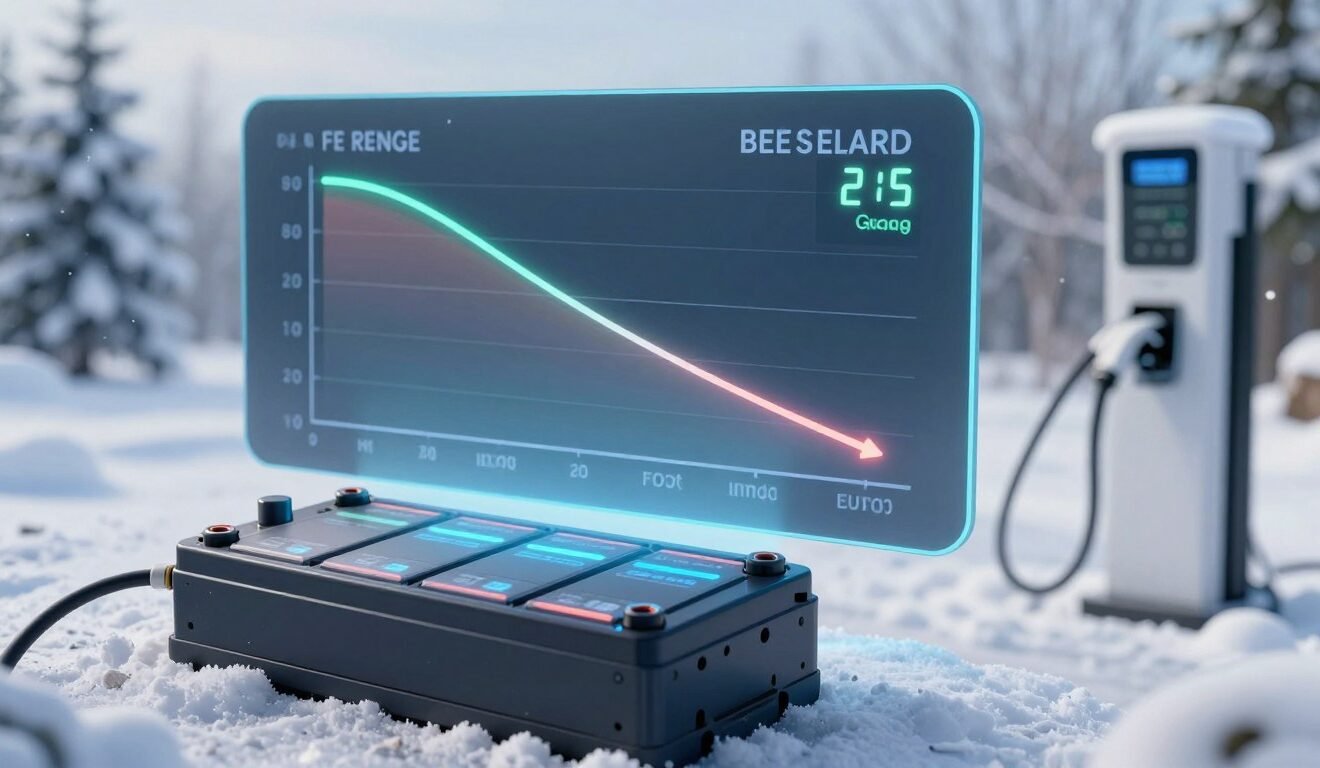
Why Cold Weather Reduces Range
Cold weather cuts down EV range for a few reasons. Battery chemistry, increased resistance, and heating the cabin all play a part.
Battery Chemistry Limitations
Lithium-ion batteries, common in EVs, don’t like cold temperatures. Cold slows down the battery’s chemical reactions, making it less efficient.
Increased Resistance in Cold
Cold weather makes the battery’s internal resistance go up. This makes it harder for the battery to power the vehicle, reducing range and performance.
Cabin Heating Energy Demands
Heating the cabin of an EV uses a lot of energy. Unlike gas cars, EVs don’t have waste heat from the engine. This makes heating the cabin more energy-intensive.
Preconditioning While Plugged In
Preconditioning your EV while it’s plugged in can help with cold weather range loss.
Remote Preheating Benefits
Many EVs let you preheat the cabin remotely while charging. This can be done through the vehicle’s app. It warms up your EV before you leave, saving battery energy.
Timing Your Departure
Preconditioning at the right time means your EV is warm when you leave. This saves energy without wasting it.
Efficient Heating Techniques
Using smart heating methods can reduce the impact of cabin heating on your EV’s range.
Seat and Steering Wheel Heaters
Using seat and steering wheel heaters is more energy-efficient. They warm you directly, reducing the need for high cabin temperatures.
Heat Pump Advantages
Modern EVs often have heat pumps, which are more efficient than traditional heating. Heat pumps move heat from outside air into the cabin, keeping you warm efficiently in cold weather.
| Heating Method | Energy Efficiency | Comfort Level |
|---|---|---|
| Resistive Heating | Low | High |
| Heat Pump | High | High |
| Seat and Steering Wheel Heaters | Medium | Medium |
Winter Tires and Range Considerations
Winter tires can cut down your EV’s range. They’re designed for snowy and icy roads, but they have higher rolling resistance than standard tires.
Cold Weather Charging Strategy
Knowing how to charge your EV in cold weather is important. It helps keep the battery healthy and maintains range.
Preconditioning for Fast Charging
Preconditioning your EV’s battery before fast charging in cold weather boosts charging efficiency. Some EVs let you set this up through their apps or settings.
Charging Time Expectations
Cold weather slows down charging, even with fast chargers. Knowing this helps plan your charging stops better.
Winter Trip Planning Adjustments
Winter trips need careful planning. Consider the reduced range and slower charging times.
By adjusting your driving habits and charging strategies, you can lessen the winter driving impact on your EV’s range and performance.
Conclusion: Your EV Ownership Checklist
Being an EV owner means you need to pay close attention to your car’s performance and life span. Knowing how battery health, range, and charging efficiency work is key. This knowledge helps you get the most out of your EV.
Check out the latest EV models like the Tesla Roadster 2025, Polestar 6 Convertible, and the possible BMW i8 Roadster successor. They offer top-notch performance and range. For more info on upcoming EVs, visit Ride Icons.
To get the most from your EV, keep an eye on your battery health. Adjust your charging habits based on ev charging tips. Regular maintenance is also important for ev maintenance. Following these ev best practices will make your EV ownership smooth and efficient.
By following these tips and staying updated, you can create a personalized ev ownership checklist. This ensures a fulfilling and efficient EV experience tailored to your needs.
FAQ
What is EV battery degradation, and how is it measured?
EV battery degradation means the battery loses capacity and performance over time. It’s measured by the battery’s state of health (SOH). This is shown as a percentage of its original capacity.
How does heat affect EV battery health?
High temperatures can make EV batteries degrade faster. This is because heat speeds up chemical reactions that harm the battery. It’s best to park your EV in shaded areas or use a sunshade to protect it from heat.
What are the best daily charging habits for preserving EV battery health?
To keep your EV battery healthy, charge it to 80% daily. Avoid full charges unless you’re going on a long trip. Also, keep the battery level between 20% and 80% if you’re not using it for a while.
How do EPA ratings measure EV range, and what do they actually represent?
EPA ratings test EV range in a controlled lab. They show the expected range under perfect conditions. But, real range can change based on driving habits, climate, and terrain.
What factors influence real-world EV range, and how can I optimize mine?
Several things affect EV range, like speed, climate control, tire choice, and elevation. To get the best range, drive at moderate speeds, use climate control wisely, keep tires at the right pressure, and plan your route to avoid big elevation changes.
How can I plan realistic charging stops on long trips?
Use a route planner or app that considers your EV’s range and charging time. Think about traffic, road conditions, and weather to make your trip smooth.
What are the benefits of preconditioning my EV’s battery before charging?
Preconditioning your EV’s battery before charging makes charging more efficient and faster. It’s very helpful in cold weather, as it warms the battery for charging.
How can I assess the battery health of a used EV before purchasing?
Check the EV’s maintenance records and use a diagnostic tool to see the battery’s state of health (SOH). Look for physical damage or wear on the battery. Also, review the warranty and understand the battery warranty terms.
How does cold weather affect EV range, and what can I do to mitigate the impact?
Cold weather lowers EV range by increasing energy use for climate control and reducing battery efficiency. To help, precondition your EV while plugged in, use efficient heating, and plan your route to save energy.
What are the best practices for storing my EV for an extended period?
Store your EV with a 50% charge, avoid extreme temperatures, and keep the battery level moderate. It’s also good to check on the vehicle now and then to keep it in top shape.