




1959 Mini Classic: The Packaging Genius That Became a Cultural Icon (And Changed Car Design Forever)
1959 Mini Classic: The Packaging Genius That Became a Cultural Icon (And Changed Car Design Forever) The 1959 Mini Classic, designed by Alec Issigonis, changed...
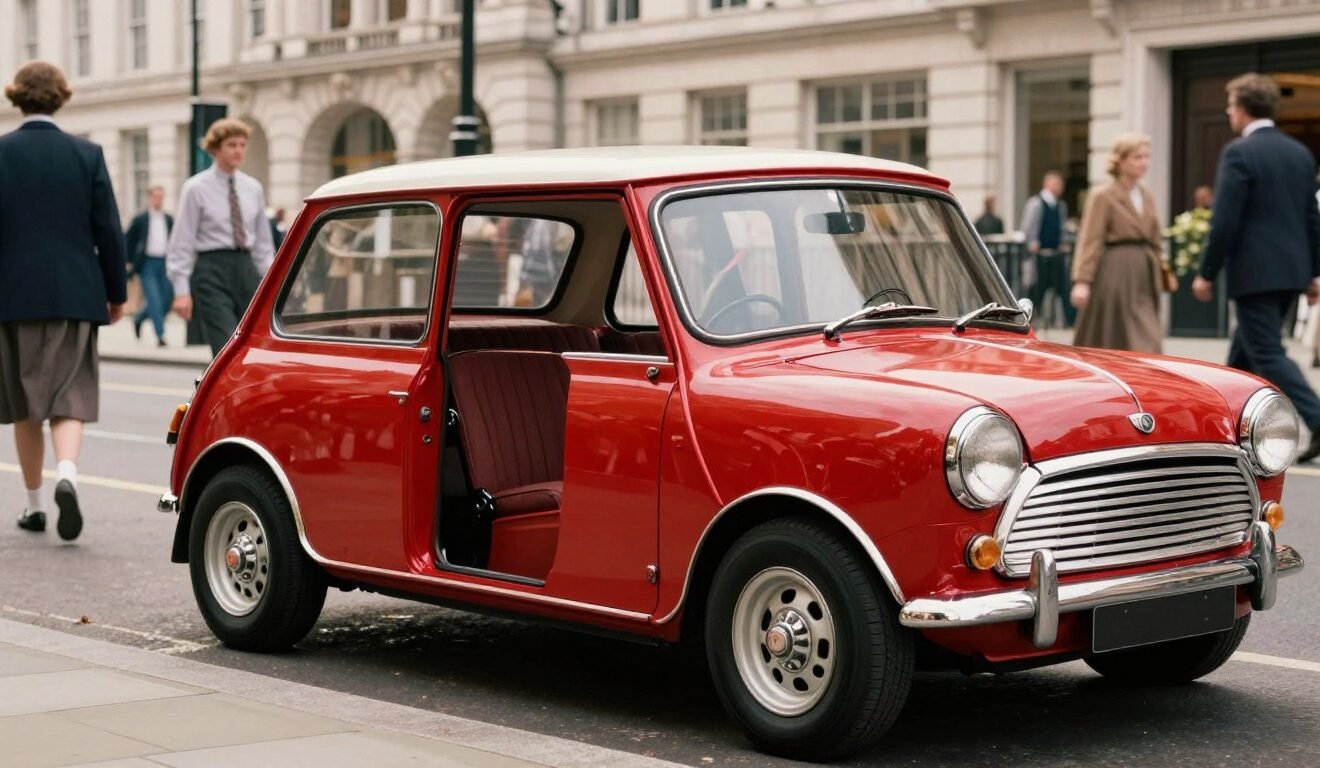
- 1959 Mini Classic: The Packaging Genius That Became a Cultural Icon (And Changed Car Design Forever)
- The Automotive Challenge of Late-1950s Britain
- Alec Issigonis: Engineering Genius with a Mission
- The 1959 Mini Classic: A Packaging Revolution
- Revolutionary Engineering Solutions
- Technical Deep Dive: The Mini's Innovative Mechanicals
- The Driving Experience: Why "Go-Kart Handling" Became Its Signature
- Cultural Impact: How the Mini Defined the Swinging Sixties
- Motorsport Glory: Building the Mini Legend
- The Mini's Influence on Modern Car Design
- Collector's Guide: Buying and Owning an Early Mini
- Conclusion: The Enduring Legacy of a Small Car with Enormous Impact
- FAQ
- What made the 1959 Mini Classic so revolutionary?
- Who designed the original Mini?
- What was the BMC brief for the Mini's design?
- What were the key engineering innovations of the Mini?
- How did the Mini's design influence modern car design?
- What is the significance of the Mini Cooper in the car's history?
- What are the critical rust areas to look out for when buying a classic Mini?
- What are the considerations when deciding between originality and restomodding a classic Mini?
- How did the Mini become a cultural icon of the Swinging Sixties?
- What is the legacy of the 1959 Mini Classic?
1959 Mini Classic: The Packaging Genius That Became a Cultural Icon (And Changed Car Design Forever)#
The 1959 Mini Classic, designed by Alec Issigonis, changed how we think about cars. It was launched by the British Motor Corporation (BMC). The Mini became a symbol of 1960s Britain.

Its transverse engine layout and front-wheel drive made it small but spacious. This design was perfect for city streets. It set the standard for small cars today.
The Issigonis Mini didn’t just change cars; it became a part of British culture. Its impact on cars is celebrated worldwide.
Key Takeaways#
- The 1959 Mini Classic was a breakthrough in space-efficient design.
- Alec Issigonis’s innovative design made the Mini a cultural icon.
- The transverse engine layout and front-wheel drive were pioneering features.
- The Mini’s design influenced modern small cars.
- It remains an enduring symbol of British culture.
The Automotive Challenge of Late-1950s Britain#
In the late 1950s, Britain was a hotbed for car innovation. The country’s car industry was under pressure from the economy and changing consumer wants.
Suez Crisis and Fuel Economy Demands#
The 1956 Suez Crisis hit Britain hard, affecting its cars too. Fuel shortages and rationing made cars that used less fuel very popular. British and European small cars became favorites because they were fuel-efficient and easy to park.

The Suez Crisis showed Britain’s oil dependence. This led to a big push for cars that used less fuel. Car makers had to get creative to meet this need.
| Year | Fuel Price Index | Small Car Sales |
|---|---|---|
| 1955 | 100 | 50,000 |
| 1956 | 120 | 60,000 |
| 1957 | 150 | 80,000 |
Urban Congestion and the Need for Compact Mobility#
Britain’s cities were getting more crowded, making big cars impractical. People wanted cars that were easy to drive in tight spaces. This need led to the creation of cars like the Mini.
The Mini was a game-changer for city driving. Its small size and smart design made it perfect for urban streets.
Alec Issigonis: Engineering Genius with a Mission#
Alec Issigonis was born in Smyrna, Turkey. He brought his unique talent to the British car industry. His work on the Mini changed car design forever.
Background and Previous Design Experience#
Alec Issigonis was a British engineer with a love for new designs. Before joining BMC, he worked at Morris Motors. This experience helped him design the Mini.
His skills in engineering and design were key. He aimed to make a small car that was big on space and fuel efficiency.
The BMC Brief: Creating Maximum Space in Minimum Dimensions#
The BMC wanted a car that could seat four adults and carry their luggage. It had to be small. Alec Issigonis took on this challenge.
He used his knowledge of design to make it happen. The Mini exceeded BMC’s expectations. It became a symbol of British car genius.

The Mini’s design showed Alec Issigonis’s genius. It combined smart packaging with a new engine layout. This work at BMC made the Mini a success and a lasting part of car history.
The 1959 Mini Classic: A Packaging Revolution#
The 1959 Mini Classic was a true marvel of packaging. It was small but had a lot of room inside. This made it a hit, perfect for city driving.
First Impressions: Tiny Footprint, Surprising Interior#
When the Mini first came out, people were amazed by its size and how it used space. It was only 10 feet long but had lots of room for people and things. This made it great for city living.

Production Launch and Initial Public Reception#
When it was launched, the Mini was sold as both the Austin Mini and Morris Mini. People loved it for its smart design and how practical it was. It was also cheap to run and good on gas, making it even more popular.
Austin Mini vs. Morris Mini: Badge Engineering Beginnings#
BMC decided to sell the same car under different names. This was a smart move to reach more people. The Austin Mini and Morris Mini were the same car, with the only difference being the name.
| Feature | Austin Mini | Morris Mini |
|---|---|---|
| Engine | 848cc | 848cc |
| Length | 10 feet | 10 feet |
| Top Speed | 72 mph | 72 mph |
BMC’s use of badge engineering was a new way to market cars. By selling the same car under different names, they could reach more people. This was a big step in car marketing.
Revolutionary Engineering Solutions#
Alec Issigonis’s design for the Mini introduced several groundbreaking engineering solutions. These innovations significantly impacted the automotive industry. The Mini’s design addressed practical needs and set new standards for car design.
Transverse Engine Layout: Breaking with Tradition#
The Mini’s transverse engine layout was a radical departure from conventional engine placement. Issigonis positioned the engine sideways. This allowed for a more compact powertrain and greater interior space.
Space Efficiency Benefits#
This layout enabled the Mini to have a shorter overall length. Yet, it didn’t compromise on cabin space or engine power. The transverse engine layout became a hallmark of modern front-wheel-drive vehicles.
Engineering Challenges Overcome#
Implementing the transverse engine layout required overcoming significant engineering challenges. These included managing engine cooling and transmission integration. Issigonis and his team successfully addressed these issues, creating a highly efficient and reliable powertrain.

Front-Wheel Drive: Eliminating the Transmission Tunnel#
The Mini’s front-wheel-drive system further enhanced its space efficiency. It eliminated the need for a transmission tunnel. This design choice contributed to the car’s spacious interior and flat floor, making the Mini feel larger than its external dimensions.
Wheels at the Corners: Maximizing the Wheelbase#
By placing the wheels at the extreme corners of the car, Issigonis maximized the Mini’s wheelbase. This design maximized interior space and improved the car’s handling and stability.
The combination of these revolutionary engineering solutions made the 1959 Mini Classic a landmark vehicle. The transverse engine layout, front-wheel drive, and wheels-at-the-corners design became standard features in many subsequent compact cars. This cemented the Mini’s legacy as a pioneer in automotive engineering.
Technical Deep Dive: The Mini’s Innovative Mechanicals#
Alec Issigonis’s design for the Mini included several groundbreaking mechanical components. These components made the Mini a revolutionary vehicle. They saved space and improved the car’s performance and efficiency.

A-Series Engine: Compact Power Source#
The A-series engine was a marvel of compact design. It provided a reliable and efficient power source for the Mini. Its transverse mounting was key to the Mini’s space-saving design.
The A-series engine was not only compact but also lightweight. This made the Mini agile and fuel-efficient.
Gearbox-in-Sump Design: Packaging Brilliance#
The Mini’s gearbox-in-sump design was a major innovation. Issigonis integrated the gearbox into the engine sump. This reduced the powertrain’s length.
This packaging brilliance made the Mini more compact without losing performance or drivability.
Rubber Cone Suspension: Simple yet Effective#
The Mini’s rubber cone suspension was another key feature. It provided a comfortable ride and legendary handling. The rubber cone suspension showed Issigonis’s skill in creating innovative solutions with simple designs.
The combination of these mechanicals—a-series engine, gearbox-in-sump design, and rubber cone suspension—made the Mini a standout. These technical advancements influenced the automotive industry and are celebrated by car enthusiasts today.
The Driving Experience: Why “Go-Kart Handling” Became Its Signature#
Drivers loved the Mini’s go-kart-like handling. This became its signature. It was thanks to several innovative design elements.
Steering Feel and Response#
The Mini’s steering was known for its precision and quick response. Engineers used a compact steering rack to connect the driver’s inputs to the car’s response. This made the Mini very agile, making driving on twisty roads a joy.
“The Mini’s steering is so direct and precise, it’s like driving a go-kart,” many reviewers said. They loved the car’s exceptional handling.
Cornering Dynamics and Weight Distribution#
The Mini’s cornering was improved by its weight distribution. The engine was mounted transversely, and the gearbox was part of the engine sump. This put the car’s weight near the center, making it agile and stable in corners.

This mix of factors gave drivers an exhilarating and confident experience. As
“The Mini’s handling is a masterclass in simplicity and effectiveness,”
automotive journalists said. They praised how easily the Mini could navigate corners.
Cultural Impact: How the Mini Defined the Swinging Sixties#
The 1959 Mini Classic was more than just a car. It became a symbol of the Swinging Sixties. It influenced fashion and entertainment, changing society in many ways.
Celebrity Owners and Fashion Status#
The Mini’s design and size won over celebrities. The Beatles, Twiggy, and Steve McQueen were among its famous owners. They made the Mini a fashion icon.
This car’s popularity soared. It became a symbol of the era’s youth and freedom.
- The Beatles used Minis in their 1967 film “Magical Mystery Tour.”
- Twiggy, a prominent model of the 1960s, was often associated with the Mini.
- Steve McQueen, an American actor, owned a Mini, further boosting its popularity.
The Mini in Film and Television#
The Mini appeared in many films and TV shows. It became a cultural icon. Its size and style made it perfect for different stories.
Some notable examples include:
- The Italian Job (1969)
- Magical Mystery Tour (1967)
- The Mini’s appearances in British television series, such as “The Avengers.”
From Practical Transport to Design Icon#
The Mini evolved from a practical car to a design icon. Its design and cultural impact made it a museum piece. It inspired future car designs with its compact, efficient, and stylish approach.
The Mini’s lasting appeal shows its significant impact on the 20th century. It changed the automotive and cultural scenes forever.
Motorsport Glory: Building the Mini Legend#
John Cooper made the Mini Cooper a champion in motorsport. He worked with BMC to create the Mini Cooper. This car would win big in rally racing.
John Cooper’s Influence and the Birth of the Mini Cooper#
John Cooper changed the Mini Cooper from a city car to a racing machine. He saw the Mini’s small size and light weight as perfect for racing. The Mini Cooper was fast, agile, and easy to handle.
Monte Carlo Rally Victories and Racing Success#
The Mini Cooper won the Monte Carlo Rally several times. It first won in 1964, then in 1965 and 1967. These wins showed the car’s strength, handling, and the skill of its drivers.
| Year | Rally | Driver(s) | Result |
|---|---|---|---|
| 1964 | Monte Carlo Rally | Paddy Hopkirk | 1st |
| 1965 | Monte Carlo Rally | Timo Mäkinen | 1st |
| 1967 | Monte Carlo Rally | Raimund Mäkinen | 1st |
The Mini Cooper’s racing wins made it a legend. It went from a simple city car to a famous performance icon. Its success inspires car lovers and racing fans today.
The Mini’s Influence on Modern Car Design#
The Mini’s legacy goes beyond its own time. It has shaped car design for generations. Its design and engineering set new standards in the car world.
Front-Wheel Drive Revolution in Small Cars#
The Mini was the first to use front-wheel drive (FWD). Alec Issigonis made this choice, changing the car world.
Today, many small cars use FWD. It makes cars more efficient and cheaper to make. As Jeremy Clarkson said, “The Mini changed the world with its front-wheel drive.”
Space Efficiency Principles in Contemporary Vehicles#
The Mini’s design inspired car makers to use space better. Its compact size and engine layout led to more practical cars.
Now, cars have more room inside without being too big. This makes driving more comfortable and convenient.
The Transverse Engine Layout’s Global Adoption#
The Mini’s transverse engine layout is now common worldwide. It makes engines smaller, allowing for bigger cars.
“The transverse engine was a stroke of genius, allowing for more interior space and better packaging.”
Experts agree on its genius.
In summary, the Mini’s impact on car design is huge. It introduced FWD, space-saving designs, and the transverse engine layout. These ideas have shaped today’s cars, making them efficient, practical, and accessible to many.
Collector’s Guide: Buying and Owning an Early Mini#
The early Mini is a cultural icon, loved by many collectors. It’s important to know how to buy and care for one. This guide will help you understand the process.
Identifying Original Mk1 Features#
When you buy an early Mini, look for the original Mk1 features. Check for the small grille, chrome door handles, and no modern comforts. The dashboard should have the right gauges, and the VIN plate should match the production date.
Original Mk1 Minis have a 948cc or 997cc engine. Make sure the engine number matches the car’s production details. Also, check the interior for original upholstery and seats.
Critical Rust Areas and Structural Concerns#
Early Minis can rust, mainly in the sills, wheel arches, and floor pans. Look for rust spots and any repairs. The chassis and suspension mounting points are also important, as rust here can harm the car’s structure.
| Rust Area | Common Issues | Inspection Tips |
|---|---|---|
| Sills | Rust perforation | Check for rust holes and weakened metal |
| Wheel Arches | Rust spreading from inner arches | Inspect inner and outer arches for rust |
| Floor Pans | Rust damage from moisture accumulation | Look for rust spots and weakened areas |
Originality vs. Restomod Considerations#
Collectors often debate between keeping the Mini original or upgrading it. Upgrades can improve performance but might lose the car’s original charm. Think about what’s most important to you as a collector.
“The Mini is not just a car, it’s a cultural icon that has captured the hearts of many. When restoring or maintaining one, it’s essential to respect its heritage while making informed decisions about modifications.”
Whether to keep the Mini original or upgrade it depends on your goals. If you want to preserve its history, stick with original parts. But if you plan to drive it often, some upgrades might be necessary for safety and reliability.
Conclusion: The Enduring Legacy of a Small Car with Enormous Impact#
The 1959 Mini Classic has left a mark on car design and culture. Its innovative engineering and stylish design have made it a historical icon. The Mini’s legacy inspires car makers and stands as a symbol of British car heritage.
The Mini’s tie to BMW has made its legacy even stronger. The brand keeps evolving while holding onto its roots. This shows the Mini’s lasting appeal, loved by fans worldwide. It’s clear why the Mini matters by looking at its influence on today’s cars.
The Mini’s impact goes beyond its own brand. It has shaped the whole car industry with its design and engineering. Today, the Mini is a cherished classic, blending style, function, and performance perfectly.
FAQ#
What made the 1959 Mini Classic so revolutionary?#
The 1959 Mini Classic changed city driving with its smart design. It had a transverse engine and front-wheel drive. This made it a cultural hit and changed car design forever.
Who designed the original Mini?#
Alec Issigonis, a British engineer, designed the original Mini. He worked for the British Motor Corporation (BMC) and loved innovative design.
What was the BMC brief for the Mini’s design?#
The BMC wanted a car for four people and their stuff. It had to be fuel-efficient and affordable.
What were the key engineering innovations of the Mini?#
The Mini’s big innovations were its transverse engine, front-wheel drive, and design. These made it space-efficient and handle well.
How did the Mini’s design influence modern car design?#
The Mini’s design led to front-wheel drive, space efficiency, and transverse engines. These ideas are now used worldwide.
What is the significance of the Mini Cooper in the car’s history?#
The Mini Cooper, made with John Cooper, was key in the Mini’s racing success. It won the Monte Carlo Rally and made the Mini known as a fast car.
What are the critical rust areas to look out for when buying a classic Mini?#
Look out for rust in the sills, floor, and subframe. These areas are prone to rust and can harm the car’s structure.
What are the considerations when deciding between originality and restomodding a classic Mini?#
Choosing between originality and restomodding depends on keeping the car true to its roots or improving it. You must think about authenticity, performance, safety, and driving experience.
How did the Mini become a cultural icon of the Swinging Sixties?#
The Mini became a symbol of the Swinging Sixties with its stylish look, famous owners, and roles in movies and TV. It became a fashion icon and a symbol of the era.
What is the legacy of the 1959 Mini Classic?#
The 1959 Mini Classic’s legacy inspires car makers. It’s an iconic part of British car history, loved by fans worldwide.