




Steam-Powered Road Vehicles Before Gasoline Engines: The Forgotten Age of Early Motoring
Steam-Powered Road Vehicles Before Gasoline Engines: The Forgotten Age of Early Motoring
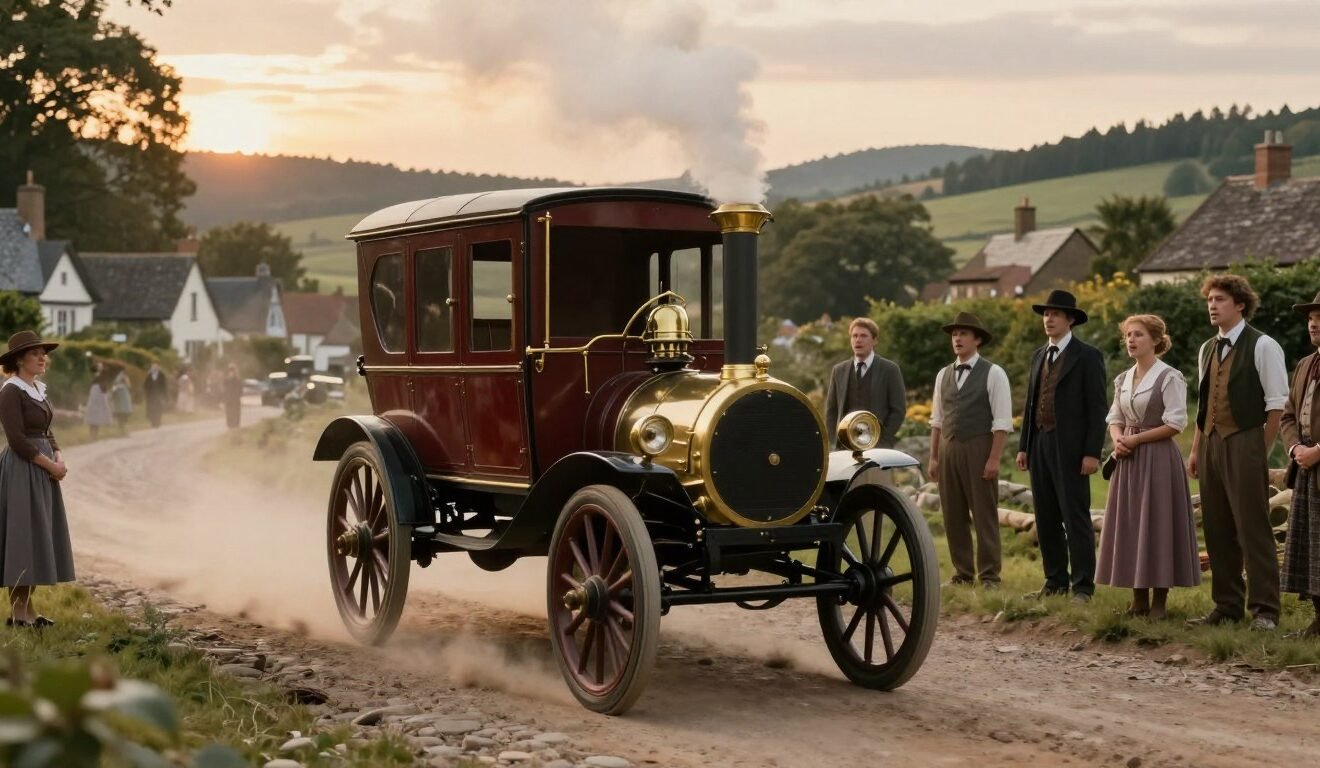
Before gasoline engines took over, steam-powered vehicles showed us the first glimpse of mechanized travel. These machines were loud, complex, and groundbreaking. They challenged the dominance of horse-drawn transport and showed that roads could be for engines too.

The story of steam propulsion started in the 17th century. Ferdinand Verbiest built a steam-powered vehicle around 1672. This was the start of a new era in travel, setting the stage for the cars we know today.
Key Takeaways
- The first mechanized travel was achieved through steam-powered vehicles.
- These early vehicles challenged traditional horse-drawn transport.
- The history of steam propulsion began in the 17th century.
- Ferdinand Verbiest built one of the first steam-powered vehicles around 1672.
- Steam-powered vehicles laid the groundwork for the modern automobile.
The Dawn of Mechanical Road Transport
In the 18th century, the idea of moving things on their own changed how people traveled. People started working on making vehicles that could move by themselves. They had to solve many problems, like finding good engines and winning over doubters.
The Vision of Self-Propelled Transportation
People had dreamed of vehicles that could move on their own for a long time. But the 18th century was when big steps were made. Nicolas-Joseph Cugnot showed how steam power could be used for moving things.
In 1770 and 1771, Cugnot showed off his fardier à vapeur. It was a steam-powered tractor for moving heavy things. This was a big step towards vehicles that could move on their own.
Creating steam-powered vehicles needed a lot of knowledge about machines. They had to figure out how to use boilers, cylinders, and gears. It was hard to make steam technology work for moving vehicles.
First Attempts at Mechanized Road Travel
The first tries at moving vehicles on roads were full of mistakes. Inventors tried different designs and tested how far steam power could go. They had to find a way to make the vehicles strong and safe.
| Innovator | Year | Invention |
|---|---|---|
| Nicolas-Joseph Cugnot | 1770-1771 | Fardier à vapeur (Steam-driven artillery tractor) |
| Richard Trevithick | 1803 | London Steam Carriage |

The early tests with steam vehicles were important. They helped create better ways to move things on roads. As technology got better, using steam power for travel became more possible. This opened the door for new ideas and inventions.
The Evolution of Steam-Powered Road Vehicles
Steam-powered road vehicles were a key innovation in early transportation. The Industrial Revolution made it clear we needed better ways to move things around.
Fundamental Mechanical Principles
These vehicles worked on basic mechanical ideas. At their core were boiler and steam generation systems. These systems created the steam needed to move the vehicle.
Boiler and Steam Generation Systems
Boilers were essential for making steam. They used coal or wood to heat water. Engineers had to make these systems safe, efficient, and strong.
Power Transmission Mechanisms
The steam engine’s power was sent to the wheels through gears, chains, or direct drive. These systems were key to turning steam energy into motion.
Adapting Industrial Steam Technology for Mobility
Turning industrial steam tech into road vehicles was tough. Engineers faced weight and size hurdles and had to create early control systems.
Weight and Size Challenges
Reducing the engine and boiler’s weight and size was a big challenge. New materials and designs helped solve these problems.
Early Control Systems
Early control systems helped manage the steam engine. They controlled speed, direction, and steam pressure. These systems were vital for safe and efficient travel.
The table below outlines the main parts and hurdles of steam-powered road vehicles.
| Component | Function | Challenges |
|---|---|---|
| Boiler and Steam Generation | Produces steam for propulsion | Efficiency, Safety, Size |
| Power Transmission Mechanisms | Transmits power to wheels | Complexity, Reliability |
| Control Systems | Regulates engine operation | Simplicity, Effectiveness |

Pioneers and Innovators of Steam Transportation
Several pioneers led the way in making steam-powered transportation a reality. Their work in the 18th and early 19th centuries was key. It turned the idea of self-moving vehicles into something real.
Nicholas Cugnot’s Fardier à Vapeur (1769)
Nicholas Cugnot, a French inventor, created the Fardier à Vapeur in 1769. It was the first self-propelled vehicle, a steam-powered three-wheeler. It could carry four people at about 2.5 miles per hour.
This invention showed steam power could be used for moving things. The Fardier à Vapeur was a big step towards better steam vehicles.

Richard Trevithick’s London Steam Carriage (1803)
In 1803, Richard Trevithick built the London Steam Carriage. It was a big step in using steam for road travel. This vehicle could carry people and was a start to the steam carriages of the future.
Trevithick made his carriage better with a more efficient steam engine and a new transmission system. This made it more useful for roads.
| Innovator | Year | Invention | Notable Features |
|---|---|---|---|
| Nicholas Cugnot | 1769 | Fardier à Vapeur | First self-propelled vehicle, steam-powered, three-wheeler |
| Richard Trevithick | 1803 | London Steam Carriage | Efficient steam engine, better transmission system |
| Goldsworthy Gurney | 1827-1829 | Steam Carriages | Improved boiler design, successful public transport services |
Goldsworthy Gurney’s Steam Carriages (1827-1829)
Goldsworthy Gurney, an English innovator, worked on steam carriages from 1827 to 1829. His designs were for public transport. They had better boilers, making them more efficient and reliable.
His vehicles were used for carrying passengers, showing steam power’s use in transport. Gurney’s work showed steam carriages could be used for daily transport, leading to more improvements.
The work of Cugnot, Trevithick, and Gurney was key in making steam transportation better. Their ideas showed steam power’s promise and helped create more advanced vehicles later on.
The Golden Age of Steam Carriages
In the 1830s, steam engine design improved a lot. This made the 1830s the best time for steam carriages. It changed how early motor transport worked. There were big steps forward in technology, services, and competition.
Commercial Passenger Services
Steam carriages started carrying passengers in the 1830s. People like Walter Hancock began using steam-powered buses in London.
Walter Hancock’s Enterprise Omnibus
Walter Hancock’s Enterprise Omnibus was a big success. He ran a fleet of steam buses in London in the 1830s. His service was reliable and efficient, meeting the public’s need for transport.
The London and Birmingham Steam Carriage Company
The London and Birmingham Steam Carriage Company was another key player. Despite facing many challenges, it helped steam transport grow. It tried to run a service from London to Birmingham, showing the good and bad of steam carriages for long trips.
Technical Innovations of the 1830s
The 1830s brought many technical improvements to steam carriages. Better materials and designs led to more efficient engines and systems. These changes made steam carriages more reliable and useful for business.

Competition Between Steam Carriage Manufacturers
As more people wanted steam carriages, companies started competing. They tried to make the most efficient, reliable, and affordable carriages. This competition pushed them to keep improving their technology.
The golden age of steam carriages was a key time in early motor transport. It was marked by big tech advances, business efforts, and a race to innovate among makers.
Industrial Applications and Commercial Success
Steam power was very versatile and widely used in many industries. It was key in the creation of steam-powered vehicles. These vehicles were used for more than just personal travel.
Agricultural Steam Traction Engines
Agricultural steam traction engines changed farming a lot. They provided strong and reliable power. This power was used for many tasks, like plowing and harvesting.
Plowing and Harvesting Applications
These engines were great for plowing and harvesting. They needed a lot of power for these tasks. This made farming more efficient and productive.
Mobile Power Sources for Rural Areas
In rural areas, these engines were mobile power sources. They powered threshing machines and sawmills. This made it easier for farmers to do their work without being stuck in one place.
| Application | Benefits |
|---|---|
| Plowing | Increased efficiency, reduced labor |
| Harvesting | Improved productivity, timely completion |
| Powering other machinery | Versatility, reduced dependency on manual labor |
Steam-Powered Commercial Transport
Steam-powered transport was very important for the economy. It helped move goods and commodities around. These vehicles were used for hauling freight and making deliveries in cities.
Freight Hauling Capabilities
These vehicles could carry heavy loads over long distances. They were perfect for hauling freight. Their power and reliability helped transport goods across the country.
Urban Delivery Vehicles
In cities, these vehicles were used for deliveries. They were efficient for moving goods around cities. Their ability to handle crowded streets made them great for urban delivery.

The success of steam-powered vehicles in industry and transport was huge. They had a big impact on farming and commerce. Their success helped pave the way for more advanced transport in the future.
Advantages and Limitations of Steam Propulsion
Steam propulsion in road vehicles had its good and bad sides. Let’s dive into the details. It brought several benefits that made it appealing for early cars.
Benefits: Torque, Reliability, and Fuel Flexibility
One key plus was its high torque. This made it great for heavy tasks. Steam engines were also reliable and could use many fuels.
Multi-Fuel Capability
Being able to use different fuels was a big plus. It let steam cars run in places where fuel was scarce. This multi-fuel capability helped a lot for long trips.
Smooth Power Delivery
Steam engines gave a smooth power delivery. This made the ride more comfortable than some other tech back then.
Drawbacks: Weight, Complexity, and Start-Up Time
But, steam propulsion had downsides too. It was heavy and complex. The need for a boiler and other parts made it heavier and more complicated than others.
Water Requirements and Freezing Issues
Another big issue was needing water. This was a problem in some areas. Plus, water freezing in cold weather added to the trouble.
Operational Challenges
The start-up time for steam engines was long. It took a lot of time to get the steam ready. This, along with regular upkeep, made it hard for users.
Social Impact and Regulatory Challenges
The introduction of steam-powered road vehicles changed transportation. But, it also brought social and regulatory challenges. These vehicles changed travel and faced resistance from many.
Public Reception and Cultural Significance
Steam-powered vehicles amazed people with their newness and promise. They were seen as symbols of progress and change. But, their noise, smoke, and look scared some people.
These vehicles were big in culture, showing a new era of travel. They were talked about in media and seen as the future of travel.
The Red Flag Acts and Legislative Barriers
The Red Flag Acts in the UK in the mid-19th century limited steam vehicles. They made vehicles slow down by requiring a person with a red flag. This slowed their adoption.
Legislative barriers like the Red Flag Acts were strict. They showed society’s worries about safety, noise, and disruption. They were a response to these concerns.
Infrastructure Limitations for Early Motorists
The roads of the time were not ready for steam vehicles. They were rough, and there were no special routes or services. This made long trips hard and risky.
Early drivers faced many problems. They had to deal with bad roads, finding fuel, and getting repairs. These issues made steam travel hard to adopt widely.
The Transition from Steam to Gasoline Power
The car industry changed from steam to gasoline engines over time. This change was slow, driven by new tech and what people wanted.
Late Innovations: The Stanley Steamer and Doble Steam Car
Even as gasoline cars became more popular, steam cars kept improving. The Stanley Steamer and the Doble Steam Car were leaders in steam tech. The Stanley Steamer was simple and reliable. The Doble Steam Car had better steam and cooling systems.
The Rise of Internal Combustion Engines
Internal combustion engines, used in gasoline cars, became more efficient and powerful. Ford was key in making these cars widely available.
Technical and Practical Advantages of Gasoline Engines
Gasoline engines had big advantages over steam cars. They were lighter, easier to start, and needed less upkeep. Here’s a comparison:
| Feature | Steam Engines | Gasoline Engines |
|---|---|---|
| Weight | Heavier due to boiler and water | Lighter, more compact design |
| Start-Up Time | Longer start-up time due to heating | Quicker start-up |
| Maintenance | More complex, requiring more maintenance | Simpler, less maintenance-intensive |
In the end, gasoline engines won out, ending the steam car era.
Conclusion: The Enduring Legacy of Steam-Powered Road Transport
The history of steam-powered road vehicles is a key part of car technology’s growth. Even though gasoline engines took over, steam’s impact is seen in today’s cars.
People like Nicholas Cugnot, Richard Trevithick, and Goldsworthy Gurney started the journey of self-moving vehicles. Their work changed how we think about moving around. Steam’s role in the early days of cars is clear, guiding the future of travel.
Knowing about steam cars helps us see how far we’ve come in car tech. It shows the clever ideas of the first car makers. Their work on steam cars shows their creativity and drive for progress.