



Pre-War European Automakers That Shaped Engineering and Defined the Future of Cars
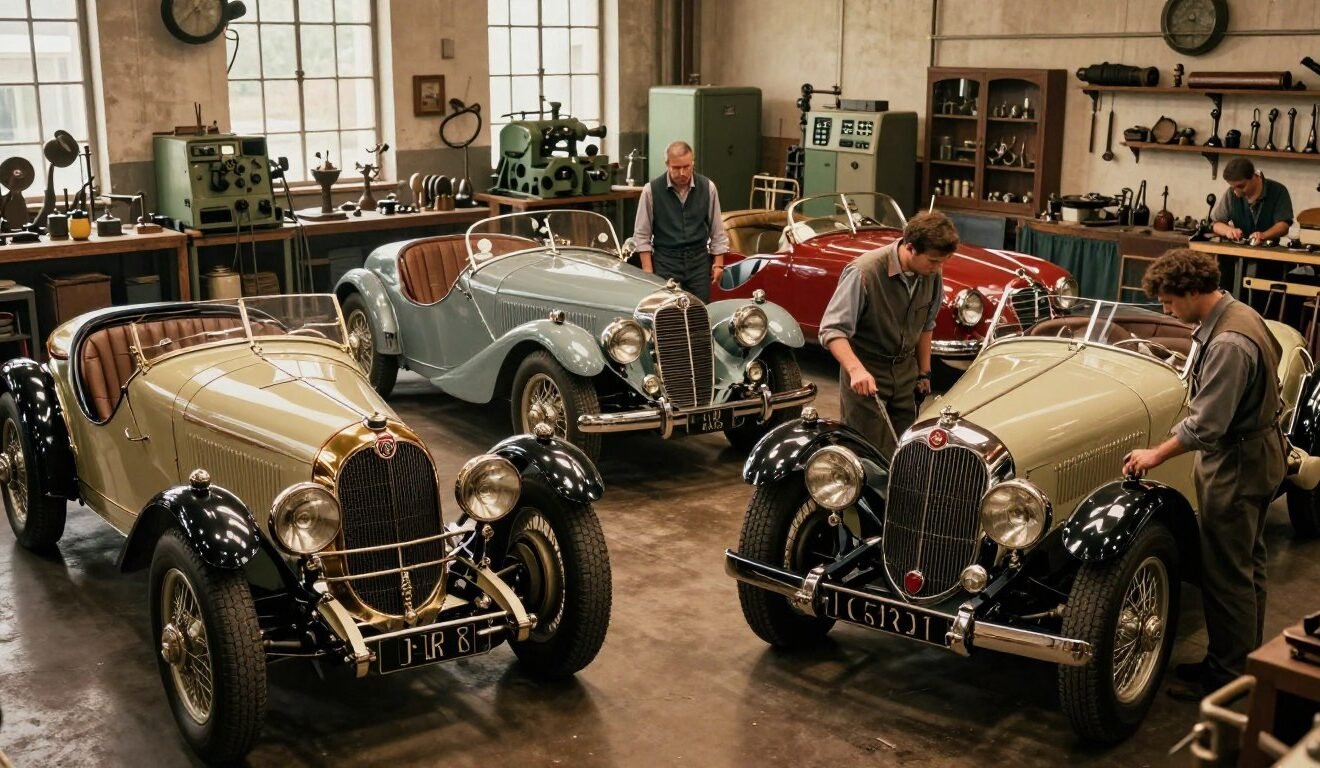
Pre-War European Automakers That Shaped Engineering and Defined the Future of Cars
Before modern electronics and computer-aided design, European automakers changed the car world. In the years before World War II, they came up with new ideas. These ideas are the base for engines, chassis, and performance we use today.

These makers didn’t just make cars; they set the standard for today’s cars. Mercedes-Benz, Bugatti, and Alfa Romeo were leaders in car innovation. They pushed limits in performance, efficiency, and safety.
Key Takeaways
- The pre-war period was key for modern car engineering.
- European car makers were vital in shaping car futures.
- They made big strides in engine design, chassis, and performance.
- Mercedes-Benz, Bugatti, and Alfa Romeo were at the forefront of innovation.
- Their work continues to shape the car industry today.
The Golden Age of European Automotive Innovation
Carl Benz’s invention of the first modern car in 1886 was a big moment in European car history. This innovation started a new era in travel, making Europe a center of car excellence.
The Birth of the Automobile in Europe
In the late 19th century, pioneers like Carl Benz and Gottlieb Daimler worked on early cars. Their efforts helped the industry grow fast in the years that followed.
Timeline of Critical Pre-War Developments
The history of cars in Europe can be split into several important times:
- 1885-1900: The Pioneering Era – This time saw the first modern cars and the start of car companies.
- 1900-1920: Standardization and Growth – As the industry grew, makers started using common parts and designs. This made cars more reliable and easy to get.
- 1920-1939: Engineering Refinement – Before World War II, car engineering made big steps forward. There were improvements in how cars performed, were safe, and comfortable.
1885-1900: The Pioneering Era
In this era, inventors and makers tried out different designs. This led to the first car companies being set up.
1900-1920: Standardization and Growth
As the industry grew, standardizing became key. Makers started using common designs and parts. This made cars more reliable and cheaper.
1920-1939: Engineering Refinement
Before World War II, car engineering made big leaps. There was a focus on making cars better in performance, safety, and comfort.

National Engineering Philosophies That Drove Innovation
The automotive world in pre-war Europe was shaped by each country’s unique engineering views. These views greatly influenced how cars were made and added to Europe’s rich car history.
German Precision Engineering
German car makers were famous for their focus on precision. They aimed for reliability, top performance, and new tech. This led to cars that were both strong and innovative.
French Artistic Approach to Mechanics
French car makers added an artistic touch to their vehicles. They focused on style, elegance, and new mechanics. This made their cars not just machines but also works of art.
Italian Performance-Focused Design
Italian car makers put performance and racing first. They designed cars that were both fast and beautiful. This led to some of the most famous sports cars ever made.
British Craftsmanship and Reliability
British car makers valued craftsmanship and reliability. They made cars that were not just luxurious but also long-lasting. This showed the high engineering standards of Britain.
The different engineering views of pre-war Europe greatly helped the car industry grow. Looking at these views shows how each country added something special:
| Country | Engineering Philosophy | Notable Features |
|---|---|---|
| Germany | Precision Engineering | Reliability, Performance, Advanced Technology |
| France | Artistic Approach | Style, Elegance, Innovative Mechanics |
| Italy | Performance-Focused Design | Speed, Racing Heritage, Aesthetic Appeal |
| Britain | Craftsmanship and Reliability | Luxury, Durability, High Standards |

Pre-War European Automakers and Their Revolutionary Contributions
Pre-war European automakers were key in shaping car history. They made big leaps in engineering and design. Mercedes-Benz, Bugatti, Alfa Romeo, and Bentley led the way in innovation.
Mercedes-Benz: Engineering Excellence
Mercedes-Benz was known for its top-notch engineering, like supercharged engines. Their racing cars were unbeatable in the pre-war era.
The Supercharged Era
The supercharged era showed Mercedes-Benz’s engineering skill. Models like the S-series combined speed with luxury. These cars were fast and showed big tech leaps.
Technical Innovations
Mercedes-Benz didn’t stop at engines. They also led in chassis design and braking systems. This made them a top name in car engineering.
Bugatti: Artistry in Mechanical Form
Bugatti was famous for its beautiful, detailed cars. They were as much art as they were machines. Their focus on craftsmanship made them stand out.
Alfa Romeo: Racing Heritage
Alfa Romeo had a strong racing background. Their cars were fast and handled well. These qualities were also seen in their everyday cars.
Bentley: Luxury Performance
Bentley was all about luxury and speed. Their cars were fast and had fancy interiors. This made them a top choice in luxury cars.
Lightweight Construction: The European Advantage
In the pre-war era, European car makers focused on making cars lighter. They knew that a lighter car was faster, used less fuel, and handled better.
Materials Innovation
European car makers used new materials to make cars lighter. They used aluminum and special steel alloys. These materials were strong but didn’t add much weight.
Aluminum Applications
Aluminum became popular because it’s strong but light. Brands like Alfa Romeo and Bugatti used it to cut down on weight.
Special Steel Alloys
Special steel alloys were also key. They were stronger and lighter than regular steel. This helped make cars even lighter.
Weight Distribution Principles
European car makers also worked on where to put the weight. They placed heavy parts like engines and transmissions carefully. This made the car balance better and handle well.
Structural Efficiency
They also focused on making the car’s structure strong but light. They used new designs and materials to achieve this.
Automotive historian notes, “The use of lightweight materials and clever design allowed pre-war European cars to achieve a level of performance and efficiency that was unmatched at the time.”
Aerodynamic Breakthroughs Before Their Time
Before World War II, European car makers made big steps in aerodynamics. Their work improved car performance and set the stage for future car engineering.
Early Wind Tunnel Testing
Wind tunnel testing was key in improving aerodynamics. It let makers test and fine-tune their designs. This led to major aerodynamic advances.
Wind tunnel testing helped engineers see how air moved around cars. They found and fixed drag spots. This was key to making cars more aerodynamic.
Streamlining Pioneers
Companies like Tatra, Maybach, and Mercedes-Benz led in streamlining. They created bold, new designs that shaped future cars.
Tatra’s Radical Designs
Tatra focused a lot on aerodynamics. Their designs, with streamlined shapes and new materials, cut down on drag. This boosted car performance.
Maybach and Mercedes Streamliners
Maybach and Mercedes-Benz also made big strides in design. Their sleek, aerodynamic cars set new standards in the industry.
Aerodynamic Principles Applied to Production Cars
The aerodynamic ideas from this time were used in regular cars. This made them better at performance and efficiency.
| Manufacturer | Aerodynamic Innovation | Impact on Production Cars |
|---|---|---|
| Tatra | Streamlined body shapes | Improved fuel efficiency and performance |
| Mercedes-Benz | Wind tunnel testing and aerodynamic refinement | Enhanced handling and reduced drag |
| Maybach | Innovative materials and design | Better aerodynamics and luxury features |
The impact of these early aerodynamic achievements is seen in today’s cars. Aerodynamics is key in their design and how they perform.
Chassis Design Revolution
Chassis design saw a big change in the pre-war years, thanks to European makers. This change was key in shaping the future of car engineering.
From Ladder Frames to Monocoques
The move from ladder frames to monocoque constructions was a big step. Monocoque chassis made cars stronger and better to drive.
Handling Dynamics and Balance
Pre-war European car makers worked hard to improve handling dynamics and balance. They created cars that were not just fast but also easy to control.
Structural Integrity Innovations
Many makers brought new ideas to structural integrity. Some key examples are:
- Lancia’s use of unibody construction
- Citroën’s work on torsion bar suspension
Lancia Lambda’s Revolutionary Unibody
The Lancia Lambda made unibody construction famous. It made cars stronger and lighter.
Citroën’s Torsion Bar Innovations
Citroën’s torsion bar suspension was a big leap in design. It made rides smoother and handling better.
The changes in chassis design before World War II set the stage for today’s cars. European makers were at the forefront, exploring new ways to design and improve vehicles.
Engine Development That Changed Automotive History
Before World War II, European car makers led in engine development. They introduced key innovations that shaped the future of cars. These advancements focused on better performance, efficiency, and reliability.
Overhead Valve and Overhead Cam Designs
The introduction of overhead valve (OHV) and overhead cam (OHC) designs was a big step. These designs improved engine performance and efficiency. They allowed for better airflow and more precise valve control.
“The overhead camshaft engine represented a significant leap forward in engine design, improving performance and efficiency.” –
Supercharging and Forced Induction
Supercharging and forced induction technologies boosted engine power. They forced more air into the combustion chamber. This was key in the pre-war era, as it let engines produce more power without growing bigger.
Supercharging became a hallmark of high-performance vehicles. It helped them reach remarkable speeds for their time.
Multi-Cylinder Configurations
Exploring different multi-cylinder configurations opened up new engine design possibilities. This included:
- Inline Engines: Known for their simplicity and compactness, inline engines were widely used in smaller vehicles.
- V-Configurations: V-type engines offered better balance and smoother operation, making them ideal for larger, more luxurious vehicles.
- Exotic Layouts: Some manufacturers experimented with unconventional engine layouts, such as horizontally opposed or radial configurations, to achieve specific performance characteristics.
Inline Engines
Inline engines were prized for their straightforward design and ease of maintenance. They were commonly used in a variety of vehicles, from economy cars to sports models.
V-Configurations
V-type engines provided a more balanced and refined driving experience, which was valued in luxury vehicles.
Exotic Layouts
Exotic engine layouts, though less common, offered unique advantages in terms of performance and packaging.
Fuel Efficiency Innovations
Pre-war European automakers also focused on improving fuel efficiency. They introduced innovations like more efficient combustion chambers and better fuel delivery systems. These helped achieve better fuel economy without sacrificing performance.
How Pre-War European Automakers Revolutionized Suspension Systems
In the pre-war era, European car makers led the way in suspension system innovation. They made big strides in improving how cars handled and felt on the road. This was key for better performance and comfort.
Independent Suspension Developments
The introduction of independent suspension was a big deal. It let each wheel move on its own. This made cars grip the road better and handled bumps smoother.
Front Suspension Innovations
Car makers in Europe made great leaps in front suspension. They started using coil springs and wishbone setups more. This led to cars that were more stable and easier to control.
Rear Suspension Breakthroughs
There were also big changes in rear suspension. Live axles with semi-elliptic leaf springs were common. But, some companies tried new things like trailing arms and swing axles. This made the rear suspension better.
Damping Technology Advancements
There were also big steps forward in damping technology. Hydraulic shock absorbers replaced old friction dampers. This gave cars better control over bumps and made them smoother to ride.
Handling Characteristics and Ride Quality
The mix of independent suspension and better damping made cars better to drive and more comfy. They were more responsive to the driver and nicer for passengers.
| Suspension Type | Pre-War Innovation | Impact on Vehicle Dynamics |
|---|---|---|
| Independent Front Suspension | Coil springs and wishbone configurations | Improved stability and control |
| Rear Suspension | Trailing arms and swing axles | Enhanced rear suspension performance |
| Damping Technology | Hydraulic shock absorbers | More effective oscillation control |
Braking and Safety Innovations
Pre-war European cars were known for their braking and safety innovations. These improvements made cars safer and better to drive.
Hydraulic Brake Systems
Hydraulic brakes brought a big leap in stopping power and reliability. They became a key feature in cars, leading to more advancements.
Drum to Disc Evolution
Switching to disc brakes from drum brakes was a big step up. Disc brakes handle heat better and stop cars faster.
Early Safety Considerations
Early European car makers thought about safety a lot. They worked on crumple zones and making cars easier to see.
Crumple Zone Concepts
Crumple zones were a major safety breakthrough. They help absorb shocks and keep people safe.
Visibility Improvements
Car designs got better to help drivers see better. This made driving safer for everyone.
| Innovation | Description | Impact |
|---|---|---|
| Hydraulic Brake Systems | Improved stopping power and reliability | Enhanced safety |
| Disc Brakes | Better heat dissipation and shorter stopping distances | Improved braking performance |
| Crumple Zones | Absorbs impact to protect occupants | Increased occupant safety |
These innovations show how much pre-war European car makers cared about safety and performance. They set the stage for today’s car safety standards.
How Motorsport Accelerated Engineering Excellence
Before World War II, European car makers used racing to test their skills. They pushed the limits of what was possible. This competition made their cars better, faster, and more reliable.
Grand Prix Racing Influence
Grand Prix racing was key for innovation in pre-war Europe. The fast speeds needed better engines, aerodynamics, and chassis designs. Mercedes-Benz and Alfa Romeo led in these advancements, using racing to perfect their tech.
Endurance Racing as the Ultimate Test
Endurance races like the Le Mans 24 Hours and Mille Miglia were tough for car makers. These races tested cars’ ability to perform well for a long time. They pushed cars to their limits.
Le Mans 24 Hours
The Le Mans 24 Hours was a 24-hour test of endurance. Car makers used it to test and improve their tech. This helped make their regular cars better.
Mille Miglia
The Mille Miglia was a race that tested cars on different roads for a long time. It required cars to be fast and durable over long distances.
Technology Transfer from Track to Street
Technologies from racing were used in regular cars. This made them better, faster, and more reliable. This was a big reason for the engineering excellence of pre-war European cars.
Motorsport’s impact on pre-war European car makers is clear. It drove innovation and improved their cars. This shaped the future of car engineering.
Drivetrain Layouts That Defined Vehicle Dynamics
In the pre-war era, European car makers led in drivetrain layouts. These innovations changed how cars handled and performed. They set the stage for future car designs.
Front, Rear, and All-Wheel Drive Configurations
European car makers tried different drivetrain setups. They included front, rear, and all-wheel drive. Each had its own benefits for driving.
Rear-wheel drive was loved for its handling. All-wheel drive, on the other hand, gave better grip.
| Drivetrain Layout | Advantages | Notable Models |
|---|---|---|
| Rear-Wheel Drive | Improved handling, driver engagement | Bugatti Type 57 SC, Alfa Romeo 8C 2300 |
| Front-Wheel Drive | Enhanced traction, reduced cost | Citroen Traction Avant |
| All-Wheel Drive | Increased stability, better grip | Early versions in some military vehicles |
Transmission Innovations
Transmission tech made big strides back then. New gearboxes and early automatics made driving smoother.
Synchromesh Development
Synchromesh made shifting gears easier. It helped more people enjoy driving.
Automatic Transmission Precursors
First automatics started showing up. They promised easier driving. These early models paved the way for today’s automatics.
Power Delivery Optimization
Improving how power was delivered was key. Car makers worked on drivetrain and transmission to make cars faster and more responsive.
Automotive historian notes, “The work on drivetrain and transmission by pre-war European makers was key. It shaped today’s cars.”
“The development of drivetrain configurations and transmission innovations marked a significant milestone in automotive engineering.”
Conclusion: The Enduring Legacy of Pre-War European Engineering
The pre-war European automakers were key in shaping the car industry today. Their innovative ideas, tech advancements, and design rules are seen in today’s cars. These early innovators set high standards that are followed.
Today’s cars show the lasting impact of pre-war engineering. You can see it in the materials and design. Mercedes-Benz, Bugatti, Alfa Romeo, and Bentley were leaders in engineering.
The European car heritage has pushed the industry forward. Their early work in car engineering has helped make today’s cars better. They improved suspension, brakes, and drivetrain designs.
The influence of pre-war European car makers is clear. Their work inspires new engineers and designers. Their legacy will keep driving innovation in the car world.