




Early Racing Cars Before Formula One: The Machines That Forged Motorsport History
Early Racing Cars Before Formula One: The Machines That Forged Motorsport History
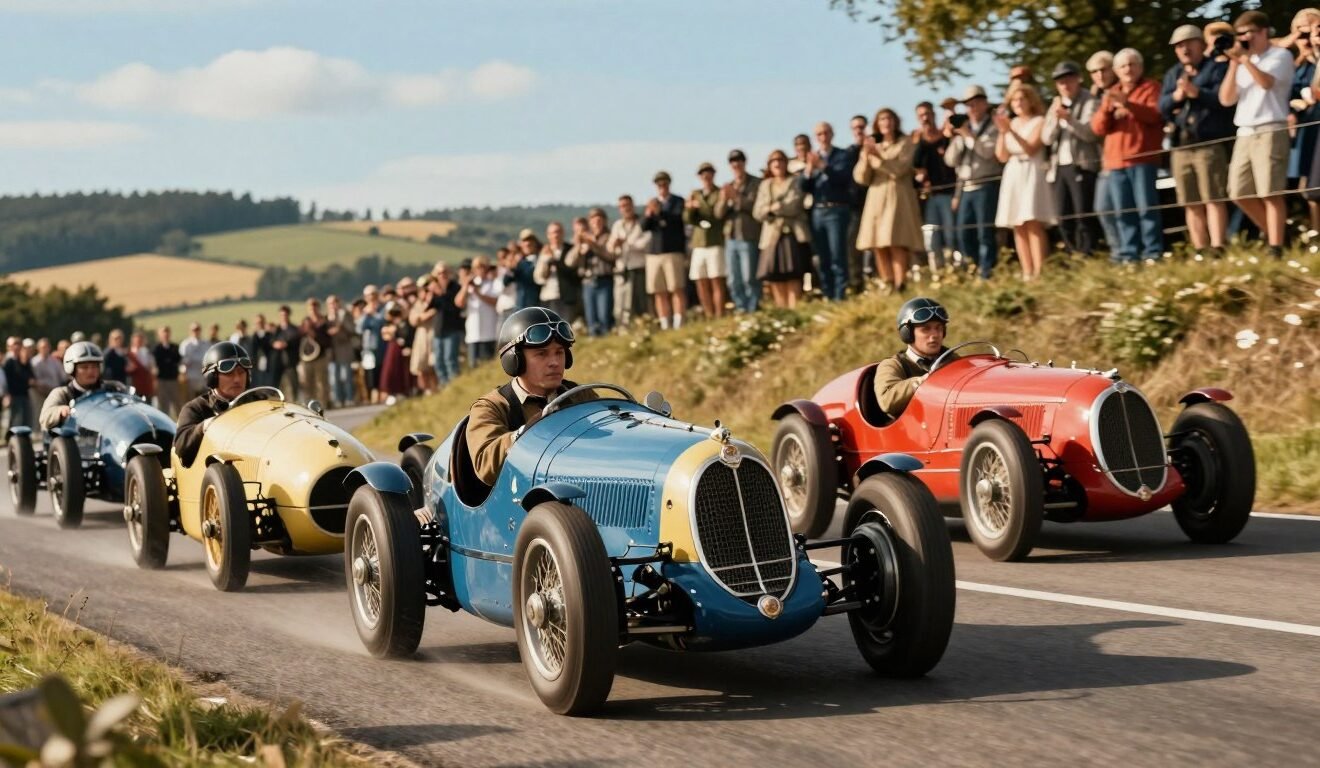
Before Formula One, racing was raw, dangerous, and revolutionary. The first races happened on open roads and makeshift tracks. Brave pioneers drove these early cars, testing their limits.

These early cars set the stage for what we know today. They showed us the power of engineering and the thrill of racing. In 1946, the FIA made Formula One the top racing class, starting in 1947.
Key Takeaways
- The origins of competitive motor racing pre-date Formula One.
- Early racing events were held on open roads and improvised circuits.
- Fearless pioneers drove machines beyond known limits.
- The engineering principles and competitive spirit forged during this period laid the groundwork for Formula One.
- Formula One was formally defined by the FIA in 1946.
The Birth of Competitive Motorsport (1894-1900)
The late 19th century was a turning point in car racing history. It moved from horseless carriages to advanced racing cars. This caught the public’s eye and set the stage for today’s motorsport.
The First Organized Races
The first races happened in the late 1800s. The Paris-Rouen race in 1894 is a key example. Early racing events made motorsport a competitive sport, attracting big crowds.
Paris-Rouen and Early European Competitions
The Paris-Rouen race showed the power of car racing as a spectator sport. Early European competitions helped shape motorsport’s future. Races like the Paris-Bordeaux-Paris in 1895 made it even more popular.
| Year | Event | Location |
|---|---|---|
| 1894 | Paris-Rouen | France |
| 1895 | Paris-Bordeaux-Paris | France |
From Horseless Carriages to Racing Machines
As cars evolved, so did their racing versions. Moving from modified cars to racing machines was a big step. Early speed records and public interest pushed for better designs.
Early Speed Records and Public Fascination
The chase for speed defined early motorsport. Early speed competitions drew fans globally. This interest led to big leaps in car technology.

Early Racing Cars: From Production Vehicles to Purpose-Built Racers – 400 words
The start of motorsport saw racing cars change from modified road cars to special machines. This change was needed for better performance, reliability, and to win races.
Modified Road Cars in Early Competition
In the early days, racing cars were just modified road vehicles. These changes were to make them faster and last longer. Car makers used different ways to make their cars ready for racing.
Adaptation Techniques and Performance Enhancements
Early racers made their cars lighter, improved the engine, and bettered the suspension. Making the car lighter was a big help. It made the car go faster and stop better.
| Modification | Purpose |
|---|---|
| Lightweight bodywork | Improved power-to-weight ratio |
| Engine tuning | Increased horsepower |
| Suspension upgrades | Enhanced handling and stability |
Émile Levassor, a key figure in car engineering, believed in the future of cars. He saw them as the future of travel.
“The motorcar is not a luxury, it’s a necessity… for speed.” –
The Emergence of Dedicated Racing Designs
As racing got more intense, the limits of modified cars were clear. Car makers started making cars just for racing. These cars had new features that would later be in regular cars.
First Purpose-Built Racing Chassis and Bodies
The creation of racing cars was a big step forward. These cars were made for speed and control, not for comfort or everyday use.

The move to racing cars was about more than just speed. It showed motorsport was becoming more serious. Car makers spent a lot on research and development, pushing what was possible.
- Innovative chassis designs
- Aerodynamic bodywork
- Specialized engine development
This time brought legendary racing cars that changed motorsport. The innovations of then helped create the advanced racing cars of today.
The Golden Age of Grand Prix Racing (1900-1914)
The Golden Age of Grand Prix Racing lasted from 1900 to 1914. It was a time of great change for motorsport. New racing events and technologies emerged, shaping the future of Grand Prix Racing.
The Gordon Bennett Cup Era
The Gordon Bennett Cup started in 1900. It was a major international racing competition. It brought together drivers and manufacturers from around the world, sparking a spirit of competition and innovation.
The Cup’s rules required cars to reflect their country of origin. This pushed manufacturers to create fast and reliable vehicles.
Notable manufacturers like Bugatti and Alfa Romeo began to shine during this time. They set the stage for their future success in Grand Prix Racing.
Early Grand Prix Competitions
The first Grand Prix took place in 1906. It was organized by the Automobile Club de France. It was a response to the growing popularity of the Gordon Bennett Cup and the need for a more prestigious event.
These early Grand Prix competitions featured challenging circuits and dedicated racing cars. Technological advancements were key, with manufacturers constantly improving speed and performance.
Technological Innovations of the Pre-WWI Period
Before World War I, Grand Prix Racing saw major technological leaps. Improvements in engine design, chassis, and aerodynamics led to faster, more efficient cars. Manufacturers tried out new technologies, like supercharging and advanced transmission systems.
These innovations set the stage for the technical advancements of the interwar period. They helped Grand Prix Racing evolve even further.
Interwar Racing: Technical Revolution and Speed Records – 400 words
The years between World War I and World War II were filled with big changes in racing tech. This time, known as the interwar period, brought huge leaps forward in motorsport.
The Rise of Supercharged Engines
During this time, supercharged engines became a big deal in racing. Supercharging lets engines make more power by forcing air into the combustion chamber. This made cars go faster and perform better. Companies like Mercedes-Benz and Alfa Romeo led the way in making these powerful engines.
Land Speed Record Machines
There were also big efforts to break land speed records during this time. Drivers and makers wanted to go faster and faster. This led to new ideas in aerodynamics and engine power. Land speed record machines got more advanced, with sleek designs and strong engines.
Streamlining and the Quest for 200 MPH
As speeds got higher, the need for aerodynamics became clear. Making cars more streamlined helped them go even faster. The dream of hitting 200 MPH was a big goal. Pioneers like Malcolm Campbell and his Blue Bird series were key in this quest.
Circuit Racing Developments
Circuit racing also grew during the interwar period. There were new tracks and old ones got better. This made racing faster and more exciting. The tech in cars and the quality of tracks helped make motorsport more popular.
Engineering Breakthroughs in Early Motorsport – 450 words
The start of motorsport was marked by engineers pushing limits to make cars faster and more reliable. As the sport grew, big steps were taken in car technology.
Engine Innovations: From Simple Motors to Racing Powerplants
At first, engines were simple, based on car designs. But as racing got tougher, engines needed to be stronger. New engine designs brought big performance boosts.
Valve Technologies and Fuel Advancements
New valve tech, like overhead camshafts, let engines run faster and stronger. Better fuel and racing fuels also helped engines perform better.
Chassis and Suspension Evolution
The chassis and suspension are key for a car’s handling and balance. Early racing cars used car chassis, but soon, special racing chassis were made.
From Ladder Frames to Monocoques
Switching to monocoque designs was a big step up from ladder frames. Monocoques are stronger and lighter, making cars perform better.
Early Aerodynamic Considerations
Aerodynamics was key in making racing cars faster. Early tests with body and wing designs showed how important aerodynamics are for speed.
| Era | Key Engineering Breakthroughs | Impact on Motorsport |
|---|---|---|
| Early 1900s | Introduction of overhead camshafts, improved engine materials | Increased engine power and reliability |
| 1920s-1930s | Development of supercharged engines, monocoque chassis | Significant gains in speed and handling |
| Pre-WWII | Aerodynamic bodywork, early wing designs | Enhanced high-speed stability and cornering |
The early days of motorsport set the stage for today’s racing cars. These innovations not only made cars faster but also pushed car tech forward.
Legendary Manufacturers and Their Racing Machines – 400 words
The dawn of motorsport brought legendary manufacturers to the scene. They shaped the future of racing with their innovative cars. Their work also led to big tech advances in the industry.
European Pioneers: Bugatti, Alfa Romeo, and Mercedes
European giants like Bugatti, Alfa Romeo, and Mercedes led early motorsport. They created iconic racing models. These cars are loved for their design, speed, and history.
Iconic Pre-War Racing Models
Models like Bugatti’s Type 35, Alfa Romeo’s P2, and Mercedes-Benz’s S-series stand out. They showed top engineering and racing skills. They won big and set new motorsport standards.
American Racing Contributions
American brands like Duesenberg and Miller also made big marks. They built fast racing cars. These cars did well in big races, like the Indianapolis 500.
The Role of Privateers in Early Racing
Privateers were key in early motorsport. They were independent drivers and teams. They competed against big factory teams, showing their talent and the car’s versatility.
Here’s a comparison of some legendary racing cars from the early 20th century:
| Manufacturer | Model | Year | Notable Feature |
|---|---|---|---|
| Bugatti | Type 35 | 1924 | Exceptional handling |
| Alfa Romeo | P2 | 1932 | Supercharged engine |
| Mercedes-Benz | S-series | 1927 | High-performance capabilities |
The legacy of these legendary manufacturers and their cars is huge. Their work and achievements have shaped today’s racing cars. Their innovations and wins paved the way for the advanced cars we see now.
Historic Racing Events That Shaped Motorsport – 350 words
Some events have changed motorsport forever. They tested drivers and cars in big ways. These events helped motorsport grow.
Endurance Challenges: The Birth of Le Mans
The 24 Hours of Le Mans started in 1923. It’s a top endurance race. It shows how cars can last and perform long distances.
The Targa Florio and Road Racing
The Targa Florio was in Sicily from 1906 to 1977. It was a tough road race. It was key in motorsport’s early days, drawing top talent.
Indianapolis 500 and Oval Racing
The Indianapolis 500 began in 1911. It’s a famous oval race. It’s known for speed and strategy, pushing limits on oval tracks.
These events have shaped motorsport and keep influencing it. They’re celebrated by fans worldwide.
The Dangers and Heroes of Early Motorsport – 300 words
In the early days of motorsport, drivers faced huge risks. They had to deal with no safety rules and cars that were not safe. This made racing very dangerous.
Safety Considerations (or Lack Thereof)
Early motorsport was full of dangers. Drivers had to face the weather without protection. Cars didn’t have safety features, so crashes were often deadly.
Fatal Accidents and Their Impact on Design
Many fatal crashes led to the first safety steps in motorsport. Car designers started adding basic safety features. This was the start of making racing safer.
| Year | Accident Location | Driver | Outcome |
|---|---|---|---|
| 1903 | Paris-Madrid Rally | Marcel Renault | Fatal |
| 1911 | Indianapolis 500 | Several Drivers | Multiple Injuries |
Pioneering Drivers and Their Legacies
Despite the risks, brave drivers kept racing. Their skills and courage helped the sport grow. They inspired many drivers to come.
Racing Legends Who Shaped the Sport
Drivers like Marcel Renault and Baron de Caters became legends. Their wins made racing popular and helped it grow.
The impact of these early heroes is seen today. Their work led to safer and more advanced racing. The sport has changed a lot, with many safety and tech improvements.
Conclusion: How Pre-Formula One Racing Shaped Modern Motorsport – 300 words
The early days of motor racing, before Formula One, set the stage for today’s sport. It introduced key players and events that shape motorsport now.
Innovations like supercharged engines and aerodynamics are now key in racing. The legacy of these early days inspires new drivers and teams, pushing motorsport forward.
The legacy of pre-Formula One racing shows the creativity and hard work of its pioneers. This spirit is seen in today’s advanced technology and competitive spirit, guiding motorsport’s future.
The journey from pre-Formula One racing to today’s high-tech, high-speed racing is remarkable. It shows how far motorsport has come, thanks to those early innovators.