




American Cars of the 1950s: Chrome, Power, and the Golden Age of Excess
American Cars of the 1950s: Chrome, Power, and the Golden Age of Excess
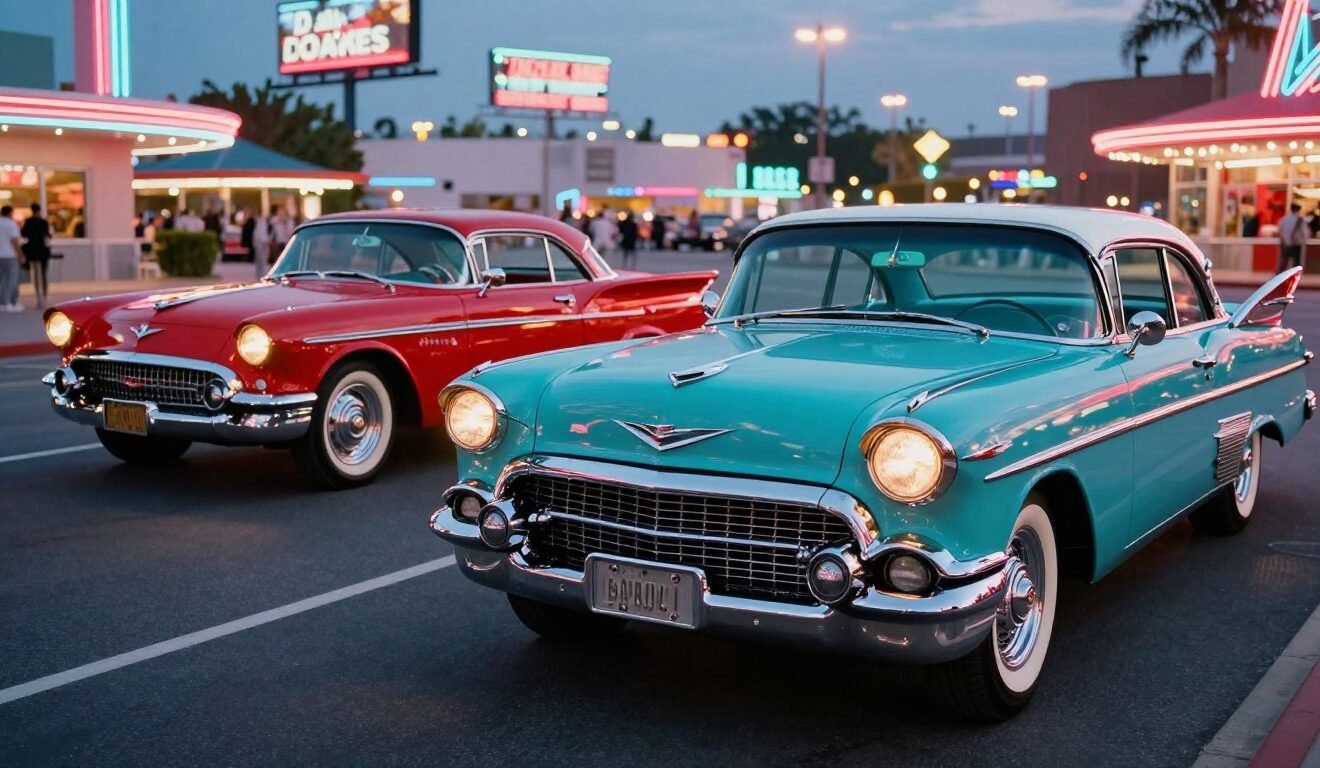
The 1950s was a big change for cars, marking a golden time for classic American cars. With the economy growing, these cars showed off wealth, hope, and new tech.

This decade saw more powerful and stylish vehicles than ever before. They were known for their shiny chrome and loud V8 engines. It was the best time for American automotive design, blending power and style for an unmatched drive.
Key Takeaways
- The 1950s was a golden age for American automotive design.
- Post-war economic growth fueled the rise of the automobile industry.
- Classic American cars became symbols of prosperity and technological confidence.
- The decade saw a surge in the production of powerful and stylish vehicles.
- Chrome finishes and V8 engines characterized the cars of this era.
The Post-War Boom: Setting the Stage for Automotive Excellence
After World War II, America saw a huge increase in demand for goods. This led to a golden age for the car industry. The change from making war supplies to consumer items sparked a boom in cars.
Economic Prosperity and the Rise of the Middle Class
The post-war years brought economic growth and a bigger middle class. People had more money to spend on things they wanted, like cars.
From Rationing to Abundance
Years of rationing ended after World War II, and people wanted to buy things they had missed. Cars became a big hit in this new market.
Disposable Income and Luxury Purchases
As people made more money, they wanted to buy luxury items, including fancy cars. This led to a big jump in car sales. Many saw cars as a way to show off their success.
From Wartime Production to Consumer Vehicles
The shift from making war supplies to cars was key to the boom. Factories changed to make cars, and production soared.
Retooling Factories for Peacetime
Car makers changed their factories to make cars for people. This made them more efficient and productive.
Pent-up Demand After Years of Scarcity
World War II made cars scarce, but demand was high. When production started again, people quickly bought cars. By the late 1950s, one in six working Americans worked in the car industry.
| Year | Automobile Production (Units) | Employment in Automotive Industry |
|---|---|---|
| 1945 | 69,532 | 1.2 million |
| 1950 | 8,003,294 | 3.5 million |
| 1955 | 9,155,217 | 4.2 million |

American Cars of the 1950s: Defining a National Identity
American cars of the 1950s were more than just cars. They were symbols of status, art, and values. The car showed who you were and where you stood in society.
Symbols of Success and Prosperity
People saw cars as signs of success and wealth. The car’s look and features showed off the owner’s social status. Luxury cars were the top choice for showing off wealth and prestige.
The Car as Status Symbol
Having a certain car was a way to show off your wealth. Classic American sedans like Cadillac and Lincoln were the top picks for luxury and quality.
Driveways of Distinction
People showed off their cars by keeping their driveways clean and their cars in top shape. A fancy car was a sign of pride and good taste.

Cultural Impact and Automotive Confidence
American cars of the 1950s had a big impact on culture and media. Cars were everywhere in movies, TV, and music, making them cultural icons.
Cars in Film and Television
Movies and TV shows used cars to tell stories and show off characters. The 1955 Chevrolet Bel Air was a favorite in films of the time.
Music, Art, and Automotive Celebration
Cars were celebrated in music, like in “Little Deuce Coupe” by The Beach Boys. Car design and art got better, with makers trying to make the coolest cars.
| Manufacturer | Model | Notable Feature |
|---|---|---|
| Cadillac | Eldorado | Luxury and advanced design |
| Chevrolet | Bel Air | Iconic styling and performance |
| Ford | Thunderbird | Sporty design and two-seat configuration |
“The car is a symbol of freedom, and the American car of the 1950s is the ultimate symbol of that freedom.”
The impact of these cars was huge. They helped create a time of great optimism in American car culture, which we can see today.
The Power Revolution: V8 Engines and Performance
The V8 engine became a symbol of American car power in the 1950s. This decade saw huge leaps in engine technology. It was the start of the horsepower race, where car makers competed to make the most powerful engines.
The Horsepower Race Begins
The move from six-cylinder to eight-cylinder engines was a big step. The V8 engine gave more power and ran smoother, making it very popular.
From Six to Eight Cylinders
People wanted cars that were more powerful. So, car makers made engines with bigger sizes to meet this demand.
Overhead Valve Innovations
Overhead valve technology made engines more efficient and powerful. This was key for creating high-performance V8 engines.
Engineering Advancements in Power Delivery
Improvements in compression ratios and transmission technology boosted engine performance.
Compression Ratios and Performance
Higher compression ratios meant engines could make more power. But, they needed higher-octane fuel to run well.
Transmission Developments
New transmissions, like automatic and overdrive units, helped engines deliver power better and use less fuel.
Fuel Efficiency vs. Power: The American Choice
In the 1950s, Americans chose power over fuel efficiency. This choice led to the creation of more powerful engines.
| Engine Type | Displacement (cubic inches) | Horsepower |
|---|---|---|
| Six Cylinder | 226 | 105 |
| V8 | 283 | 283 |
| V8 | 348 | 250 |
The optional 283 cubic inch V8 with fuel injection was a marvel. It showed the innovative spirit of American car makers in the 1950s.
Chrome Dreams: The Evolution of Styling
The 1950s was a big change for American car design. It was filled with chrome that changed how cars looked on the road. This time showed chrome as a key part of American cars, showing the country’s wealth and confidence.
The Chrome Revolution in Design
Chrome’s rise was thanks to better ways to make it. New plating processes and better ways to apply it made chrome designs more detailed and lasting.
Manufacturing Techniques for Chrome Applications
Getting better at electroplating made making chrome parts cheaper. This made chrome parts more common and affordable.
Cost vs. Visual Impact Considerations
Even though chrome was expensive, its look made cars more appealing. The ’57 Bel Air, with its fancy tail fins and lots of chrome, is a perfect example of this time.
Bumpers, Grilles, and Trim: Maximalism in Metal
Chrome was used a lot on bumpers, grilles, and trim. This made classic Detroit cars look over-the-top. Using so much chrome became a sign of 1950s American car design.
The Psychology Behind Shiny Surfaces
People liked chrome because it meant success and status. But, taking care of chrome was hard.
Consumer Attraction to Reflective Surfaces
People loved the shiny look of chrome cars. They saw them as symbols of wealth and modernity.
Maintenance Challenges of Chrome Features
Keeping chrome looking good was a big job. It needed regular polishing to stop rust. But, its look was so appealing that people didn’t mind the upkeep.
Fins to the Sky: Space Age Influence on Design
The Space Age dawned, and the American car industry reached for the sky. This era mixed technology and style, creating some of history’s most unique cars.
Rocket Science Meets Automotive Design
The Space Age’s impact on car design was deep. It was about more than looks. It was about the culture and technology of the time.
The Space Race and Car Styling
Car designs got rocket-inspired, with fins and chrome. These features symbolized speed and the future. The tailfin became a key symbol of this era.
Aerodynamic Claims vs. Reality
Though fins were said to improve aerodynamics, they were mostly for looks. Yet, they became a big part of car design.
The Tailfin Era: From Subtle to Spectacular
The tailfin era started small but grew fast. By the late 1950s, fins were taller and more elaborate.
| Year | Model | Notable Feature |
|---|---|---|
| 1955 | Cadillac Eldorado | Introduction of tailfins |
| 1957 | Chrysler 300C | High-performance variant |
| 1959 | Cadillac Series 62 | Peak tailfin design |
Cadillac, Chrysler, and the Competition for the Most Dramatic Fins
Cadillac and Chrysler led the tailfin race. Each year, their designs got more dramatic. The 1959 Cadillac is the ultimate example.
The 1959 Cadillac: Peak Fin Design
The ’59 Cadillac’s fins were the tallest and most rocket-like. They became a symbol of the era’s excess and innovation.
Public Reception and Critical Response
The public loved the new designs, but critics were harsh. They saw the fins as a sign of American excess. Yet, the designs captured the era’s spirit.
“The tailfin era was a manifestation of America’s fascination with technology and its aspirations for the future.”
The 1950s saw cars that are unforgettable and unique. The space age’s influence left a lasting mark on car design.
Bigger is Better: The Growth of American Automobiles
After World War II, America’s economy grew fast. This growth showed in the size of American cars. They got longer, wider, and taller.
Expanding Dimensions and Wheelbases
The 1950s saw a big change in car sizes. By 1959, cars like the Cadillac were over 18 feet long.
Comparative Measurements Across the Decade
| Year | Average Length (inches) | Average Wheelbase (inches) |
|---|---|---|
| 1950 | 204 | 120 |
| 1955 | 212 | 123 |
| 1959 | 222 | 128 |
Engineering Challenges of Scale
Big cars were hard to engineer. They were heavier and needed stronger engines to move well.
Interior Luxury and Passenger Comfort
The inside of these cars got fancier. They focused more on making passengers comfortable. New seats and materials helped a lot.
Seating Innovations and Materials
Car makers brought in new seats and better materials. This made the ride more comfortable.
Dashboard Evolution and Controls
Dashboards got smarter. They had new controls and features. This made driving better.
The Weight Penalty: Performance Implications
Big cars were heavy. They needed strong engines to move fast and handle well.
The 1950s saw American cars get bigger. This showed the country’s wealth and love for comfort, luxury, and style.
The Highway Revolution and Its Impact on Car Design
The Interstate Highway System’s development changed car design in the 1950s. The U.S. government’s big investment in roads led to new car designs. Cars were made to fit the new highway culture.
The Interstate Highway System Development
The Federal Highway Act of 1956 was a big moment in American history. It started a new era in transportation.
Federal Highway Act of 1956
This law allowed for the Interstate Highway System. It was a network of controlled-access highways that changed the nation’s roads.
Infrastructure Changes and Automotive Requirements
As highways got better, car makers focused on designs for long trips. They aimed for comfort and performance on the road.
Long-Distance Travel and Vehicle Requirements
Traveling long distances became easier. Cars needed to be more comfortable and reliable. So, car makers added better suspension, stronger engines, and more comfort features.
Suburban Expansion and the Family Car
The growth of suburbs led to a need for family-friendly cars. Station wagons became popular for their space and practical design.
Multi-Car Households Emerge
As suburbs grew, more families had multiple cars. This let families have different cars for different needs.
Station Wagons and Family-Focused Design
Station wagons were made for families. They had big interiors and designs that met suburban family needs.
Here’s a summary of the key changes in car design influenced by the highway revolution:
| Design Aspect | Pre-Highway Era | Post-Highway Era |
|---|---|---|
| Comfort Features | Basic seating and minimal amenities | Enhanced comfort, improved suspension |
| Engine Power | Moderate horsepower | Increased horsepower for long-distance travel |
| Vehicle Types | Primarily sedans and coupes | Rise of station wagons and family-friendly vehicles |
Consumer Culture and Annual Model Changes
The 1950s saw a big change in the car market. Annual model changes made last year’s cars seem old. This fueled a desire for new cars.
Planned Obsolescence as Marketing Strategy
Harley Earl at General Motors was key in starting this trend. By introducing new designs and features yearly, GM made people feel they needed the latest.
Harley Earl’s Influence at General Motors
Earl’s designs focused on newness and progress. This became a big part of 1950s car marketing. His work made GM a leader in the field.
Creating Desire Through Yearly Updates
New models every year made car buyers excited. They looked forward to the latest designs and features. This strategy boosted sales and grew a culture that loved new things.
Financing the American Dream on Wheels
More people could buy cars thanks to better credit options. Dealerships helped by making it easy to trade in for new models.
Credit Expansion and Purchasing Power
More credit meant more people could buy cars. This boom in sales made people feel optimistic about the economy.
Trade-In Culture and Dealership Tactics
Dealerships used tactics to get people to trade in for new cars. They offered good trade-in values and promoted new models through marketing.
The Psychology of Automotive Consumption
| Psychological Factor | Marketing Strategy | Consumer Response |
|---|---|---|
| Desire for Novelty | Annual model changes | Increased sales and brand loyalty |
| Status Symbolism | Emphasis on luxury features | Perceived prestige and social status |
| Financial Flexibility | Expanded credit options | Increased purchasing power |
The car industry used planned obsolescence and financing to create a complex consumer psychology. By understanding these, manufacturers could meet consumer desires and boost sales.
The Big Three and Beyond: Key Manufacturers and Models
The 1950s were a time of big change for American cars. This decade saw the rise of the Big Three: General Motors, Ford, and Chrysler. Independent makers also played a big role in shaping the car world.
General Motors: Setting the Standard
General Motors was a big name in the 1950s. Its brands offered cars for all kinds of buyers.
Cadillac’s Luxury Leadership
Cadillac was the top choice for luxury. The Eldorado was famous for its sleek look and strong engine.
Chevrolet’s Mass Market Dominance
Chevrolet was a hit with the masses. The Bel Air was loved for its style, power, and good price.
Ford’s Response to the Changing Market
Ford kept up with what people wanted with new models. These cars really captured the spirit of the 1950s.
The Thunderbird and Personal Luxury
The Ford Thunderbird was a big deal. It stood out in the personal luxury market with its sporty yet elegant vibe.
Edsel: Lesson in Marketing Failure
Ford’s Edsel was a big mistake. It taught Ford a lot about the dangers of bad marketing.
Chrysler’s Forward Look and Design Innovation
Chrysler’s “Forward Look” changed the game. Virgil Exner’s designs were bold and futuristic.
Virgil Exner’s Styling Revolution
Virgil Exner’s work made Chrysler stand out. His designs were known for their bold fins and modern look.
Plymouth, Dodge, and DeSoto Positioning
Chrysler’s brands like Plymouth, Dodge, and DeSoto served different markets. They offered something for everyone.
Independent Manufacturers: Packard, Studebaker, and Others
Companies like Packard and Studebaker also made a mark. They brought unique designs and new ideas to the table.
| Manufacturer | Notable Model | Characteristics |
|---|---|---|
| General Motors | Cadillac Eldorado | Luxury, Powerful Engine |
| Ford | Thunderbird | Personal Luxury, Sporty |
| Chrysler | 300 Series | Bold Design, High Performance |
Global Influence and Design Legacy
American cars from the 1950s were more than just symbols of wealth. They also shaped car design worldwide. Their bold looks, strong engines, and new features won fans everywhere, changing the global car industry forever.
American Styling Abroad: Export and Imitation
American cars were exported to many countries, bringing new design ideas. Car makers in Europe and Asia were inspired by their sleek designs and strong engines.
European Responses to American Excess
European car makers admired American designs but chose more modest styles. They liked some of the American looks but preferred simpler designs.
Japanese Automotive Industry Learning Curve
In the 1950s, Japan’s car industry was just starting. They watched American car designs closely. They learned from both the looks and engineering, using this knowledge in their own cars.
Long-term Impact on Automotive Design Language
The designs of 1950s American cars have shaped car design for decades. Features like chrome, sweeping lines, and V8 engines are now common worldwide.
Collector Culture and Restoration Movement
The love for 1950s American cars has grown a lot. Restored models are highly prized by collectors and sell for a lot at auctions.
Value Trends and Iconic Models
Some models, like the 1955 Chevrolet Bel Air or the 1957 Ford Thunderbird, are very valuable. Their worth keeps going up over time.
Preservation Challenges and Techniques
Keeping these classic cars in good shape is hard. It takes finding original parts and keeping them true to their original form. New restoration methods have been created to meet these challenges.
| Model | Year | Collector Value |
|---|---|---|
| Chevrolet Bel Air | 1955 | $50,000+ |
| Ford Thunderbird | 1957 | $100,000+ |
| Cadillac Eldorado | 1959 | $80,000+ |
Conclusion: The Lasting Legacy of 1950s American Automobiles
The 1950s was a time of big change for American cars. They saw new designs, strong engines, and a culture that’s lasted to this day. Cars from that era, with their shiny chrome and smooth lines, are symbols of America’s hope and wealth after the war.
The legacy of American cars comes from the daring designs and tech of the 1950s. Big names like General Motors, Ford, and Chrysler made cars that were both beautiful and practical. This era was all about freedom and adventure, as people explored the country in their cool cars.
Even now, cars from the 1950s are loved by car fans everywhere. Their mix of style, power, and a touch of nostalgia makes them very popular. The impact of 1950s American cars can be seen in today’s designs, keeping their legacy alive for years to come.