




Chassis Design Explained: From Ladder Frames to Monocoques and Modern Structures
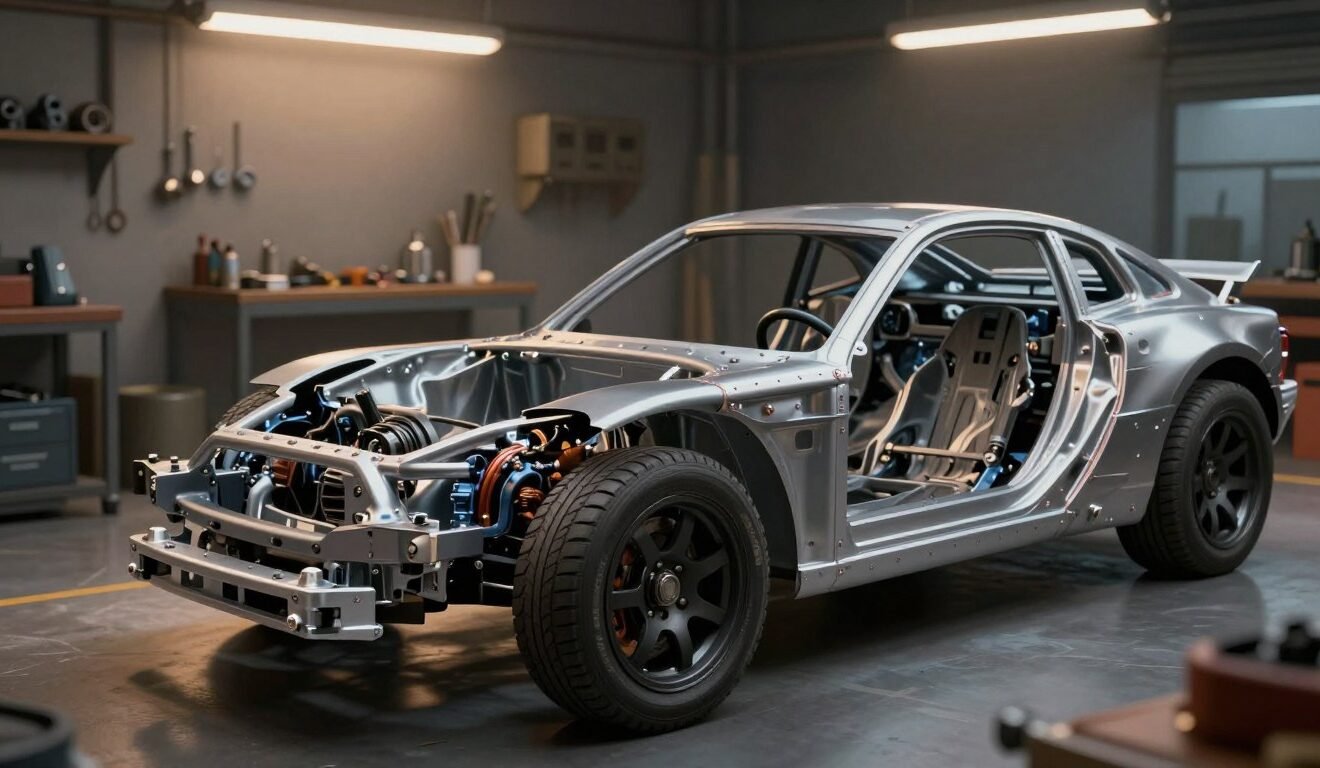
Chassis Design Explained: From Ladder Frames to Monocoques and Modern Structures
The backbone of every vehicle is its chassis. It gives the vehicle its strength and holds up different parts. Early cars used ladder frame chassis. Later, they moved to more advanced monocoque and unibody structures.

The change from ladder frames to today’s designs has made cars better in many ways. It has improved how they handle, stay safe, and feel comfortable. Knowing about this evolution helps us see how cars work and protect us today.
Key Takeaways
- The chassis is the fundamental structure of a vehicle, influencing its overall performance and safety.
- Ladder frame chassis were used in early vehicles, while modern cars often employ monocoque or unibody constructions.
- The shift in chassis design has enhanced vehicle handling, safety features, and passenger comfort.
- Different chassis types are suited to various vehicle applications, from rugged off-road vehicles to sleek passenger cars.
- Understanding chassis design evolution helps in appreciating the engineering that goes into modern vehicles.
The Foundation of Automotive Engineering: Understanding Chassis Function
The chassis is at the core of automotive engineering. It affects a vehicle’s performance, safety, and comfort. It’s more than a frame; it supports the body, engine, and suspension.
Defining the Automotive Chassis
The chassis is made of many parts that give a vehicle its strength. It includes the frame, suspension, steering, and brakes. Good chassis design is key for stability and smooth driving.
Core Functions and Requirements
A good chassis must do several things:
- Support the body and parts
- Hold suspension and steering systems
- Stay strong under different loads
- Improve safety and crashworthiness
Chassis engineers must think about material selection, structural design, and manufacturing processes. The right materials affect strength, weight, and cost.
The Relationship Between Chassis and Vehicle Dynamics
The chassis greatly affects a vehicle’s dynamics. It impacts handling, stability, and comfort. A strong, well-designed chassis means better steering and handling. A bad one can harm safety and driving.
Knowing how chassis design affects vehicle dynamics is vital. It helps engineers make vehicles better and safer.
Early Automotive Frames: The Ladder Frame Era
The ladder frame chassis started with horse-drawn carriage designs. It was key in early car development. This design was important in the early 20th century.
Origins in Horse-Drawn Carriage Design
The ladder frame came from horse-drawn carriage designs. Car makers used this design for early cars. It was simple and strong.
The frame had long and short parts that made it strong. It could hold the car’s weight and handle stress well.
Construction Principles and Materials
Ladder frames were made of steel. They had long sides and cross pieces. This made them strong and stable.
Steel was used because it was well-known and easy to work with. This made the frames durable and reliable.

Iconic Vehicles of the Ladder Frame Period
The ladder frame was used in many famous cars. It showed its strength and reliability.
Ford Model T and Early Mass Production
The Ford Model T used a ladder frame. This helped make it durable and easy to make. These were key to its success.
Truck and Commercial Vehicle Applications
Ladder frames were also used in trucks and commercial vehicles. They were strong and could carry heavy loads. They were also easy to fix and maintain.
The ladder frame era helped pave the way for future car designs. It led to more advanced structures in later cars.
Body-on-Frame Construction: Strengths and Limitations
The body-on-frame method has been key in car making for years. It has both big pluses and some downsides. This old-school way puts the car’s body on a separate frame.
Engineering Advantages in Early Automotive History
In the early car days, this method was a big win. It was simple to design and make. Cars built this way were strong and could handle the tech of the time.
Manufacturing Simplicity and Repair Accessibility
Body-on-frame is easy to make. The body and frame are separate, making production simpler. Also, fixing the body is easier because you don’t mess with the frame.
Performance Compromises and Structural Weaknesses
But, there are downsides too. This method can make cars heavier and less stiff. This can hurt how well they perform and how safe they are.
- Weight penalties: The extra frame makes cars heavier, which can hurt how far they go on a tank of gas.
- Center of gravity issues: The way the body and frame are stacked can make cars harder to steer and less stable.
Weight Penalties and Center of Gravity Issues
- The extra weight from the frame can make cars less fuel-efficient and slower to get going. Also, the high center of gravity can make cars harder to handle, like when turning or avoiding obstacles.
Handling Characteristics of Separated Structures
- How cars handle can be affected by the body and frame being separate. This can make cars less precise to drive compared to cars with a single, solid body.

Chassis Design Evolution: The Transition to Integrated Structures
The need for better and safer cars led to a big change. Cars moved from body-on-frame to unibody construction. This change was pushed by market needs, new ideas, and big technical steps forward.
Market Forces Driving Structural Innovation
Car makers wanted to make cars that used less fuel, emitted less, and were safer. This led to new designs in chassis.
“The automotive industry is driven by the need for sustainability and safety, and chassis design plays a critical role in achieving these goals.”
People wanted cars that were more flexible and efficient. This led to looking into new materials and ways to make cars.
Early Unibody Pioneers and Their Contributions
Chrysler’s “Unitized Body” in the 1934 Airflow was a big step. Later, European makers also started using unibody. These early steps showed how strong and light cars could be.
Technical Breakthroughs in Materials and Manufacturing
New welding methods, like spot and laser welding, made joints stronger and more precise. High-strength steel and other new materials helped make unibody structures better. These advances were key for the safety and strength needed in today’s cars.
The move to unibody chassis is a big step in car engineering. It’s all about better performance, safety, and efficiency.
The Monocoque Revolution: Engineering Principles
The monocoque chassis is a big step forward in car design. It combines strength with new ideas. This change has made cars safer, faster, and more fuel-efficient.
Structural Integrity and Load Path Management
Monocoque chassis design makes a single, strong structure. It spreads out the weight of the car, making it safer and more durable.
Key benefits of monocoque construction include:
- Enhanced structural rigidity
- Improved crashworthiness
- Reduced weight through optimized material usage
Materials Science Advancements in Automotive Construction
New materials have helped make monocoque chassis possible. Aluminum and advanced steel are used to make strong, yet light, parts.
Stress Distribution and Impact Energy Management
Monocoque chassis are designed to handle crashes well. They spread out the force of impact, keeping people safer.
Torsional Rigidity and Handling Precision
Monocoque chassis are better at handling because they are stiff. This makes cars more stable and responsive.
Crumple Zone Design and Occupant Protection
Crumple zones are key in monocoque chassis. They absorb crash energy, protecting people inside. This design helps reduce injury risk in accidents.
| Design Feature | Benefit | Impact on Vehicle Performance |
|---|---|---|
| Monocoque Structure | Enhanced Structural Integrity | Improved Safety and Durability |
| Advanced Materials | Weight Reduction | Better Fuel Efficiency and Performance |
| Crumple Zone Design | Occupant Protection | Reduced Risk of Injury in Collisions |
Unibody Construction: Transforming Automotive Manufacturing
The introduction of unibody construction changed how cars are made. It made making cars faster and cheaper. This big change has had a big impact on the car industry.
Mass Production Efficiencies and Cost Benefits
Unibody construction makes cars by combining the body and chassis into one piece. This makes cars cheaper because it cuts down on parts and assembly time. So, cars are now more affordable for people to buy.
Weight Reduction Strategies and Fuel Economy
Unibody construction lets car makers make cars lighter. They use strong materials and design them well to keep them safe and light. This makes cars use less fuel, which is good for the environment and saves money.
Integration of Safety Systems and Crash Performance
Unibody construction also makes cars safer. It helps spread out the force of crashes, keeping people inside safer. New materials and designs make cars even safer in crashes.
High-Strength Steel Applications
High-strength steel is key in making cars safer and lighter. It’s strong but also light, so cars can be made with less material but stay safe. This is a big win for car safety.
Computer-Aided Design and Testing Evolution
New computer tools have helped make cars better. They let car makers design and test cars without making real ones. This makes making cars faster and cheaper.
Alternative Chassis Designs: Spaceframes and Backbone Structures
There are more than just ladder frames and monocoques in the world of car chassis. New designs like spaceframes and backbone structures have come up. They are great for cutting down weight, being strong, and performing well. This makes them perfect for certain types of cars.
Tubular Spaceframe Engineering in Performance Cars
Spaceframes are key in high-speed and racing cars. They use tubes to make a strong yet light structure. This design boosts the car’s stability and handling.
The Aston Martin DBR1 and Jaguar D-Type are examples of how spaceframes excel in racing. They show how this design can make cars faster and more agile.
“Spaceframes in cars help keep them light and strong,” says an expert. This is why they’re used in making sports cars that are both fast and light.
Backbone Chassis Applications and Notable Examples
Backbone chassis have a central beam for strength and lightness. They’re not as common but are used in certain cars. The Škoda 110R is a great example. It uses a backbone chassis for better balance and handling.
Specialized Applications in Low-Volume Manufacturing
Spaceframes and backbone structures are great for making small batches of cars. They need less setup than monocoques, saving money. This makes them ideal for making high-performance or special cars.
In short, spaceframes and backbone structures are vital for the car industry. They meet the needs of performance cars and small production runs. Their use shows how important they are for car design.
Modern Chassis Innovation: Modular Platforms and Hybrid Structures
The latest in car engineering focuses on making chassis more efficient and flexible. This change aims to boost performance, safety, and eco-friendliness across all car types.
Multi-Material Construction Techniques
Today’s chassis use a mix of materials like steel, aluminum, and carbon fiber. This mix creates strong yet light structures. For example, Volkswagen’s MEB platform blends steel and aluminum for strength and weight savings.
Scalable Platform Architecture Across Vehicle Classes
Scalable platforms are another big leap in chassis design. They allow making one platform for many car types, cutting costs and boosting efficiency. General Motors’ BEV3 platform, for instance, supports a wide range of electric vehicles, from small cars to big trucks.
“The use of modular platforms allows us to reduce production time and costs while improving quality and flexibility.” –
Electric Vehicle-Specific Chassis Solutions
Electric cars need special chassis to fit their batteries and balance weight. New designs are being made just for EVs.
Battery Integration and Structural Considerations
Putting batteries into the chassis is key for EVs. It’s a balance between storing energy and keeping the car safe and strong. Volvo’s EX30 has a small battery pack in the floor, boosting range and stability.
Weight Distribution and Performance Optimization
Where the weight goes affects how an EV drives. By placing batteries and heavy parts right, makers can make the car handle better. Here’s a look at how different EVs compare:
| EV Model | Battery Placement | Weight Distribution | Performance Metric |
|---|---|---|---|
| Model A | Underfloor | 50:50 | 0-60 mph in 4s |
| Model B | T-Shape | 55:45 | 0-60 mph in 3.5s |
| Model C | Skateboard | 52:48 | 0-60 mph in 4.2s |
By using modular and hybrid designs, the car world is set for big leaps in efficiency, performance, and green tech.
Conclusion: The Future of Automotive Structural Design
The evolution of chassis design has been key in modern vehicle development. It has changed the auto industry a lot. From ladder frames to today’s monocoque and unibody structures, the journey has been full of innovation.
Looking ahead, the auto industry will see new trends and tech. This includes using different materials and modular platforms. These changes will help set new standards for vehicle design.
The history of chassis technology shows how far we’ve come. From body-on-frame to hybrid and electric cars, we’ve made big strides. As we keep innovating, the future of car design will bring better performance, safety, and eco-friendliness.