




Muscle Cars Explained: Power, Culture, and the Legacy of American Performance
Muscle Cars Explained: Power, Culture, and the Legacy of American Performance
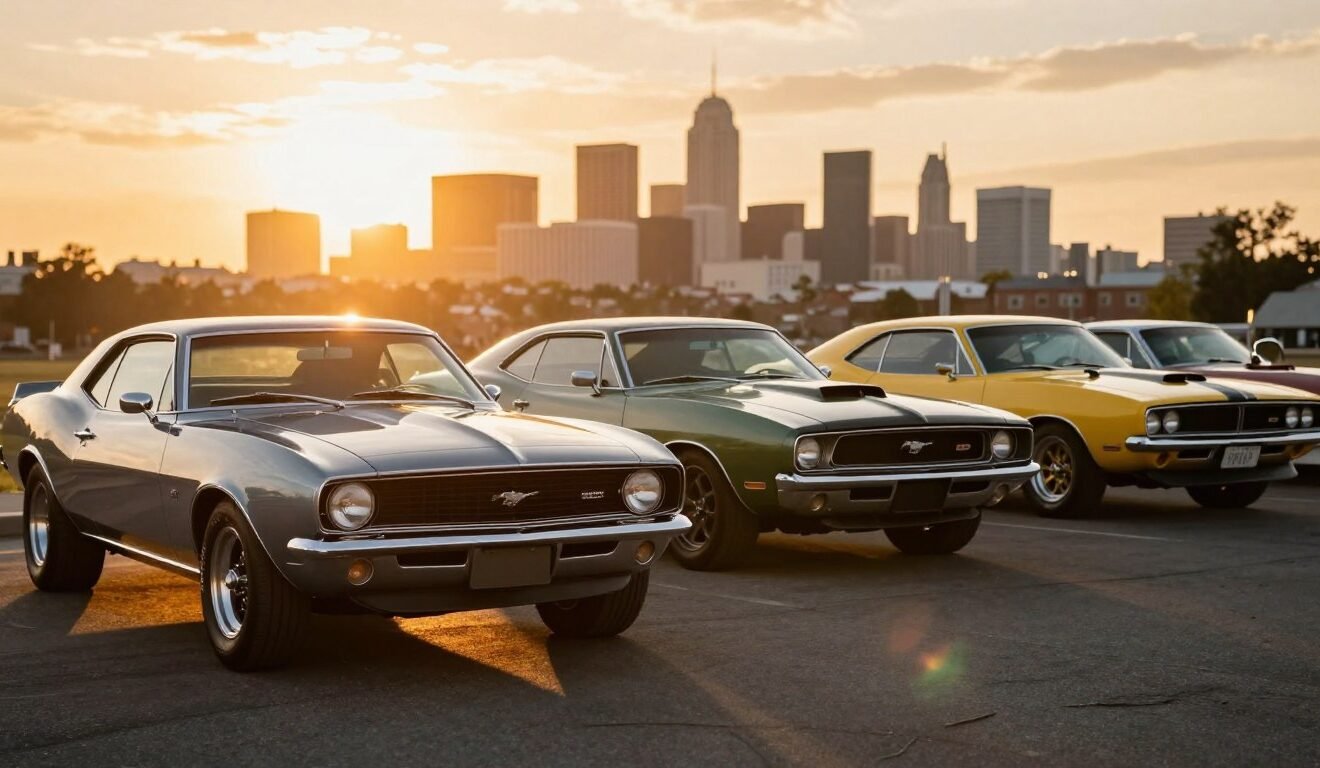
Muscle cars are a big part of American car culture. They mix power, style, and performance in a unique way. These cars, with their big engines, have been loved for over 70 years.

They’re not just fast and affordable. They also represent a cultural movement. This movement is all about the joy of speed and the open road. From the 1960s to today, muscle cars have changed but kept their core spirit.
American muscle is more than just cars. It’s about attitude, sound, and the thrill of driving. With their bold looks and loud V8 engines, these cars keep sparking passion in car lovers.
Key Takeaways
- Muscle cars are defined by their large-displacement engines and straight-line performance.
- They represent a cultural phenomenon that embodies the desire for speed and power.
- The legacy of muscle cars continues to influence automotive culture.
- From classic models to modern versions, muscle cars have evolved over time.
- American muscle is about attitude, sound, and the driving experience.
The Essence of American Muscle Cars
Muscle cars are a special type of vehicle that came after World War II. They are known for their large-displacement engines and straight-line performance. These cars were not just about power; they were also stylish and affordable, appealing to many people.
Defining the Muscle Car Phenomenon
The muscle car phenomenon is due to two main things:
Large-Displacement Engines and Straight-Line Performance
At the core of every muscle car is a big block V8 engine. It’s made for great horsepower and straight-line speed. This made muscle cars perfect for drag racing, a big deal in the 1960s.
Affordability and Mass-Market Appeal
Muscle cars were made to be affordable and loved by many. They were based on existing models and priced well, making fast cars available to more people.

| Characteristics | Muscle Cars | Sports Cars |
|---|---|---|
| Engine Size | Large-displacement V8 | Varied, often smaller |
| Performance Focus | Straight-line speed | Handling and agility |
| Affordability | Generally affordable | Often expensive |
The mix of powerful engines, aggressive styling, and affordability made muscle cars a big deal. They were closely linked to the youth movements and drag racing of the 1960s.
Muscle Cars Explained: The Historical Origins
In the early 1960s, a mix of economic growth, cultural changes, and new tech led to the muscle car era. Muscle cars’ roots go back to the early 20th century. They were influenced by hot rod culture and the desire for factory performance upgrades.
Pre-Muscle Influences: Hot Rods and Factory Performance
Modifying cars for speed started in the 1920s, with bootleggers racing to avoid the law. This culture grew into the hot rod movement of the 1940s and 1950s. Enthused by drag racing, people started modifying cars. Manufacturers noticed and began to offer their own performance upgrades.

The 1964 Pontiac GTO: The First True Muscle Car
The 1964 Pontiac GTO is seen as the first real muscle car. It combined a big V8 engine with a mid-size body, making it powerful yet affordable. Its success came from its mix of speed and practicality, appealing to young people.
The Perfect Storm: Economic and Cultural Factors
The rise of muscle cars wasn’t just about tech; it was also about money and culture. Post-war wealth gave Americans more to spend, and young people wanted to express themselves. Muscle cars became symbols of rebellion and freedom, embodying the American Dream.
Post-War Prosperity and the American Dream
After World War II, America saw huge economic growth. This growth meant more money for consumers, and the car industry offered more powerful and stylish cars.
Youth Market and Disposable Income
The youth market was key to muscle cars’ success. Young Americans had more money to spend on cars and modifications. This led to a booming aftermarket industry, with many companies providing upgrades and accessories.
| Year | Model | Engine Size | Horsepower |
|---|---|---|---|
| 1964 | Pontiac GTO | 389 cubic inches | 348 HP |
| 1966 | Ford Mustang Shelby GT350 | 289 cubic inches | 306 HP |
| 1968 | Dodge Charger R/T | 440 cubic inches | 375 HP |
The Golden Age: 1964-1972
The golden age of muscle cars lasted from 1964 to 1972. It was a time of fierce competition among American car makers. They introduced iconic models, racing to be the best in performance and design.
Horsepower Wars Between Manufacturers
In the late 1960s, Chevrolet, Ford, and Chrysler’s Mopar division were in a fierce battle. They all wanted to be the strongest with their engines and bold looks.
Chevrolet’s Response: Camaro and Chevelle SS
Chevrolet jumped into the muscle car scene with the Camaro and Chevelle SS. The Camaro, launched in 1967, challenged the Ford Mustang with its powerful engines. The Chevelle SS, with its big V8, was another top contender.
Key Specifications:
- Camaro SS: 350cid V8, 325hp
- Chevelle SS 396: 396cid V8, 375hp
Ford’s Contenders: Mustang and Torino
Ford fought back with the Mustang and Torino. The Mustang, a pioneer in muscle cars, kept getting better with the Shelby GT500. The Torino, in its Cobra Jet form, was a force to be reckoned with.
“The Mustang is a symbol of American performance and freedom, embodying the spirit of the open road.”
Mopar Muscle: Dodge and Plymouth Enter the Fray
Dodge and Plymouth, under Chrysler’s Mopar, joined the muscle car battle. They brought models that would be remembered for their power and style.
Challenger, Charger, and Road Runner
The Dodge Challenger and Charger, along with the Plymouth Road Runner, were Mopar’s stars. The Challenger mixed style with performance. The Charger was known for its bold look and strong engines. The Road Runner was built for speed.
| Model | Engine | Horsepower |
|---|---|---|
| Dodge Challenger R/T | 440cid V8 | 375hp |
| Plymouth Road Runner | 383cid V8 | 335hp |
| Dodge Charger 426 HEMI | 426cid V8 | 425hp |
The HEMI Legacy
The Chrysler HEMI engine, famous for its design, became a symbol of American muscle. Its fame grew with models like the Dodge Charger 426 HEMI. Today, it’s a prized collector’s item.
The golden age of muscle cars was a time of innovation and competition. It led to the creation of some of America’s most iconic cars. This era’s influence is seen in car culture today.
Anatomy of Power: What Makes a Muscle Car Perform
Every muscle car has a powerful engine at its heart. This engine is made to go fast in a straight line. It’s this raw power that makes the muscle car experience so special.
Big Block V8 Engines: The Heart of Muscle
The big block V8 engine is key to a muscle car. It gives the car the power needed for straight-line speed. These engines are big and have high horsepower ratings.
Cubic Inches and Horsepower Ratings
The engine’s size, in cubic inches, affects its power. Bigger engines usually mean more horsepower. This makes them perfect for drag racing and other high-speed activities.
Carburetors vs. Fuel Injection
Old muscle cars used carburetors to mix air and fuel. But today, fuel injection systems are used for better efficiency and performance.
Straight-Line Warriors: Drag Racing Dominance
Muscle cars are made for drag racing. They can accelerate fast in a straight line. Their strong engines help them win in this sport.
Sound and Fury: The Sensory Experience
The exhaust notes and engine roars of a muscle car are a big part of its charm. They offer an exciting and intimidating experience.
Exhaust Notes and Engine Roars
The deep rumble of a muscle car’s exhaust is unique. It shows the car’s power and warns of its speed.
Visceral Acceleration and G-Forces
When a muscle car speeds up, the G-forces push the driver back. This creates a strong, intense feeling that’s hard to find elsewhere.
Muscle Car Culture and American Identity
American muscle cars are more than just cars. They symbolize a cultural movement of youth rebellion and love for cars. This movement was shaped by drag racing and regional car designs.
Youth Movement: Rebellion on Wheels
In the 1960s and 1970s, muscle cars were a symbol of youth rebellion. They stood for freedom and not following the rules. Young people loved these cars for their power and performance, showing their independence and challenging society.
Drag Strips and Street Racing: Competitive Spirit
The muscle car culture is deeply connected to drag racing. Many owners race their cars on quarter-mile tracks. Quarter-Mile Culture became a key part of muscle car fans, with famous racers and their cars becoming icons.
Quarter-Mile Culture
Drag strips were where muscle cars were tested. Drivers showed off their skills and car’s performance. This competition led to new car designs and better performance.
Legendary Drag Racers and Their Machines
Drivers like Don Garlits and Shirley Muldowney were drag racing legends. They pushed the limits of speed and performance. Their cars, often customized muscle cars, showed the peak of power and engineering.
Regional Variations: Detroit Iron to California Cruisers
Muscle cars had regional differences, from Detroit Iron to California cruisers. Different parts of the United States influenced car designs, showing local tastes and preferences.
This diversity made muscle car culture rich and complex. It’s a unique part of American car heritage.
The Decline: Regulations, Oil Crisis, and Changing Tastes
The muscle car era was short-lived. By the early 1970s, strict regulations and economic issues started to take their toll. Factors like stricter emissions, the oil crisis, and shifting consumer tastes played a role in its decline.
Emissions Standards and the Power Drain
Stricter emissions standards hit muscle cars hard. The Clean Air Act of 1970 forced manufacturers to cut down on harmful emissions.
The Clean Air Act and Its Impact
The Clean Air Act led to the use of catalytic converters. These converters cut emissions but also hurt engine performance.
Performance Compromises and Catalytic Converters
Catalytic converters were key, but they reduced horsepower and torque. This made muscle cars less attractive to fans.
The 1973 Oil Crisis: Economic Reality Hits
The 1973 oil crisis made muscle cars less popular. Fuel prices rose, and gas shortages made fuel-efficient cars more appealing.
| Year | Average Fuel Price (USD) | Muscle Car Sales |
|---|---|---|
| 1972 | 0.36 | 120,000 |
| 1973 | 0.53 | 100,000 |
| 1974 | 0.73 | 80,000 |
The Malaise Era: Muscle Cars in Name Only
By the late 1970s, muscle cars had entered the “malaise era.” This era was marked by declining performance and visual upgrades that hid the lack of power.
Declining Horsepower Figures
As emissions rules got stricter, horsepower numbers dropped. Muscle cars became slow and less powerful.
Visual Packages Without Performance
Some makers tried to keep the muscle car look with visual updates. But without real power, these cars lost their true essence.
Muscle Cars in Popular Culture
Muscle cars have made a big impact on American culture. They are seen in movies, music, and TV. This shows how much they influence us.
Silver Screen Icons: Muscle Cars in Film
Muscle cars are often seen in movies. They stand for power, freedom, and rebellion. The Highland Green Mustang from Bullitt and the cars in Fast and Furious are great examples.
Bullitt and the Highland Green Mustang
The 1968 film Bullitt starred Steve McQueen. His Highland Green Ford Mustang Fastback became a symbol of car culture. The chase scene made it even more famous.
Fast and Furious: Modern Muscle Revival
The Fast and Furious movies have made muscle cars cool again. They show off fast cars in exciting scenes. This has inspired many car lovers.
Music, Television, and the American Imagination
Muscle cars have also influenced music and TV. The Beach Boys and Jan and Dean celebrated car culture in their songs.
Beach Boys, Jan and Dean, and Car Songs
The Beach Boys and Jan and Dean wrote songs about the joy of driving. Their music has made muscle cars a big part of American pop culture.
Muscle Cars as Character Extensions
In movies and TV, muscle cars show what characters are like. They add to the story, making muscle cars important. They stand for rebellion, power, and being different.
Looking at muscle cars in pop culture shows their wide reach. They affect many parts of American culture and identity.
The Revival: Modern Muscle Renaissance
The modern muscle car era brings back American performance with a mix of old and new. It’s not just about classic models. It’s also about adding modern performance and design.
The 1990s Resurgence: Nostalgia Meets Technology
In the 1990s, muscle cars made a comeback. This was thanks to a mix of nostalgia and new car tech. Car makers brought back old favorites with a modern twist, appealing to both old and new fans.
21st Century Powerhouses: Challenger, Camaro, and Mustang
In the 21st century, muscle cars like the Dodge Challenger, Chevrolet Camaro, and Ford Mustang became leaders. They mix retro-inspired design with today’s performance.
- Retro-Inspired Design: Modern muscle cars pay homage to their predecessors with classic design cues.
- Modern Performance: Advanced engine technology has enabled these cars to achieve unprecedented performance levels.
Retro-Inspired Design with Modern Performance
Modern muscle cars like the Challenger and Camaro have designs that recall the 1960s and 1970s. But they also have modern aerodynamics and safety features.
Horsepower Numbers Exceeding the Golden Era
Today’s muscle cars often have more horsepower than their old counterparts. This is thanks to new engine tech and tuning.
Balancing Heritage with Innovation
As muscle cars evolve, makers face a challenge. They need to keep the original spirit while adding new tech and performance.
- Electric Muscle: The Future of Performance: The shift towards electric vehicles represents a significant opportunity for muscle cars to redefine performance.
- Maintaining the Muscle Car Spirit: Despite the changes, the essence of what makes a muscle car appealing must be preserved.
Electric Muscle: The Future of Performance
The arrival of electric vehicles (EVs) is changing the muscle car scene. EVs offer instant torque and unmatched acceleration.
Maintaining the Muscle Car Spirit
As we move towards electric cars, it’s key to keep the muscle car spirit alive. This spirit includes power, aggression, and a connection to American culture.
Engineering Legacy: How Muscle Cars Changed Automotive Design
Muscle cars have left a lasting mark on car design. Their innovations have changed the automotive world. These changes are seen in many modern cars.
Performance Trickle-Down: From Drag Strip to Daily Driver
Muscle cars were made for racing, but their tech improved daily driving. This made cars better for everyone.
Suspension and Handling Improvements
Improved suspension made muscle cars handle better. This tech is now in many cars.
Braking Systems and Safety Advancements
Better brakes were needed for muscle cars’ power. Now, these advancements are in all cars.
Global Influence on Performance Car Development
American muscle cars have inspired car makers worldwide. They’ve influenced performance car design globally.
European Performance Cars: The American Influence
European car makers have been influenced by muscle cars. They’ve mixed power and style into their own cars.
Japanese Muscle: America’s Unexpected Legacy
Japanese car makers have also been influenced. Cars like the Nissan GT-R show this. They’ve adopted muscle car ideas.
Muscle cars have had a lasting impact on car design. Their influence is seen in today’s cars. Their legacy continues to shape the automotive world.
Collecting and Preserving American Muscle
The world of muscle car collecting is full of life. Enthuasiasts work hard to restore, preserve, and celebrate these iconic cars. They are driven by a deep love for the history, design, and power of muscle cars.
Investment Value: Rare Models and Auction Prices
Muscle cars are now a big investment, with rare ones selling for high prices. The value depends on the car’s condition, how rare it is, and its historical importance.
Seven-Figure Muscle: The Most Valuable Models
Some muscle cars are worth a lot of money. Here are a few:
- The 1967 Shelby Mustang GT500
- The 1969 Chevrolet Camaro ZL1
- The 1970 Dodge Challenger R/T
These cars are highly sought after by collectors. They can sell for hundreds of thousands of dollars.
Documentation and Provenance
The history of a muscle car, including who owned it and any restoration work, affects its value. Original documents, like the car’s window sticker and sales records, prove its authenticity and make it more valuable.
Restoration Culture: Keeping History Alive
The restoration culture for muscle cars aims to keep these vehicles alive for the future. Enthuasiasts spend a lot of time and effort to make their cars look like new again. They use both original parts and new ones that look like the originals.
Original vs. Restomod Approaches
Restorers often choose between keeping the car as it was or making it better (Restomod). The decision depends on what the restorer wants and how the car will be used.
Parts Availability and Reproduction
Finding original parts can be hard for restorers. Luckily, many companies now make reproduction parts. This makes it easier to keep or restore a muscle car to its original state.
Knowing about the investment value and restoration culture helps collectors make smart choices. This is true for both buying and restoring muscle cars.
Conclusion: Why Muscle Cars Endure as American Icons
Muscle cars are a big part of American car culture. They stand for freedom, rebellion, and being different. Their strong engines, bold looks, and lasting appeal keep fans coming back.
The open road is what muscle cars are all about. They’re more than just cars; they show who you are and connect you to America’s car history. Muscle cars keep inspiring new car lovers.
Muscle cars have changed car design and performance forever. They’ve made a big splash on the road and in car culture. They show the American love for power, freedom, and standing out.