


1980s Cars: The Rise of Turbo and Technology That Redefined Performance
1980s Cars: The Rise of Turbo and Technology That Redefined Performance
The 1980s marked a key time for cars. Turbocharging became common and computers started controlling them. This decade brought a new wave of performance and tech, changing car designs and functions.

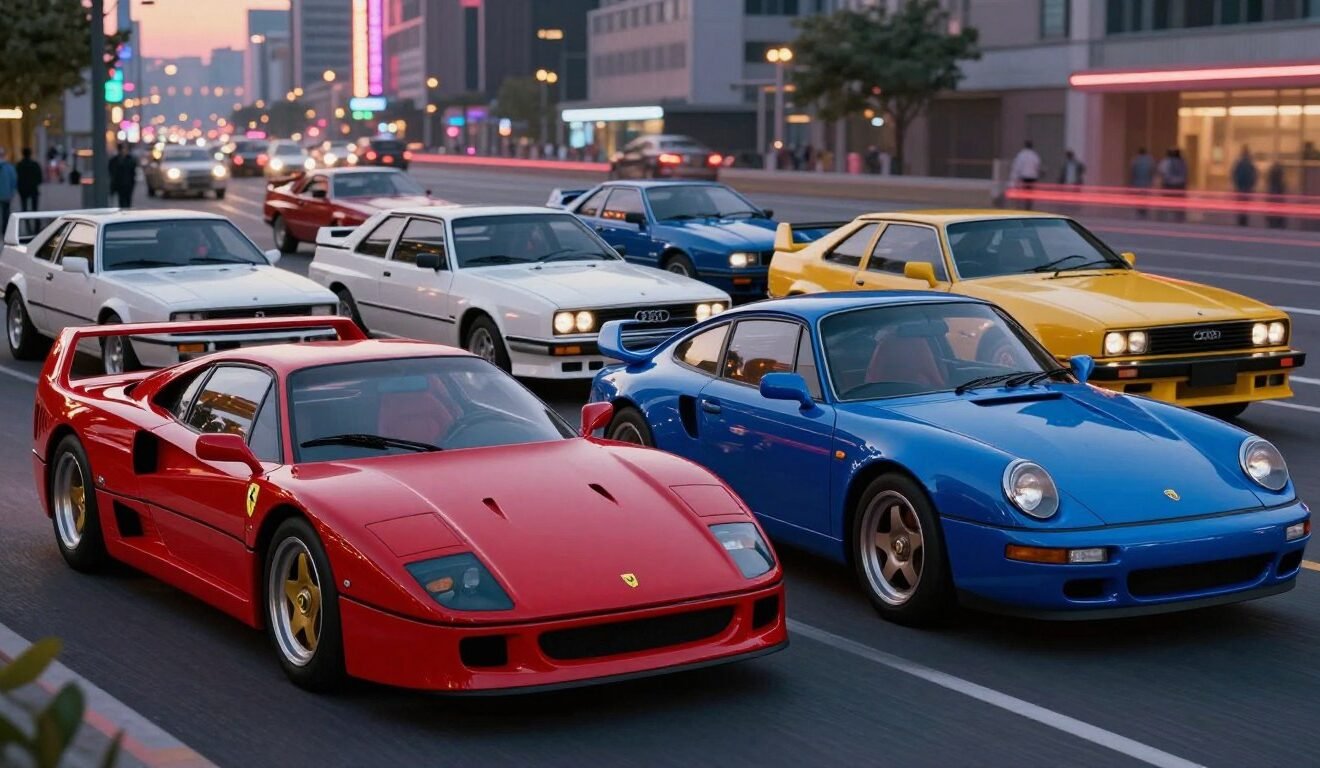
Legendary sports cars like the Ferrari F40 and Porsche 959 appeared. They showed what turbocharging and new designs could do. The mix of electronics and turbochargers set the stage for today’s fast cars.
This era’s tech advancements brought back performance lost in the past. It set the stage for even more car innovations in the future.
Key Takeaways
- The 1980s saw a big increase in turbocharged cars, boosting performance.
- Technological innovations, including computer controls, became more common.
- Iconic sports cars emerged, showing off new tech’s possibilities.
- The decade set the foundation for today’s performance cars.
- Car innovation sped up, thanks to better electronics and turbocharging.
The Performance Crisis That Preceded the 1980s
The 1980s dawned on the automotive world with a crisis of performance. This was due to strict emissions standards and oil embargoes. Car makers had to rethink engine design and performance.
Emissions Regulations and Their Impact on Horsepower
In the early 1970s, emissions regulations changed the game. Cars were no longer just about speed; they had to be green. This led to a drop in horsepower as makers tried to meet new standards.
Many iconic muscle cars lost their oomph. The big engines of the 1960s and early 1970s were now limited by emissions tech. This tech was needed but cut into their power.
The Fuel Crisis and the Push for Efficiency
The 1979 oil embargo made fuel efficiency key. People wanted cars that saved gas, not just went fast. So, makers started making engines smaller and more fuel-friendly.
Front-wheel drive cars became popular, and engine designs got better. The Big Three in America faced stiff competition from Japanese makers who focused on fuel efficiency.
The Decline of Traditional High-Displacement Engines
High-displacement engines fell out of favor. Makers turned to turbocharging and electronic fuel injection to keep performance up while saving gas.
The table below shows how engine sizes dropped and new tech rose in the late 1970s and early 1980s.
| Year | Average Engine Displacement (Liters) | Average Horsepower | Notable Technologies |
|---|---|---|---|
| 1975 | 5.7 | 140 | Carbureted engines |
| 1980 | 4.2 | 120 | Early electronic fuel injection |
| 1985 | 3.8 | 150 | Turbocharging, advanced EFI |

The move to efficient, tech-savvy engines started a new era in car performance. The 1980s innovations paved the way for today’s high-performance cars.
Turbocharging: The Technology That Saved Performance
As emissions rules got stricter, turbocharging saved the day in the 1980s. It let makers get more power from smaller engines. This way, they could meet rules and keep cars fast for fans.
How Forced Induction Revolutionized Engine Design
Turbocharging changed engine design by making small engines as powerful as big ones. It uses forced induction. A turbocharger pushes air into the engine, boosting power.
This tech improved both speed and fuel use. So, turbo cars were great for those who wanted speed and those who wanted to save gas.
From Racing Innovation to Street Performance
Turbocharging started in racing to get an edge. Its success on the track made it popular in cars. Porsche and Saab were early adopters.
Living with Turbo Lag: The Price of Power
But, turbocharging had a downside: turbo lag. This is when power takes time to kick in. Drivers had to get used to it, making turbo cars unique.
Porsche 930 Turbo: The Widowmaker
The Porsche 930 Turbo, or “Widowmaker,” was known for its strong engine and tricky handling. It showed the power and unpredictability of early turbo cars.
Buick Grand National: America’s Turbo Muscle
The Buick Grand National was America’s turbocharged muscle car. Its intercooled turbo gave it fast acceleration. It stood out in the muscle car world.
Saab 900 Turbo: Practical Performance
The Saab 900 Turbo mixed turbo power with everyday use. It showed how turbocharging could make a car more appealing.
In the 1980s, turbocharging boosted car performance and set the stage for future car tech. Its impact is seen in today’s cars, where it balances power and efficiency.

- Turbocharging allowed for smaller engines to produce larger engine power.
- It originated in racing and was later adopted in production cars.
- Turbo lag was a significant characteristic of early turbocharged cars.
Electronic Fuel Injection: Precision Replaces Tradition
In the 1980s, electronic fuel injection changed the car world. It offered a more precise and efficient way to fuel cars. This change was needed for better performance, fuel use, and less pollution.
The Carburetor’s Last Stand
As electronic fuel injection became popular, the carburetor started to disappear. Carburetors had been used for decades but had limits. They couldn’t control fuel flow well. The carburetor’s last try was to get better, but EFI systems won out.
EFI Systems: Better Performance and Efficiency
EFI systems made cars run better and use less fuel. They used electronic sensors and actuators to control fuel. This led to better fuel economy and less pollution. EFI also let car makers tune engines for different driving needs.
The Role of Early ECUs in Engine Management
The early Electronic Control Units (ECUs) were key in EFI systems. These simple computers used sensor data to adjust fuel injection. This ensured the engine ran well and efficiently. The start of ECUs began a new era in engine control.
The Digital Revolution in 1980s Cars
The 1980s saw a big change in cars with the arrival of digital technology. Cars started to have onboard computers and digital dashboards. This change made cars better in many ways, like how they perform, use fuel, and stay safe.
Onboard Computers: The Brain Behind the Brawn
Onboard computers became key in 1980s cars. They controlled the engine and made it run better. These computers, or Engine Control Units (ECUs), helped cars use fuel and run cleaner.
Digital Dashboards: From Analog to Electronic
Digital dashboards replaced old analog ones in the 1980s. They showed drivers important info like speed and fuel level. This made driving better and opened the door for more car tech.
Self-Diagnostics: The Beginning of OBD Systems
Self-diagnostics started in 1980s cars, leading to today’s OBD systems. These early systems helped mechanics fix cars faster and cheaper. It was a big step forward in car repair.
| Technology | Impact | Legacy |
|---|---|---|
| Onboard Computers | Improved engine performance and efficiency | Modern ECUs and engine management systems |
| Digital Dashboards | Enhanced driver information and experience | In-car infotainment and navigation systems |
| Self-Diagnostics | Streamlined repair and maintenance processes | Advanced OBD systems used today |
The 1980s digital revolution was a big step for cars. It laid the groundwork for today’s car tech. The innovations of the 1980s are key to the cars we have now.
Motorsport’s Influence on Street Technology
Motorsport was key in shaping street tech in the 1980s. Racing innovations made their way into cars for everyone. This led to better performance, efficiency, and driving experiences.
Group B Rally: The Turbo Proving Ground
Group B rallying was a hotbed for turbo tech. Audi, Peugeot, and Lancia pushed turbocharging limits. Their cars were fast and showed turbo’s power in street cars.
The rally inspired cars from this time, like the Audi Quattro, became symbols of speed. They influenced future street cars.
Homologation Specials: Race Tech for the Road
Manufacturers made homologation specials to meet motorsport rules. Cars like the Ferrari 288 GTO and Porsche 959 had race tech. They brought advanced tech to the streets.
Formula 1 Technology Trickle-Down
Formula 1 drove innovation, with top-notch materials and engine tech. Not all F1 tech went to street cars. But, innovations like carbon fiber and engine management made it to production cars.
Aerodynamics: The Science of Speed
In the 1980s, car makers focused more on aerodynamics. This led to designs that were faster and more fuel-efficient. New tech allowed for better aerodynamic tests.
Wind Tunnel Testing Becomes Standard Practice
The 1980s saw a big jump in wind tunnel testing for aerodynamics. Ferrari and Lamborghini spent a lot on this tech. It helped them make their cars better and faster.
Iconic Wedge Designs of the 1980s
The wedge design was a big hit in the 1980s. Cars like the Lamborghini Countach and Ferrari 288 GTO had this look. It made them faster and looked cool.
Functional Features: Spoilers, Air Dams, and Pop-up Headlights
Car makers added special features to improve aerodynamics. Spoilers and air dams cut down on drag. Pop-up headlights made sports cars look sleeker.
| Feature | Purpose | Examples |
|---|---|---|
| Spoilers | Reduce drag and improve downforce | Porsche 911, Ferrari 288 GTO |
| Air Dams | Improve airflow and reduce drag | Lamborghini Countach, Toyota Supra |
| Pop-up Headlights | Improve aerodynamics when not in use | Mazda RX-7, Lotus Esprit |
The 1980s were a big time for car design. Cars got faster and more efficient. It was a key moment in car history.
Japanese Manufacturers and 1980s Cars: The Rising Force
In the 1980s, Japanese car brands soared to new heights. They introduced innovative technologies and performance models that won hearts worldwide. These advancements included turbocharging and electronic fuel injection, boosting both power and efficiency.
Toyota’s Technological Leap with the Supra and MR2
Toyota took big steps forward with the Supra and MR2. The Supra stood out with its strong inline-six engine and turbo option. The MR2, with its rear engine and agile handling, offered a special driving feel. These cars showed Toyota’s skill in combining power with dependability.
Nissan’s Z and Skyline: Turbo Legends
Nissan’s 300ZX and Skyline GT-R are true legends of the 1980s. The 300ZX was packed with tech, like turbocharging and digital gauges. The Skyline GT-R, famous in Japan, was known for its speed and all-wheel drive.
Honda’s High-Revving VTEC Innovation
Honda changed the game with its VTEC technology. It allowed engines to switch cam profiles for better power and torque. This tech first appeared in the Acura NSX and later in other Hondas, changing engine management forever.
Mazda’s Rotary Renaissance and Turbo Experimentation
Mazda kept improving its rotary engine tech, making the RX-7 a symbol of 1980s power. The turbo RX-7 was a marvel, with its balance of power and handling. Mazda’s work with turbocharged rotary engines showed what was possible with this unique engine.
European Performance: Old World Meets New Tech
In the 1980s, European car makers mixed old-school craftsmanship with new tech. This blend led to some of the decade’s most famous fast cars.
German Engineering
German car makers led the tech revolution. BMW’s M division and Mercedes’ AMG (then independent) made high-performance versions of popular cars. Porsche also pushed sports car limits.
Models like the Porsche 944 Turbo and BMW M535i showed off German tech skills with turbocharging.
| Model | Engine | 0-60 mph |
|---|---|---|
| Porsche 944 Turbo | 2.5L Turbo I4 | 5.9 seconds |
| BMW M535i | 3.5L I6 | 6.4 seconds |
Italian Exotics
Italian car makers like Ferrari and Lamborghini updated their supercars with new materials and designs.
The Ferrari 288 GTO and Lamborghini Countach showed off Italian style and speed.
The Hot Hatch Revolution
The 1980s brought the hot hatch craze, led by the Volkswagen Golf GTI and Peugeot 205 GTI. These cars were fast and practical, winning over many fans.
Swedish Innovation
Swedish car makers, like Volvo and Saab, tried turbocharging in their sedans. The Saab 900 Turbo became a symbol of Swedish innovation.
These European car makers not only kept up with 1980s tech but also helped shape the decade’s car scene.
American Renaissance: Detroit Embraces Technology
Detroit faced big tech challenges in the 1980s but came out strong. Car makers like Ford, General Motors (GM), and Chrysler led the way. They brought out cars that showed off turbocharging and electronic engine management.
Ford’s Turbo Mustang SVO and Thunderbird Turbo Coupe
Ford made big moves with the Turbo Mustang SVO and the Thunderbird Turbo Coupe. These cars showed Ford’s skill in turbocharging and their tech focus.
GM’s Computer Command Control and Buick’s Turbo V6
GM brought in the Computer Command Control system, changing engine management with electronics. Buick’s Turbo V6 engine was a hit for its power and fuel efficiency, showing GM’s tech strength.
Chrysler’s Turbo K-Cars and Shelby Collaborations
Chrysler didn’t lag behind with its Turbo K-Cars. They brought turbo power to small cars. Team-ups with Shelby boosted Chrysler’s performance image.
The Corvette’s Technological Rebirth
The Corvette, a symbol of American muscle, got a tech makeover in the 1980s. New materials and engine tech kept the Corvette at the top of sports cars.
Conclusion: The 1980s Legacy in Today’s Automotive World
The 1980s was a key time for cars, with big tech leaps and better performance. This decade changed how we drive, moving from old to new car tech. It set the stage for today’s cars.
Classic 80s cars, with their cool looks and turbo power, are loved by many today. The neon cars of the 80s helped create today’s car designs. The 80s also started the trend of using tech like turbocharging and digital dashboards.
The 80s were a turning point for cars, leading to today’s advanced vehicles. Cars now have better aerodynamics, computers, and self-checks. So, the 80s’ impact on cars is clear, influencing their look, performance, and tech today.