




1910 Atlas Model H: An Early American Automobile from the Brass Era
1910 Atlas Model H: An Early American Automobile from the Brass Era The early days of cars saw many small makers trying to lead the...
- 1910 Atlas Model H: An Early American Automobile from the Brass Era
- The American Brass Era and the Birth of Atlas Motors
- The Atlas Model H: Engineering and Design of a Forgotten Pioneer
- Conclusion: The Fate of Atlas and the Volatile Early Automotive Industry
- FAQ
- What is the Atlas Model H, and when was it produced?
- What defines the American brass era in automotive history?
- What were some of the challenges faced by small automakers like Atlas Motor Company?
- What were the technical characteristics of the 1910 Atlas Model H?
- How did the Atlas Model H compare to other vehicles of its era?
- Why did many small manufacturers, including Atlas, disappear from the automotive scene?
- What is the historical significance of the Atlas Model H and similar early automobiles?
- How rare are surviving examples of the Atlas Model H and other early automobiles?
1910 Atlas Model H: An Early American Automobile from the Brass Era#
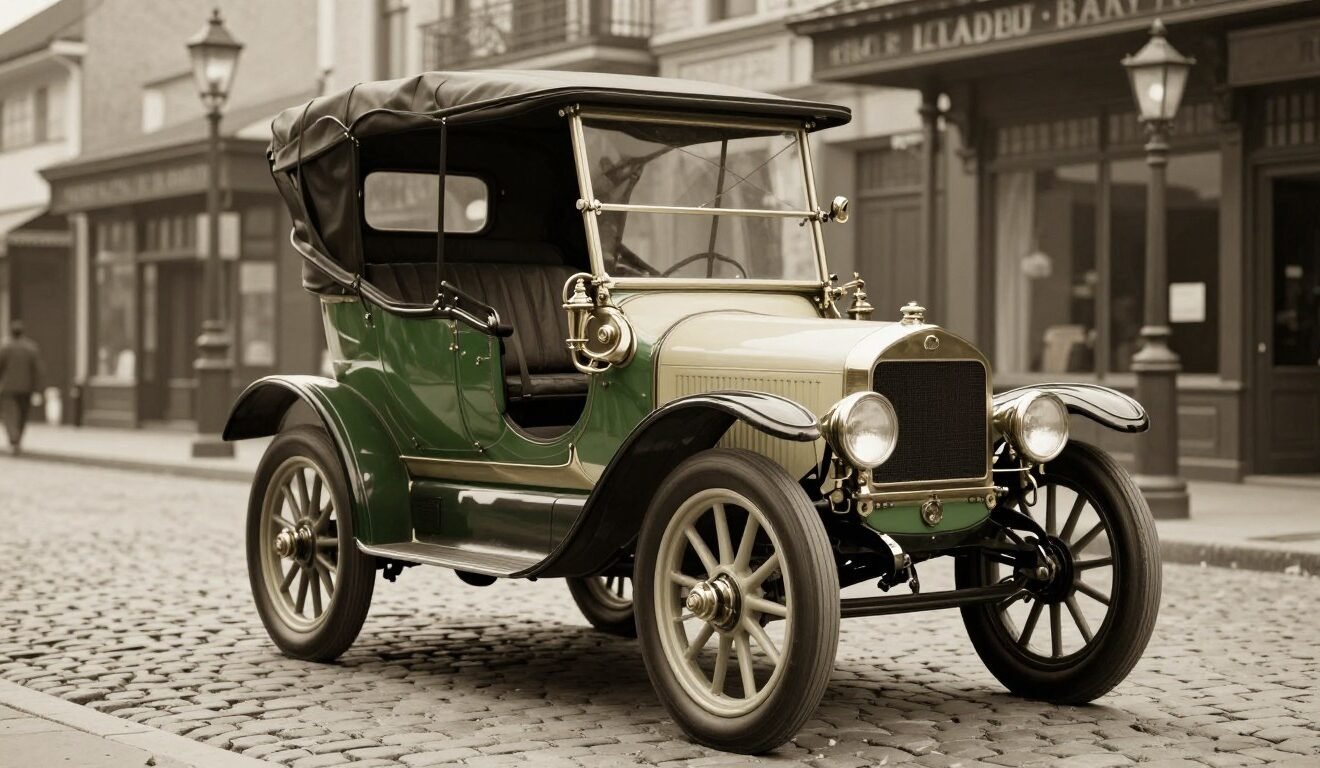
The early days of cars saw many small makers trying to lead the way. The Atlas Motor Car Company was one of them. They made the 1910 Atlas Model H, showing America’s bold tries during the brass era.
This time was full of quick changes and new ideas, with many car designs popping up. The Atlas Model H was a big step forward. It was a light car with a design common back then.

The 1910 Atlas Model H was a five or seven-passenger touring car. It had a 60 horsepower engine. This car showed the ups and downs of making cars back then.
Key Takeaways#
- The 1910 Atlas Model H was a product of the Atlas Motor Car Company, known for its innovative two-cycle engines.
- It was introduced as a touring car, capable of carrying five or seven passengers.
- The vehicle featured a 60 horsepower engine, indicative of the technological advancements of the time.
- The Atlas Model H represents a significant part of early American automotive history.
- Its production was characteristic of the brass era, a period of experimentation and innovation in the automobile industry.
The American Brass Era and the Birth of Atlas Motors#
The Brass Era lasted from the late 1800s to the early 1910s. It was a key time in American car history. Cars from this era used brass and were the first to try new car tech. Many small car makers also started during this time.

Defining the Brass Era in American Automotive History#
The Brass Era was all about new ideas and trying things out in cars. Cars from then had brass radiators and other brass parts. This led to the name “Brass Era.” It was a time when early US automakers dared to be different and explore new car tech.
The Emergence of Small Automakers in Early 1900s America#
In the early 1900s, many small car manufacturers popped up in America. Atlas Motor Company was one of them. These companies were started by people who loved to innovate and challenge the usual ways of doing things. They helped grow the early automotive industry.
Atlas Motor Company: Origins and Brief History#
Harry A. Knox started Atlas Motor Company after leaving Knox Automobile Company. Atlas was known for its cool two-cycle engines. It was one of the early car startups that made a splash back then. Even though it’s not around today, Atlas was important in the early days of cars.
The Atlas Model H: Engineering and Design of a Forgotten Pioneer#
The 1910 Atlas Model H is a key part of early 20th-century car history. It shows how cars were made back then. We’ll look at its tech, how many were made, and where it fit in the market.
Technical Characteristics of the 1910 Model H#
The 1910 Atlas Model H had a four-cylinder engine. It was a two-cycle engine, making 60 horsepower. This was a common setup for cars back then.
Engine and Drivetrain Configuration#
The Model H had a three-speed transmission. This was a big deal for its time. It used a chain or shaft drive, like many cars of the era.
Body Style and Construction Materials#
The body of the Atlas Model H was made with materials popular in the Brass Era. It was built to last and look good. The brass era engineering showed in its fine details.

Production Scale and Market Positioning#
Not many Atlas Model H cars were made. This was because small car makers faced big challenges back then. But, the Model H was seen as a strong competitor in the market.
The Model H in Context: Comparable Vehicles of the Era#
The Atlas Model H was unique among Brass Era cars. It had new early engine technology and a strong design. Its side valve engines and early carburetors showed the engineering skills of the time.
Conclusion: The Fate of Atlas and the Volatile Early Automotive Industry#
The Atlas Motor Company closed in 1911, ending a key chapter in American car history. It couldn’t keep up with better four-cycle engines, like many small car makers. This led to its downfall.
The early car world faced big hurdles, like strict laws and slow speed limits. Yet, car lovers kept exploring new speeds and power levels.
Now, we remember these old cars through antique registries and car history studies. Finding old records and knowing how many cars were made is key to keeping this history alive.
The Atlas story shows how tough the early car world was. It was a time of constant change and struggle, where only the strongest survived.