




1963 ATS Tipo 100: The Ambitious Italian GT That Challenged Ferrari and Failed
1963 ATS Tipo 100: The Ambitious Italian GT That Challenged Ferrari and Failed In the early 1960s, a group of former Ferrari insiders had a...
- 1963 ATS Tipo 100: The Ambitious Italian GT That Challenged Ferrari and Failed
- The Ferrari Rebellion: Origins of ATS
- The ATS Tipo 100: Engineering an Italian GT Challenger
- Development Challenges and Limited Production
- Fighting on Two Fronts: ATS's Divided Focus
- Conclusion: The Legacy of a Bold Italian Failure
- FAQ
- What was the ATS Tipo 100?
- Why was ATS formed?
- What were the main goals of ATS?
- What were the key engineering features of the ATS Tipo 100?
- How did the ATS Tipo 100 perform in the market?
- What challenges did ATS face in producing the Tipo 100?
- How many ATS Tipo 100 cars were produced?
- What was the outcome of ATS's efforts in Formula One and GT production?
- What is the legacy of the ATS Tipo 100?
- Is the ATS Tipo 100 considered a rare Italian exotic?
1963 ATS Tipo 100: The Ambitious Italian GT That Challenged Ferrari and Failed#
In the early 1960s, a group of former Ferrari insiders had a big dream. They wanted to create something better. The 1963 ATS Tipo 100 was their dream car, a grand tourer that could match the best in the world.

After disagreements at Ferrari, eight team members left in 1961. They started Automobili Turismo e Sport in February 1962. Their goal was to make a Grand Prix car and a Grand Touring car, showing off Italian automotive ambition.
The ATS Tipo 100 was a key part of this plan. It showed the bravery and risk of taking on big names in the car world.
Key Takeaways#
- The ATS Tipo 100 was developed by former Ferrari engineers and managers.
- It was part of Automobili Turismo e Sport’s plan to challenge Ferrari.
- The car represents a significant example of Italian automotive ambition.
- The ATS Tipo 100 is considered a rare Italian car.
- It is a classic Italian sports car with a rich history.
The Ferrari Rebellion: Origins of ATS#
A dramatic walkout at Ferrari in 1961 started a new chapter in Italian motorsports with ATS. This event was caused by internal conflicts, including Laura Ferrari’s interference in the racing team’s operations.
The Great Ferrari Walkout of 1961#
The 1961 walkout was a key moment in Ferrari’s history. Several key engineers and managers left, unhappy with the internal dynamics. Carlo Chiti and Romolo Tavoni, former Ferrari race engineer and team manager, were among them. They left due to Enzo Ferrari’s autocratic management style.
This walkout showed the deep problems within Ferrari’s leadership and operations. The departing members were skilled engineers and visionaries who had helped Ferrari succeed.

Assembling a Team of Automotive Visionaries#
After leaving Ferrari, the former employees formed ATS. They aimed to challenge their former employer. Carlo Chiti was key in shaping ATS’s technical direction, bringing Ferrari expertise. The ATS team was passionate about racing and creating high-performance vehicles.
ATS’s formation was a big step for Italian automotive startups. As a boutique automaker, ATS aimed to stand out in the competitive 1960s Italian sports car world.
The ATS Tipo 100: Engineering an Italian GT Challenger#
The ATS Tipo 100 was a front-engine grand tourer that showed off Italian design in the 1960s. It was made to compete with big names like Ferrari in the grand touring world.
Front-Engine Grand Touring Philosophy#
The ATS Tipo 100 had a front-engine layout, typical of grand touring cars back then. This design aimed for a mix of performance and handling, perfect for long trips.
This layout made engineering easier, focusing on power and comfort. It met the needs of those who loved grand tourers in the early 1960s.
Technical Specifications and Powertrain#
The Tipo 100 was powered by a V8 engine, known for its strong performance and smooth running. It had many features that made it fast and easy to handle.
| Specification | Detail |
|---|---|
| Engine Type | V8 |
| Engine Capacity | 2.5 liters |
| Top Speed | 150 mph |
| Transmission | 5-speed manual |
Italian Styling and Design Elements#
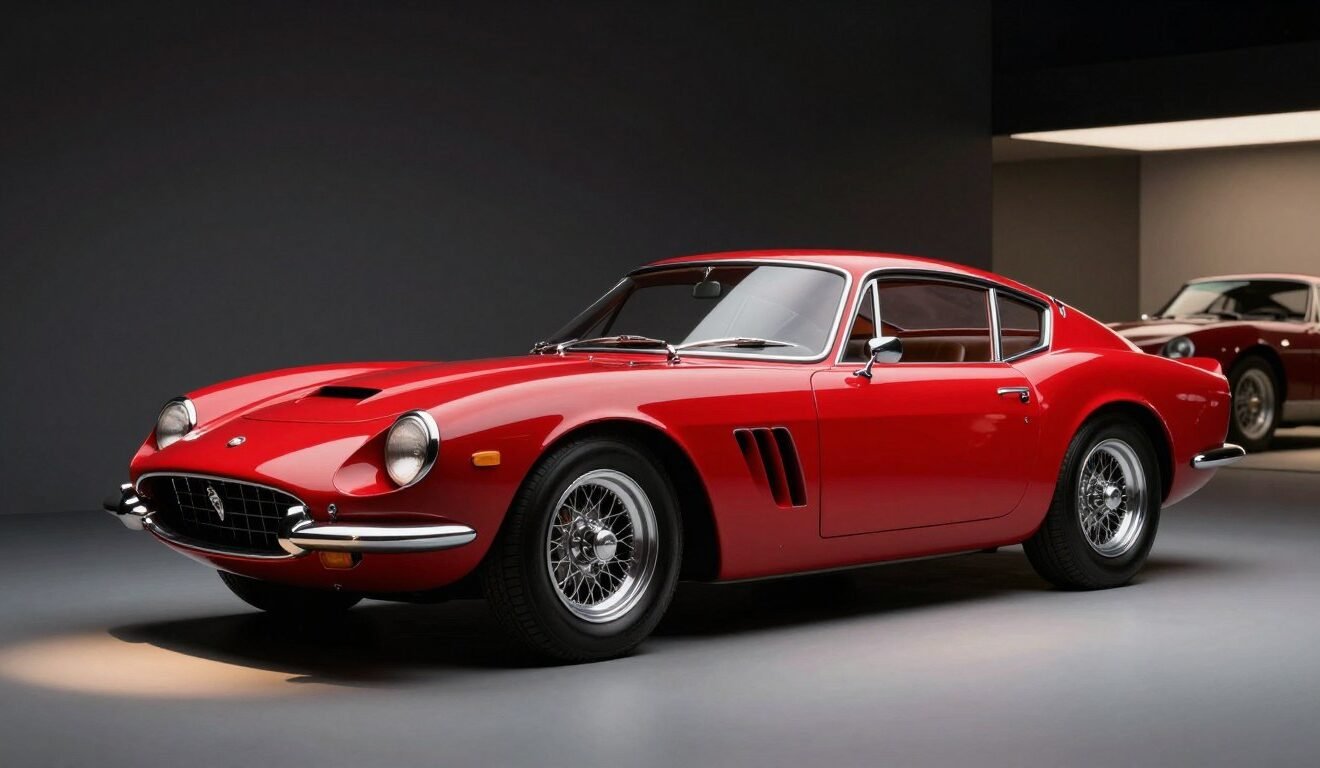
The ATS Tipo 100 had sleek Italian styling with elegant lines and classic shapes. It was designed by top Italian designers to look stunning on the road.

Its design, with curved bodywork and a unique grille, made it eye-catching. The care in its design showed the high quality of Italian coachbuilt cars back then.
Development Challenges and Limited Production#
The ATS Tipo 100 faced many hurdles during its development. Its complexity and the team’s inexperience were major challenges.
Prototype Testing and Refinement Hurdles#
Testing the ATS Tipo 100’s prototype was tough. Its front-engine design needed refinement to meet performance goals. Prototype testing issues were common, requiring many tries to get it right.

Manufacturing Constraints and Quality Control#
Manufacturing issues limited the ATS Tipo 100’s production. The company struggled with quality control because the cars were handmade. This made production slow and expensive.
The Rarity Factor: Production Numbers and Surviving Examples#
The ATS Tipo 100 is a rare collector’s item. Only a few were made, making it a limited production gt car collectors love. Today, the few that exist are highly valued for their rarity and history, classifying them as rare collector automobiles.
The ATS Tipo 100’s challenges and limited production have made it legendary. As a rare gt coupe, it remains a favorite among classic car fans and collectors.
Fighting on Two Fronts: ATS’s Divided Focus#
ATS started with big dreams, but it was torn between two goals. It wanted to make a top-notch grand tourer and also race in Formula One. This split focus was a big test for the young company.
Balancing GT Production with Formula One Aspirations#
ATS worked hard on two fronts. It aimed to make a grand tourer that could beat Ferrari and also build a Formula One car. The company’s resources were stretched too thin.
The Tipo 100 needed a lot of work in design, engineering, and testing. The Formula One car needed a strong chassis, engine, and aerodynamics. This was a huge challenge for ATS.
Choosing to do both was bold but tough on ATS’s money and people. The team, including Carlo Chiti and Phil Hill, worked hard. But, this split focus hurt the company’s finances and caused big problems.
Market Competition in the 1960s Italian Sports Car Landscape#
The 1960s Italian sports car market was very competitive. Ferrari, Maserati, and Lamborghini were already big names. ATS’s Tipo 100 faced tough competition from these brands.
The Tipo 100 was a boutique GT car made in small numbers. This made it hard to sell and compete in the market.

Financial Strain and Organizational Challenges#
ATS’s focus on both GT cars and Formula One racing was very costly. The company didn’t have enough money to do both well. This caused big problems.
As money troubles grew, ATS found it hard to stay competitive. This struggle led to the company’s downfall.
ATS’s story is a lesson in the Italian automotive rivalry of the 1960s. It shows the challenges small makers face against big brands. Despite its dreams, ATS couldn’t beat the odds. Now, its sports cars are very valuable to collectors.
Conclusion: The Legacy of a Bold Italian Failure#
The ATS Tipo 100 is a key example of Italian car design and engineering dreams. It’s a rare car that draws the attention of classic car fans in Italy and those who love European GT cars.
This car shows the bold and creative side of Italian car engineering in the 1960s. Even though it didn’t beat Ferrari, the ATS Tipo 100 is remembered as a part of Italian grand touring car history.
Now, the ATS Tipo 100 is seen as a symbol of Italian car dreams. It stands for a time of big innovation and rivalry in European GT cars. Its rarity and importance make it a treasure for collectors and a key part of Italian car failure stories.