




1953 Allstate Coupe: Sears’ Short-Lived Experiment in Selling Cars
1953 Allstate Coupe: Sears’ Short-Lived Experiment in Selling Cars In the early 1950s, Sears, Roebuck & Co. decided to sell cars. They used the Allstate...
- 1953 Allstate Coupe: Sears’ Short-Lived Experiment in Selling Cars
- The Birth of Sears' Automotive Ambition
- The Allstate Coupe: Design and Engineering
- Conclusion: The Short Road to Discontinuation
- FAQ
- What was the 1953 Allstate Coupe?
- Why did Sears decide to sell cars under the Allstate brand?
- What were the key design modifications made to the Henry J to create the Allstate Coupe?
- Where was the Allstate Coupe predominantly delivered?
- What factors contributed to the affordability of the Allstate Coupe?
- Why did the Allstate Coupe sell poorly?
- What was Sears' strategy to build consumer trust for the Allstate Coupe?
- What was the outcome of Sears' automotive experiment with the Allstate Coupe?
1953 Allstate Coupe: Sears’ Short-Lived Experiment in Selling Cars#
In the early 1950s, Sears, Roebuck & Co. decided to sell cars. They used the Allstate brand through their stores and catalog. This was a bold move.
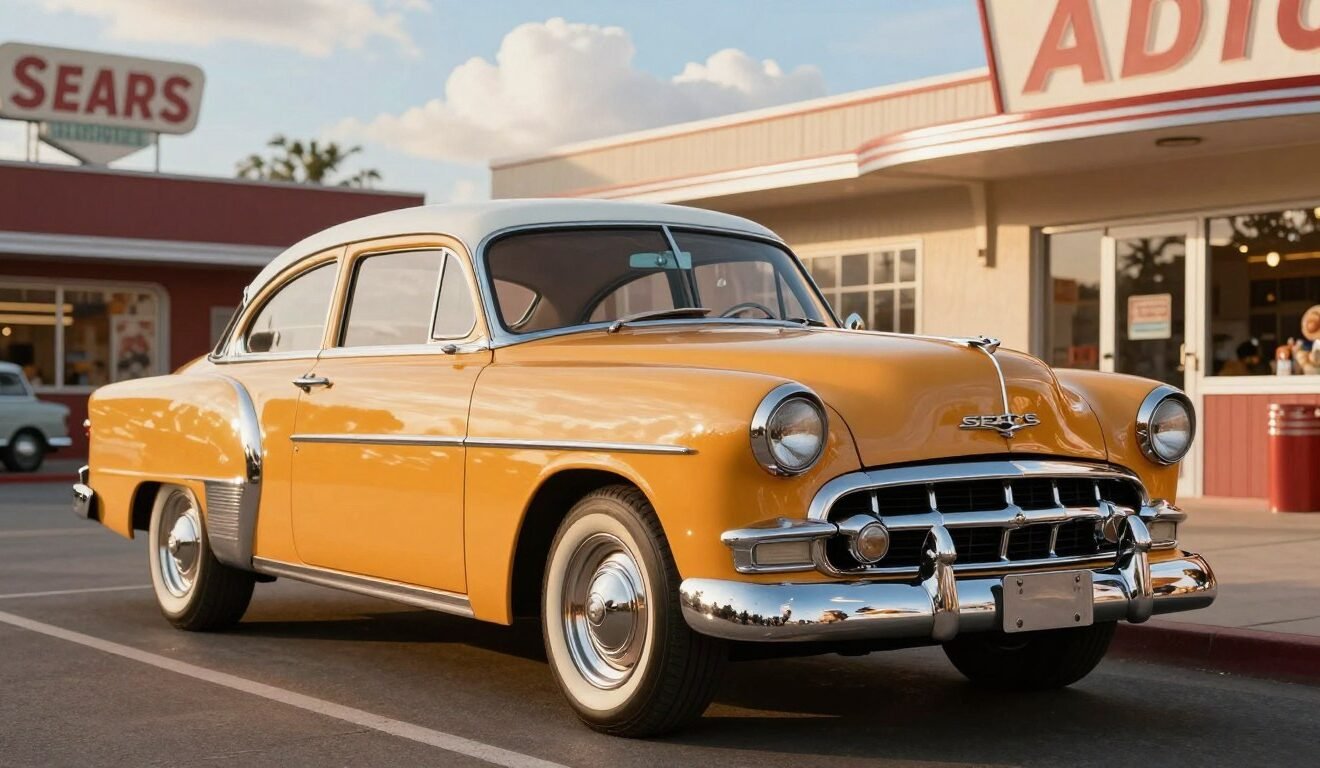
The 1953 Allstate Coupe was a compact, affordable car. It was built by Kaiser-Frazer and was like a Henry J. Sears marketed it as a budget-friendly car, using their trusted name.

Sears put the Allstate Coupe on the back of its 1952 catalog. This made it stand out in the car market. Though it didn’t last long, it’s an interesting part of American car history.
Key Takeaways#
- Sears, Roebuck & Co. sold the Allstate Coupe through its retail stores and catalog network.
- The Allstate Coupe was a rebadged Henry J, built by Kaiser-Frazer.
- The vehicle was marketed as an affordable, compact postwar car.
- The Allstate Coupe was featured on the back cover of the 1952 Sears catalog.
- This experiment represents a unique moment in American automotive history.
The Birth of Sears’ Automotive Ambition#
Sears took a big step into the car world, showing its big plans for growth. After World War II, people wanted new, cheap cars. Sears, known for selling lots of things, thought it could sell cars too, under the Allstate brand.

Sears’ Expansion into the Automotive Market#
Sears wanted to grow and sell more things. It had become a top retailer. So, it started selling the Allstate Coupe, a car for those on a budget.
The Allstate Coupe was a cheap car for those watching their money. It was small and had useful features. But, it was only sold in the South, which hurt its sales.
The Retail-to-Dealership Strategy#
Sears tried something new by selling cars in its stores. This was a bold move. But, it had problems like getting the cars to stores and not being well-known in cars.
The Allstate Coupe was hard to find outside the South. This made it hard for people to buy. The tough car market also made Sears’ car business struggle.
In the end, Sears’ car business was a big try but had too many problems. Its new way of selling cars was smart but couldn’t beat the car market’s challenges.
The Allstate Coupe: Design and Engineering#
Sears entered the car market with the Allstate Coupe, based on Kaiser-Frazer’s Henry J. This move was key for Sears as it stepped into new territory.
Kaiser-Frazer’s Henry J Foundation#
The Henry J was the base for the Allstate Coupe. Kaiser-Frazer’s work on postwar cars shaped the Henry J. Sears rebadged it as the Allstate Coupe. The Henry J was small and affordable, perfect for Sears’ car venture.
The Allstate Coupe got new looks to stand out. It had a new grille design, hub caps, and interior trim. Sears wanted a unique look while keeping the Henry J’s reliability and price.

Compact Dimensions and Practical Features#
The Allstate Coupe kept the Henry J’s small size. This made it great for city driving and saving fuel. Its design was simple and easy to maintain, appealing to those watching their budget.
- Compact dimensions for urban driving
- Cost-conscious engineering for affordability
- Practical features for everyday use
Affordability and Consumer Trust Strategy#
Sears thought its trusted name could help sell cars. It used its reputation to make the Allstate Coupe seem reliable and affordable. Sears hoped people who trusted them for home goods would also trust them for cars.
“Sears’ venture into the automotive market was a bold experiment that capitalized on the trust and reliability associated with the Sears brand.”
The Allstate Coupe was priced to attract many buyers. Sears wanted to sell a car that was both affordable and of good quality. This mix was seen as a strong point in the postwar car market.
Conclusion: The Short Road to Discontinuation#
The 1953 Allstate Coupe was Sears’ attempt to enter the car market. It ended up as a rare classic car, showing the risks of new branding in cars.
Even with Sears’ big catalog and stores, the Allstate Coupe didn’t sell well. Its price, around $1,600, made it hard to compete with other car makers. This led to its end, marking it as a forgotten car brand.
The Allstate Coupe’s tale is a unique look at American car experiments and odd branding. It shows how hard it is to start a new car brand in a crowded market. Today, it’s a small part of car history, reminding us of Sears’ short car-making try.
The story of the Allstate Coupe shows a car that tried something new with Sears’ catalog sales. But, it couldn’t beat the odds and became a piece of car history.