


1955 Alpine A106: The Lightweight
1955 Alpine A106: The Lightweight Jean Rédélé, a determined and visionary entrepreneur, founded Alpine with a passion for racing. He was just 32 years old...
- 1955 Alpine A106: The Lightweight
- The Birth of Alpine in Postwar France
- The Alpine A106: Engineering Philosophy
- Competition Heritage and Limited Production
- Legacy: Establishing Alpine's DNA
- FAQ
- What was the significance of the 1955 Alpine A106 in the history of the Alpine brand?
- How did Jean Rédélé's background influence the design of the A106?
- What was the automotive innovation landscape like in post-WWII France?
- What engineering innovations did the Alpine A106 feature?
- How did the A106 perform in competitions?
- How many Alpine A106s were produced, and what impact did this have on its appeal?
- What legacy did the Alpine A106 leave for the Alpine brand?
- How did the A106's design and engineering philosophy influence later Alpine models?
1955 Alpine A106: The Lightweight#
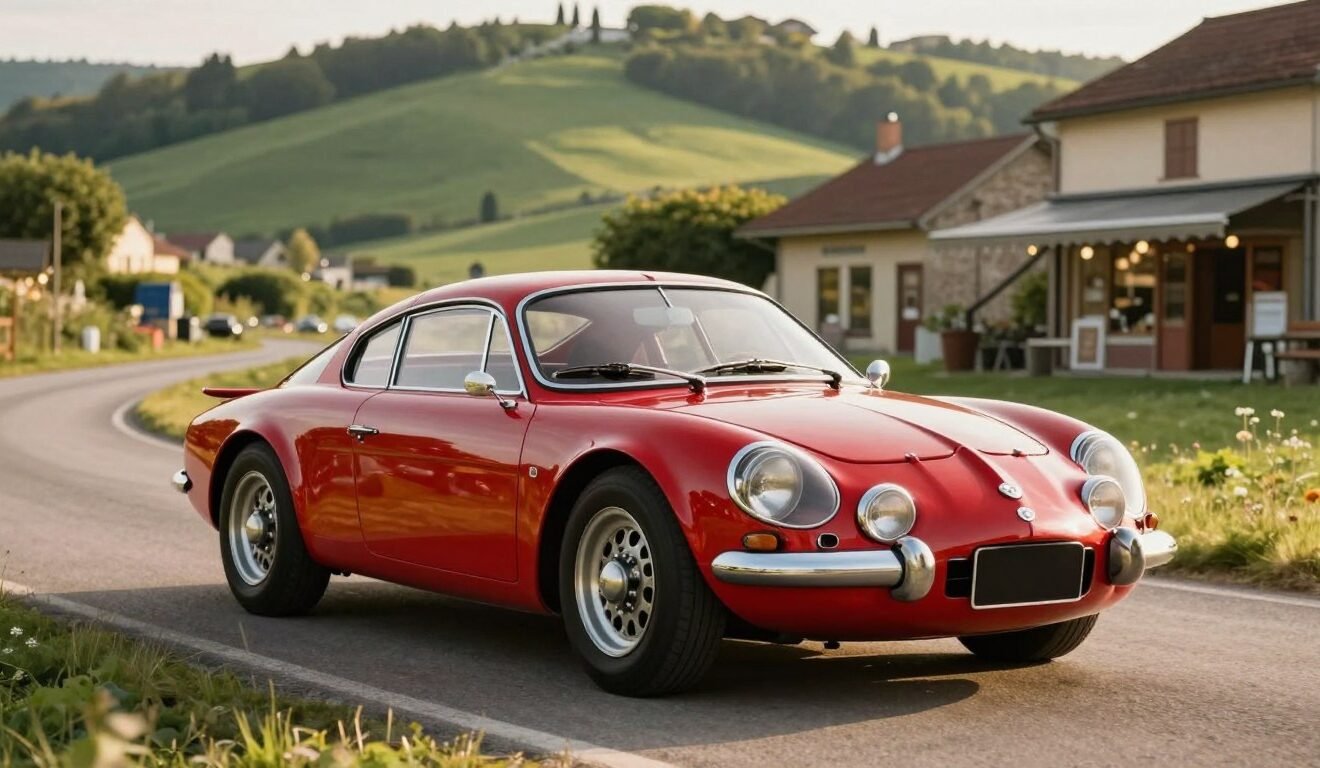
Jean Rédélé, a determined and visionary entrepreneur, founded Alpine with a passion for racing. He was just 32 years old when he created the Alpine A106, the brand’s first car. This car was born from his experience as a Renault dealer and his love for racing.

The 1955 Alpine A106 was Rédélé’s dream of a lightweight sports car. It used the Renault 4CV’s efficiency to be both agile and fast. This model showed that speed could come from balance, not just power.
Key Takeaways#
- Jean Rédélé founded Alpine, driven by his passion for racing.
- The 1955 Alpine A106 was the brand’s first production model.
- Rédélé’s experience with the Renault 4CV influenced the A106’s design.
- The A106 was designed to be lightweight and agile.
- Alpine’s success was rooted in Rédélé’s vision for a balanced, efficient sports car.
The Birth of Alpine in Postwar France#
After World War II, the French economy was rebuilding. Entrepreneurs like Jean Rédélé saw chances to innovate in cars. The war’s damage opened up space for new ideas and tech.

Jean Rédélé: From Racer to Visionary Founder#
Jean Rédélé was a young, ambitious rally driver by 1950. He had won several races with the Renault 4CV. This success inspired him to create a sports car that could win big.
Rédélé wanted to do more than just race. He aimed to make a car that was both innovative and competitive. He used the 4CV’s mechanics to build something special.
Automotive Innovation in Post-WWII France#
Post-WWII France was all about car innovation. The focus was on making cars that were both affordable and fast. Small, quick sports cars like the Alpine A106 thrived in this time.
During this era, small car makers like Alpine became big names. They used Renault parts to make cars that were light and quick. The key was:
- Using Renault parts to save money
- Making cars light for better speed
- Creating cars that were fun to drive
This time of car innovation helped shape Alpine. It also changed the French sports car scene in the 1950s.
The Alpine A106: Engineering Philosophy#
The Alpine A106 was built with a focus on being light and using new materials. This made it fast and easy to handle.
Renault 4CV Underpinnings and Mechanicals#
The Alpine A106 used the Renault 4CV’s parts to make a sporty car. Alpine made it lighter and faster by using the 4CV’s tech. This let Alpine work on the A106’s design and performance.
Revolutionary Fiberglass Body Construction#
The Alpine A106 had a fiberglass body made by the Chappe brothers. This material made the car very light but strong. Its body made the A106 look unique and different from other cars.

Rear-Engine Layout and Handling Precision#
The Alpine A106 had a rear-engine layout, like the Renault 4CV. This made it very responsive and agile. The design made the A106 a pleasure to drive on any road.
Automotive historians say the Alpine A106 was a pioneer in sports cars. It was light, used new materials, and had a rear-engine layout. This shows its innovative approach to speed and handling.
Competition Heritage and Limited Production#
The Alpine A106’s racing history shows its innovative design and engineering. It competed in rallies and hill climbs, proving its worth. This helped Alpine become a key player in racing.
Rally and Hill Climb Successes#
The A106 did well in rallies and hill climbs, showing its agility and speed. Its rear-engine layout and lightweight fiberglass body gave it an edge. It had many successes, including:
- It did well in famous rallies, showing its durability and handling.
- It also did great in hill climb events, thanks to its power-to-weight ratio.

Exclusive Production Numbers and Variants#
The Alpine A106 was made in small numbers, making it rare and sought after. Its different variants, with unique engine and aerodynamic features, added to its charm. This limited production made the A106 a limited production classic, loved by vintage racing car fans.
Legacy: Establishing Alpine’s DNA#
The Alpine A106 was key in shaping Alpine’s identity. It set the stage for the brand’s future wins. It focused on lightness, precise handling, and motorsport success.
This sports car showed off fiberglass and rear-engine designs. It also proved Alpine’s dedication to racing. The A106’s wins in rallies and hill climbs boosted Alpine’s motorsport image.
The A106’s legacy is clear in Alpine’s ongoing quest for iconic sports cars. It’s a pioneering model in European car history. It stands as a symbol of Alpine’s heritage and its aim to make cars that shine on the road and track.
The A106’s influence on Alpine’s identity is deep. It guided the development of future models. It also solidified Alpine’s commitment to motorsport and innovative design.