




1923 Amilcar CG Special: France’s Lightweight Giant-Killer of the 1920s
1923 Amilcar CG Special: France’s Lightweight Giant-Killer of the 1920s In the roaring twenties, big engines ruled the roads. But smart design and light build...
- 1923 Amilcar CG Special: France’s Lightweight Giant-Killer of the 1920s
- Amilcar's Rise in French Motorsport
- The Amilcar CG Special: Engineering for Victory
- David vs. Goliath: Racing Success Against the Odds
- Conclusion: The Enduring Legacy of a French Racing Icon
- FAQ
- What is the Amilcar CG Special?
- Who founded Amilcar and what were its founding principles?
- What was Amilcar's small-displacement philosophy?
- What made the Amilcar CG Special a successful racing car?
- What were some of the Amilcar CG Special's notable racing achievements?
- How did the Amilcar CG Special contribute to Amilcar's reputation?
- What is the Amilcar CG Special's significance in motorsport history?
- What is the legacy of the Amilcar brand?
1923 Amilcar CG Special: France’s Lightweight Giant-Killer of the 1920s#
In the roaring twenties, big engines ruled the roads. But smart design and light build changed everything. The 1923 Amilcar CG Special showed how to beat the big guys, becoming a legend in racing.

Andre Morel and engineer Edmond Moyet started Amilcar with money from Emile Akar and Joseph Lamy. They quickly became known for making fast cyclecars and voiturettes. Their first car, the CC, came out in 1921. It was light to save on taxes, paving the way for the CG Special’s success.
Key Takeaways#
- The 1923 Amilcar CG Special was a pioneering lightweight race car.
- Amilcar’s founders leveraged the benefits of low weight and small displacement.
- The company’s early models, like the CC, were designed with tax efficiency in mind.
- Amilcar’s innovative approach helped define the golden age of lightweight motorsport.
- The CG Special’s success was rooted in its intelligent engineering and low weight.
Amilcar’s Rise in French Motorsport#
Amilcar focused on making cars light and using small engines. This strategy helped it stand out in early 20th-century racing. It found a special place in the French motorsport world.
The Birth of a Performance Brand#
The Amilcar CC was introduced in 1921. It had a 904cc engine. This car showed Amilcar’s dedication to speed and lightness, setting the stage for its racing wins.
Small-Displacement Philosophy#
Choosing small engines was a smart move for Amilcar. It let the company compete well against bigger cars. In 1922, Andre Morel won the 1100cc Class Championship of France. This proved that smaller engines could win big races.
| Model | Engine Size | Notable Achievement |
|---|---|---|
| Amilcar CC | 904cc | Introduction of lightweight design |
| Amilcar (Andre Morel) | 1100cc | 1100cc Class Champion of France, 1922 |

The Amilcar CG Special: Engineering for Victory#
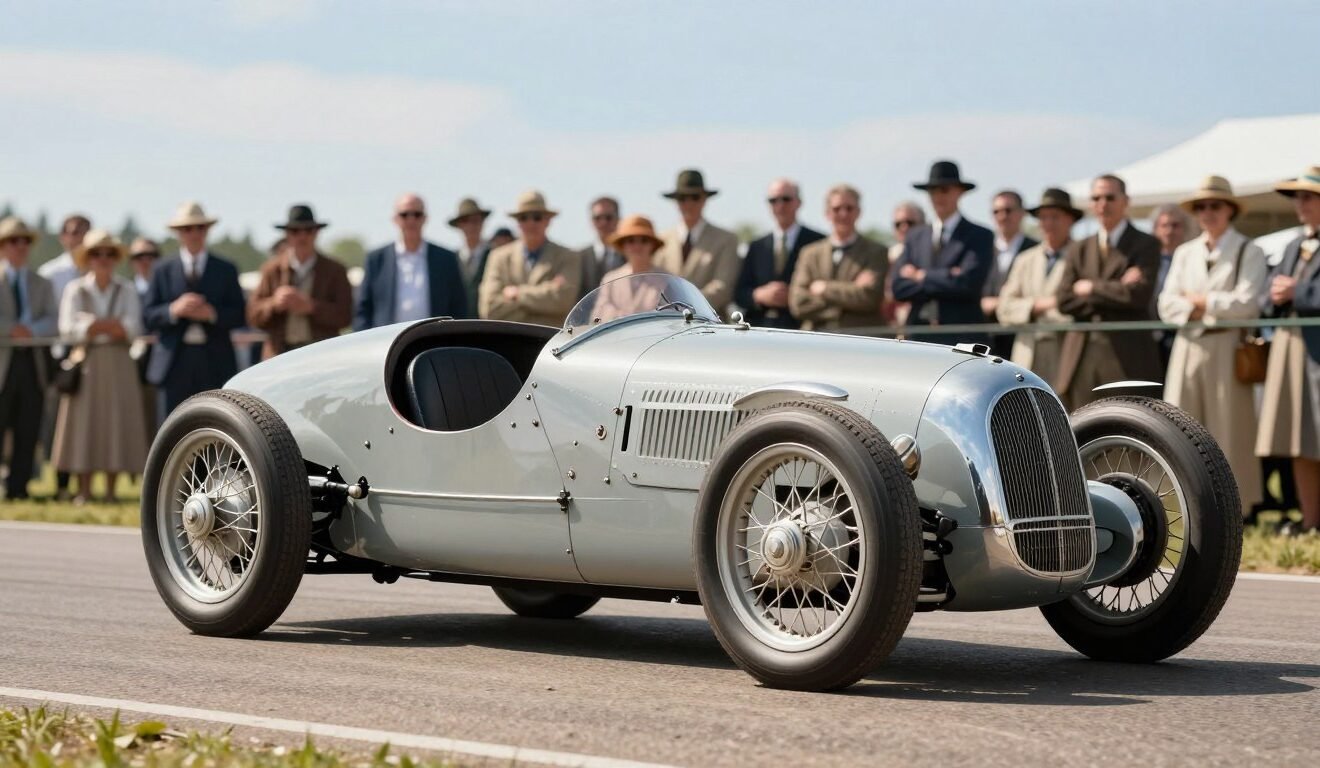
The Amilcar CG Special was a racing machine that evolved from the CG models. It focused on being lightweight and having high-revving performance. This showed Amilcar’s dedication to making vehicles that could compete with bigger, more powerful ones.
Chassis and Lightweight Construction#
The Amilcar CG Special’s chassis was made to be both rigid and light. This was key for its racing performance. The rigid design helped keep the suspension and bodywork stable.
Narrow Bodywork Design#
The CG Special had narrow bodywork. This design cut down on aerodynamic drag, giving it an edge on the track. Its streamlined body was a sign of Amilcar’s innovative thinking.
Weight Reduction Strategies#
Amilcar used weight reduction strategies in the CG Special. They used light materials and cut down on unnecessary parts. This made the car faster and more agile than others.
| Feature | Benefit |
|---|---|
| Rigid Chassis | Improved Handling |
| Narrow Bodywork | Reduced Drag |
| Lightweight Materials | Enhanced Acceleration |
Engine and Performance Characteristics#
The Amilcar CG Special’s engine was its heart. It was a high-revving engine, showing Amilcar’s focus on performance. The engine was efficient and powerful, despite its size.
High-Revving Power Delivery#
The CG Special’s engine could deliver high-revving power. This let it compete with bigger engines. It was tuned for maximum efficiency and power.
Efficiency Over Raw Horsepower#
Amilcar aimed for efficiency in the CG Special’s engine. They knew power wasn’t everything in racing. This focus on efficiency helped the car’s overall performance and handling.

Competition-Focused Suspension and Handling#
The Amilcar CG Special’s suspension system was made for competition. It balanced comfort and performance. This made the car great on the track and easy to drive on the road.
The CG Special’s handling was improved by its competition-focused suspension. This let drivers push the car hard with confidence. It was a top choice for drivers in 1920s motorsport.
David vs. Goliath: Racing Success Against the Odds#
In the world of motorsport, the Amilcar CG Special stood out. It was a small, lightweight car facing big, powerful opponents. Yet, it won many races.

Voiturette Racing Triumphs#
The Amilcar CG Special shone in voiturette racing. This class valued quickness and control over brute strength. Its light build and sharp handling let it beat bigger cars, winning many races.
- Notable wins in major voiturette racing events
- Consistent podium finishes against more powerful opponents
- Demonstrated the effectiveness of its design philosophy
Hill Climb Dominance#
The Amilcar CG Special also excelled in hill climb racing. Its balance of power and lightness made it perfect for steep climbs. Quick starts and tight control were key here.
Key factors in its hill climb success:
- Exceptional acceleration
- Precise handling characteristics
- Strategic gearing for optimal performance
1920s European Motorsport Context#
The Amilcar CG Special’s wins happened in the exciting 1920s motorsport scene. This time saw big leaps in car tech, with companies racing to show off their latest.
Its victories showed how smart design, light build, and clever engineering could beat bigger, stronger cars.
Conclusion: The Enduring Legacy of a French Racing Icon#
The Amilcar CG Special is a legend in French motorsport. It’s known as the “Bugatti for the common man” because of its light build and sporty look. This classic car is a key part of the Amilcar brand’s history.
This car was a star in prewar racing. Its wins in voiturette racing and hill climbs show the skill of French car makers in the 1920s. It’s a big inspiration for fans of Amilcar cars.
The Amilcar CG Special is more than just a racing car. It marks a big step in making cars lighter and faster. Its design shows the creativity of its makers. It’s a celebrated symbol of prewar racing.