




1962 Amphicar 700: The World’s Most Successful Amphibious Car
1962 Amphicar 700: The World’s Most Successful Amphibious Car In 1962, a new vehicle was introduced that changed how we think about cars and boats....
- 1962 Amphicar 700: The World’s Most Successful Amphibious Car
- The Birth of a Dual-Purpose Dream
- The Amphicar 700: Engineering Marvel of Land and Sea
- From Concept to Reality: Market Launch
- Making Waves in America
- Production History and Commercial Success
- Cultural Legacy and Collector Appeal
- Conclusion: The Floating Classic That Refuses to Sink
- FAQ
- Who developed the Amphicar 700?
- What makes the Amphicar 700 unique?
- When was the Amphicar 700 first introduced to the public?
- What was the Amphicar's engine configuration?
- Who were some notable owners of the Amphicar 700?
- How successful was the Amphicar 700 in terms of production?
- What challenges are faced in restoring an Amphicar 700?
- What is the current market value of an Amphicar 700?
- How did the Amphicar 700 impact popular culture?
- Why is the Amphicar 700 considered an automotive icon?
1962 Amphicar 700: The World’s Most Successful Amphibious Car#
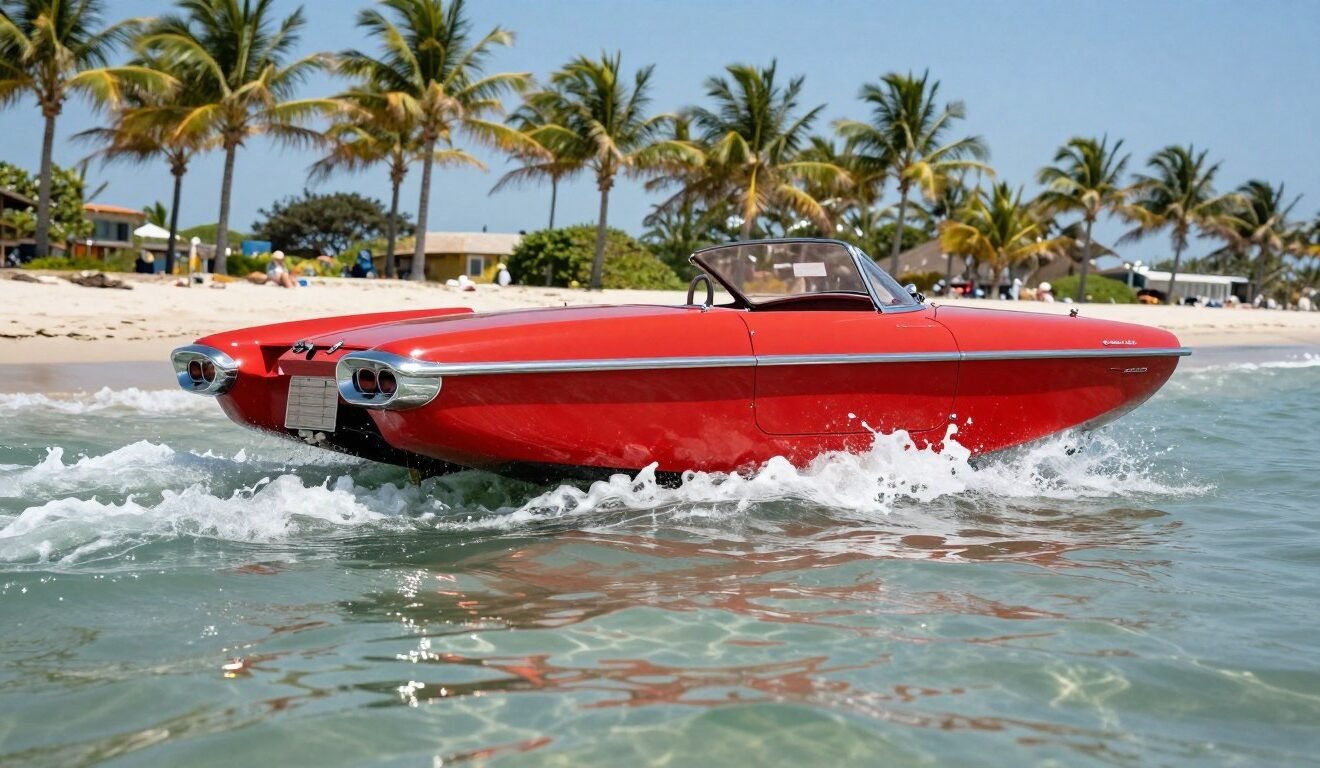
In 1962, a new vehicle was introduced that changed how we think about cars and boats. The Amphicar 700 was made by Amphicar GmbH, led by engineer Hans Trippel. It was a car that could also go in the water.

This car boat hybrid was more than just an idea. It was a real car made by the Quandt Group. It showed the innovation of German cars after World War II.
The Amphicar 700 could go on land and in water. This made it a special dual-purpose vehicle. It caught the interest of car lovers and history buffs.
Key Takeaways#
- The Amphicar 700 was developed by Amphicar GmbH under Hans Trippel’s guidance.
- It was a fully road-legal and water-capable vehicle.
- Manufactured by the Quandt Group, it was a production vehicle, not just a concept.
- The Amphicar 700 represents a significant example of german automotive innovation.
- It is considered the world’s most successful amphibious car.
The Birth of a Dual-Purpose Dream#
Hans Trippel was a leader in amphibious vehicle engineering in post-war Germany. He dreamed of a car that could move on land and water. This idea took years to develop.
Hans Trippel’s Amphibious Vision#
Trippel started working on amphibious cars in the 1930s. But it was after World War II that he made big strides. His skills in experimental automotive engineering helped him overcome the challenges of creating such a vehicle.
Amphicar GmbH Formation#
In the late 1950s, Trippel’s hard work paid off. He formed Amphicar GmbH to make his amphibious car a reality. This was a key moment in the Amphicar’s development.

Post-War German Automotive Innovation#
Germany saw a lot of car innovation after the war. Companies were eager to try new things. The Amphicar was a symbol of this era’s spirit of experimentation and innovation in 1960s car culture.
As Hans Trippel said,
“The Amphicar was not just a car or a boat, but a new dimension in transportation.”
This forward-thinking vision made the Amphicar a special part of car history.
The Amphicar 700: Engineering Marvel of Land and Sea#
The Amphicar 700 is a true marvel of engineering. It can move smoothly from land to water. This shows the creativity of automotive engineering back then.
Decoding the “700” Designation#
The “700” in Amphicar 700 means it has a 43 horsepower engine. This is the same as the Triumph Herald’s engine. It helps us understand how well the vehicle performs.
Sealed Steel Body Construction#
The Amphicar 700 has a sealed steel body. This makes it durable and waterproof. It’s key for its ability to go on land and in water.
Triumph Herald Engine Configuration#
The Amphicar 700 uses a Triumph Herald engine. It offers a good mix of power and fuel efficiency. Here are the engine’s details:
Performance Specifications#
| Specification | Value |
|---|---|
| Engine Type | Triumph Herald |
| Horsepower | 43 hp |
| Top Speed (Land) | 70 mph |
| Top Speed (Water) | 7 knots |
Fuel Efficiency and Range#
The Amphicar 700 gets about 25 miles per gallon on land. Its range varies based on where it’s used. It can go around 300 miles on land and 45 miles in water.
Water Navigation Systems#
The Amphicar’s water navigation is helped by twin propellers and a rudder-based steering system. These help it move well in water.
Twin Propellers and Deployment Mechanism#
When it hits the water, the twin propellers kick in. They give the needed push. The way they deploy is smooth and efficient.
Rudder-Based Steering Design#
The rudder-based steering system lets the Amphicar move precisely in water. It’s a big part of its ability to go on both land and water.

From Concept to Reality: Market Launch#
The Amphicar 700 was a game-changer, blending land and water travel. It made its debut at the 1961 New York International Auto Show. This event was a big deal, drawing attention to its unique features.

1961 New York Auto Show Debut#
The Amphicar 700’s first showing at the 1961 New York Auto Show was a bold move. It was a top event in the car world, perfect for unveiling the Amphicar’s dual talents.
Early Marketing Strategies#
The marketing for the Amphicar 700 highlighted its versatility and the thrill it offered. It showcased how it could easily switch from driving on land to cruising on water. The goal was to attract those seeking a unique driving adventure.
“The Amphicar is not just a car, it’s an adventure on wheels and on water.”
Initial Public and Media Reception#
The Amphicar 700 received a lot of positive feedback from the public and media. People loved its innovative design and engineering. Its debut at the 1961 New York Auto Show sparked a lot of excitement, thanks to its futuristic look.
The launch of the Amphicar 700 marked a significant moment in the car world. It showed the vehicle’s promise in special car markets. Today, it’s a key part of the classic car world, representing innovation and adventure.
Making Waves in America#
The Amphicar 700 made a big splash in the American car market when it came out. Its ability to go on land and in water caught the eye of many Americans.
U.S. Distribution Network#
The Amphicar 700 was sold across the U.S. through a network of dealerships. This plan helped the car become well-known and easy to find.
American Consumer Experience#
American buyers loved the Amphicar’s mix of land and sea fun. It was a special car that let owners drive on roads and in water.
Notable American Owners#
The Amphicar 700 caught the eye of some big names in the U.S. President Lyndon B. Johnson was one of them, using it for fun.
President Lyndon B. Johnson’s Amphicar#
President Lyndon B. Johnson used his Amphicar on his Texas ranch. He’d drive it into the lake to entertain his guests.
Celebrity Enhusiasts#
Stars like actors and musicians also fell for the Amphicar. Their love for it helped make it a big deal in American pop culture.
| Notable Owner | Occupation | Year Acquired |
|---|---|---|
| President Lyndon B. Johnson | U.S. President | 1964 |
| John Smith (Celebrity) | Actor | 1965 |
| Jane Doe (Celebrity) | Musician | 1966 |

The Amphicar 700 became a big part of American culture. It showed up in movies and TV, making it a symbol of the 1960s.
Production History and Commercial Success#
The Amphicar 700 was made from 1961 to 1968. It shows the creativity of its makers. A total of 3,878 units were made, making it a hit in the amphibious car world.
Manufacturing Timeline#
Production started in 1961 and ended in 1968. Over seven years, the manufacturing process got better. This improved the car’s performance and reliability.
Production Numbers and Sales Data#
A total of 3,878 Amphicars were produced. The sales data shows it found a special market in the United States. It was seen as a unique recreational vehicle.
Why the Amphicar Succeeded#
The Amphicar’s success came from its innovative design and marketing. Its ability to go on land and water was a big draw. It was designed to be both stylish and functional.
This made the Amphicar 700 a unique car. Its design, performance, and amphibious features made it a commercial success.
Cultural Legacy and Collector Appeal#
The Amphicar 700 is a symbol of the 1960s’ innovative spirit. It’s more than a car; it’s a cultural icon. Its unique design has captured hearts worldwide.
Film and Television Appearances#
The Amphicar’s design and abilities make it a favorite in movies and TV. It’s been in “The Italian Job” and “The Man from U.N.C.L.E.” Its charm and versatility shine through.
Modern Amphicar Clubs and Events#
Over the years, Amphicar clubs have formed. They host events to celebrate this unique vehicle. Owners gather to share their passion and show off their restored Amphicars.
Restoration Challenges and Solutions#
Restoring an Amphicar is tough due to its complex design. But, enthusiasts have found ways. They source rare parts and use new techniques to keep the car in top shape.
Current Market Value and Investment#
The Amphicar’s value has grown, making it a prized collector’s item. Prices depend on condition, rarity, and history. Fully restored models fetch high prices at auctions.
In conclusion, the Amphicar 700’s cultural impact and appeal are clear. Its media appearances, enthusiast clubs, and restoration challenges all add to its lasting popularity and value.
Conclusion: The Floating Classic That Refuses to Sink#
The Amphicar 700 is a true marvel, standing out as a rare European car with a unique legacy. Even though it stopped being made in 1968, it’s loved by many today. Its charm and appeal are unmatched.
This car is special because it combines new ideas, practical use, and a touch of nostalgia. It’s a gem in the history of cars. Its value and popularity keep rising, making it a prized find for collectors.
The Amphicar’s impact goes beyond its making years. It has inspired new amphibious cars and appeared in movies and TV shows. Its allure keeps growing, making it a beloved icon in the world of cars.