




1925 Bugatti Type 35: The Grand Prix Legend That Defined Racing Elegance and Engineering Precision
1925 Bugatti Type 35: The Grand Prix Legend That Defined Racing Elegance and Engineering Precision The 1925 Bugatti Type 35 is a legendary Grand Prix...
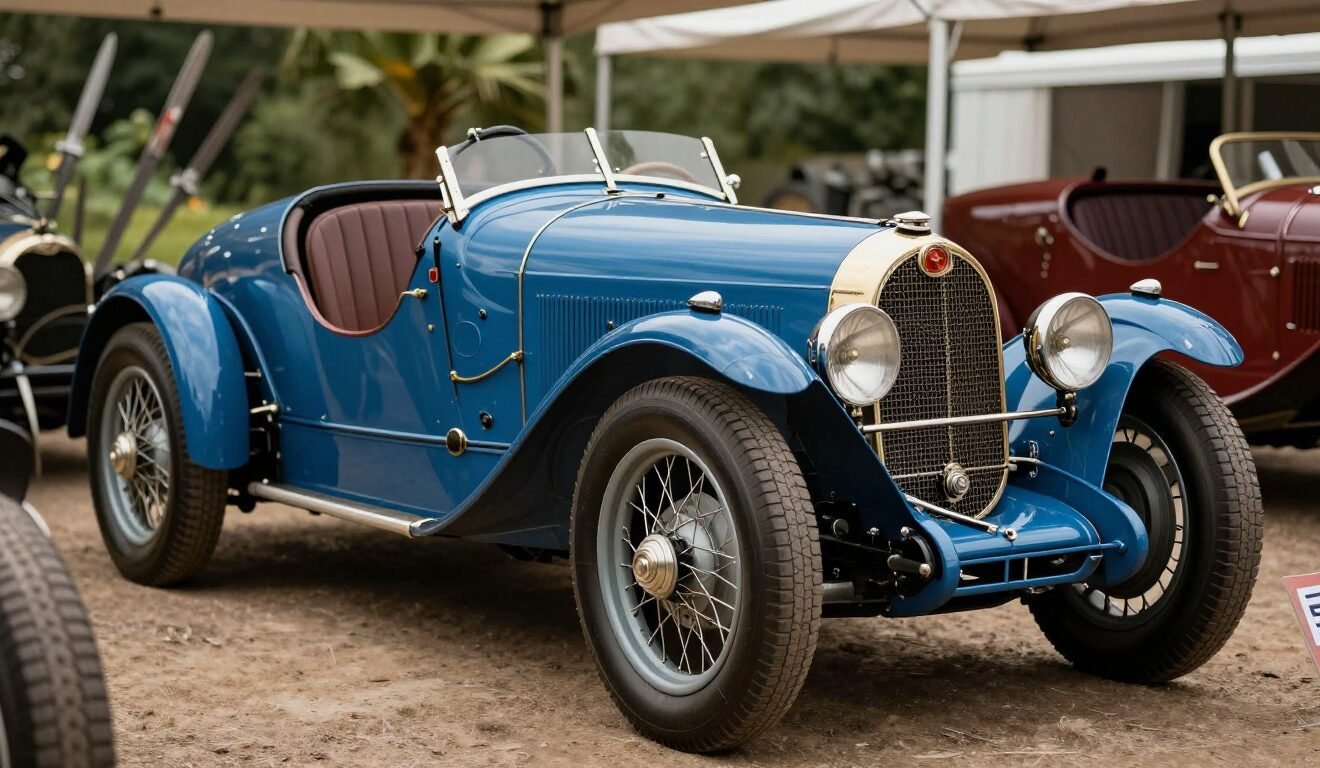
- 1925 Bugatti Type 35: The Grand Prix Legend That Defined Racing Elegance and Engineering Precision
- The Birth of a Racing Icon
- The 1920s Grand Prix Racing Era
- Ettore Bugatti's Engineering Philosophy
- The 1925 Bugatti Type 35: Technical Masterpiece
- Engineering Innovations That Defined an Era
- The Heart of the Beast: Engine and Performance
- Type 35 Variants and Specifications
- Unmatched Racing Dominance
- The Privateer's Dream Machine
- Collector Status and Preservation
- Conclusion: The Enduring Legend of the Bugatti Type 35
- FAQ
- What is the significance of the 1925 Bugatti Type 35 in Grand Prix racing?
- Who designed the Bugatti Type 35, and what was his vision?
- What were the key engineering innovations of the Bugatti Type 35?
- What type of engine did the Bugatti Type 35 have, and what were its performance characteristics?
- How many variants of the Bugatti Type 35 were produced, and what were their differences?
- What was the racing record of the Bugatti Type 35, and what were its major achievements?
- Why was the Bugatti Type 35 a popular choice among privateer drivers?
- What is the collector status of the Bugatti Type 35, and what are the challenges in preserving it?
- What is the legacy of the Bugatti Type 35 in the world of motorsport?
1925 Bugatti Type 35: The Grand Prix Legend That Defined Racing Elegance and Engineering Precision#
The 1925 Bugatti Type 35 is a legendary Grand Prix car. It showed off racing elegance and engineering skill in the 1920s. Introduced in 1924, it was known for its lightweight design and top-notch performance.

The Bugatti Type 35 had a 2.0-liter inline-8 engine that made 90 hp. This made it a tough opponent in races. Its light body and low center of gravity set a high standard for reliability and driver confidence.
The Grand Prix legend status of the Type 35 shows its groundbreaking design and racing success. It set the tone for Grand Prix racing in the 1920s.
Key Takeaways#
- The Bugatti Type 35 was unveiled in 1924 with a 2.0-liter inline-8 engine.
- It produced 90 hp, making it a strong competitor.
- Its lightweight chassis contributed to its success.
- The Type 35 is considered a benchmark for reliability and driver confidence.
- It defined the spirit of Grand Prix racing in the 1920s.
The Birth of a Racing Icon#
The 1925 Bugatti Type 35 was more than a racing car. It was a masterpiece created by Ettore Bugatti. He combined art and technology in a unique way. This philosophy guided the Type 35’s development.
The Vision of Ettore Bugatti#
Ettore Bugatti wanted the Type 35 to stand out in both performance and design. He thought a racing car should be a work of art. It should show Bugatti’s elegance and precision.
From Drawing Board to Racetrack#
The Type 35’s development included many innovative solutions. Its lightweight chassis was key. It was designed to be strong yet light. This, along with a powerful inline-8 engine, made it a top competitor.

The Type 35’s Debut#
The Bugatti Type 35 debuted in Grand Prix racing. It quickly became known for its speed, agility, and design. Its success on the track proved Ettore Bugatti’s vision. It became a symbol of 1920s automotive engineering.
| Feature | Description | Benefit |
|---|---|---|
| Lightweight Chassis | Minimized weight while maximizing strength | Improved speed and agility |
| Inline-8 Engine | Powerful engine design | Enhanced performance |
| Aesthetic Design | Elegant and precise design elements | Visual appeal and brand identity |
The 1920s Grand Prix Racing Era#
As the roaring twenties began, Grand Prix racing became a top motorsport event. It attracted the best manufacturers and drivers. This time was key in shaping motorsport’s future, without a formal Formula 1 structure.
Pre-Formula 1 Racing Context#
In the 1920s, Grand Prix racing was just starting. Races were held on public roads and special circuits in Europe. Without a single governing body, rules varied, making racing both diverse and chaotic.
Manufacturers played a key role in Grand Prix racing’s growth. Companies like Bugatti, Alfa Romeo, and Mercedes-Benz competed to show off their engineering skills and racing history.
European Racing Circuits of the 1920s#
European circuits were the heart of Grand Prix racing in the 1920s. Places like the Circuit de la Sarthe in France and the Monza Circuit in Italy hosted major races. These events drew big crowds and global attention.
| Circuit | Location | Notable Feature |
|---|---|---|
| Circuit de la Sarthe | France | 24 Hours of Le Mans |
| Monza Circuit | Italy | High-speed layout |
| Brooklands Circuit | UK | Banked oval sections |
Competitive Landscape#
The 1920s Grand Prix racing was filled with fierce competition among manufacturers. Bugatti’s Type 35 was a top contender, but Alfa Romeo and Mercedes-Benz were also major players.

This era was a mix of rules and freedom. It led to creative engineering and a rich racing history. This history continues to shape motorsport today.
Ettore Bugatti’s Engineering Philosophy#
Ettore Bugatti was all about precision engineering. He didn’t just want to make a fast car. He aimed to create something beautiful and functional.

Precision as a Guiding Principle#
Ettore Bugatti thought precision was key in car engineering. He paid close attention to every small detail. This made the Type 35 fast, reliable, and durable.
The Type 35’s engine design showed Bugatti’s focus on precision. Every part was crafted with care. This led to an engine that performed exceptionally well.
Functional Art in Automotive Design#
Bugatti saw cars as functional art. He thought they should look good and work well. The Type 35’s design was a mix of beauty and function.
The Type 35’s design wasn’t just for looks. It was also aerodynamically efficient. Its streamlined body helped it go faster.
The Bugatti Approach to Performance#
Ettore Bugatti wanted cars that were fast and agile. The Type 35 was light and had a strong engine. It was a top competitor on the racing circuit.
| Feature | Description | Benefit |
|---|---|---|
| Precision Engineering | Meticulous attention to detail in every component | Reliability and durability |
| Functional Art | Blend of form and function in design | Aesthetic appeal and aerodynamic efficiency |
| Lightweight Design | Use of lightweight materials in construction | Improved power-to-weight ratio and agility |
Ettore Bugatti’s philosophy, shown in the Type 35, raised the bar for cars. Its precision, beauty, and performance made it a racing legend.
The 1925 Bugatti Type 35: Technical Masterpiece#
Ettore Bugatti aimed to make a racing car that would win on Grand Prix circuits. The 1925 Bugatti Type 35 was a marvel, mixing new design and precise engineering.

Design Philosophy#
The Bugatti Type 35 aimed for a balance between being light and fast. Ettore Bugatti wanted cars that were not just quick but also beautiful. The Type 35’s design showed this, focusing on being light yet strong.
The Type 35’s lightweight design was key to its racing success. Bugatti used new materials and methods to make a car that was both tough and quick.
Chassis and Body Construction#
The Type 35’s chassis and body were vital for its performance. It had a ladder-frame chassis for strength and stability without adding too much weight. The body was made from light materials, helping the car’s power-to-weight ratio.
- The chassis was both strong and light.
- Advanced materials were used to keep it light.
- The bodywork was designed for better aerodynamics.
Lightweight Design Principles#
The Type 35’s light design came from several key ideas. It used strong, yet light materials and a smart design. Every detail was checked to remove extra weight. This made the car fast and easy to handle.
- Use of high-strength, low-alloy materials.
- Optimized structural design for minimal weight.
- Attention to detail to eliminate unnecessary components.
The 1925 Bugatti Type 35 was a true marvel of its time. Its design and technical specs made it a standout performer on Grand Prix circuits.
Engineering Innovations That Defined an Era#
Ettore Bugatti had a clear vision for the Type 35. He wanted to change Grand Prix racing with new engineering solutions. The Type 35 led in car innovation in the 1920s, improving performance and handling.

The Revolutionary Hollow Front Axle#
The Bugatti Type 35’s hollow front axle was a game-changer. It made the car lighter and stronger. This design showed Bugatti’s focus on combining function and creativity.
Automotive historians say, “The Type 35’s hollow front axle was a bold move. It showed Bugatti’s dedication to automotive engineering innovation.”
Integrated Alloy Wheels and Brake Drums#
The Type 35 also had alloy wheels and brake drums cast together. This design improved heat dissipation and reduced weight. It made the car’s brakes better and handling more agile.
Racing drivers of the time loved the Type 35. They said it had “exceptional braking capabilities and responsive handling.”
Chassis Simplicity and Weight Reduction#
The Type 35’s chassis was simple and light. This made the car fast and agile on the track. Its design was strong yet light, letting drivers race confidently.
As “the perfect blend of power, agility, and reliability”, the Type 35 was a top choice for Grand Prix drivers.
In summary, the Bugatti Type 35’s innovations made it a leader in 1920s Grand Prix racing. Its hollow front axle, alloy wheels, and simple chassis made it a strong competitor.
The Heart of the Beast: Engine and Performance#
The Bugatti Type 35 was famous for its powerful straight-eight engine. This engine was a wonder of its time. It was key to the car’s success on the track.
The Legendary Straight-Eight Engine#
The Bugatti Type 35 had a straight-eight engine. It was known for its smooth running and strong power. Ettore Bugatti made sure the Type 35 was both fast and reliable.
As noted by a renowned automotive historian,
“The straight-eight engine was a masterpiece, with unmatched power and finesse.”
Supercharged Variants#
Bugatti also made supercharged versions of the Type 35. These versions had even more power. This made them even better on the track.
| Model | Engine Type | Power Output |
|---|---|---|
| Type 35 | Straight-Eight | 90 hp |
| Type 35C | Straight-Eight Supercharged | 128 hp |
Power Delivery and Performance#
The engine’s power was smooth and strong. This let drivers take the car to its limits. For more on high-performance engines, check out this article on V12 engines.
The Bugatti Type 35 was a top car in 1920s racing. Its light body and strong engine made it unbeatable. Its success made it a legend among racing fans.
Type 35 Variants and Specifications#
Ettore Bugatti’s masterpiece, the Type 35, saw various iterations. This shows the brand’s commitment to innovation and performance. The Type 35 was not just one car but a family of racing cars. Each variant was tailored for specific racing conditions and driver preferences.
Type 35/35A/35B/35C Comparison#
The Type 35 family includes several variants: the standard Type 35, Type 35A, Type 35B, and Type 35C. Each variant had distinct features and improvements over its predecessors.
Engine Specifications#
The engine specifications varied across the Type 35 variants. The following table summarizes the key engine specifications:
| Model | Engine Capacity | Cylinders | Power Output |
|---|---|---|---|
| Type 35 | 2.0 liters | 8 | 90 hp |
| Type 35A | 2.0 liters | 8 | 75 hp |
| Type 35B | 2.3 liters | 8 | 120 hp |
| Type 35C | 2.0 liters | 8 | 120 hp (with supercharger) |
Performance Figures#
The performance figures of the Type 35 variants were diverse. This reflects their different engine specifications and tuning. The Type 35C, with its supercharger, was notable for its enhanced power delivery.
Chassis and Drivetrain Details#
The chassis and drivetrain of the Type 35 variants shared similarities. The Type 35’s design was a foundation for the subsequent models. There were improvements and modifications made to the drivetrain for different engine specifications.
Production Numbers and Rarity#
The production numbers for the Type 35 variants show their exclusivity and craftsmanship. The total production numbers for the Type 35 family were relatively low. This adds to their rarity and collector’s value today.
In conclusion, the Bugatti Type 35 and its variants represent a pinnacle of 1920s racing car design and engineering. Their diverse specifications and production numbers underscore the innovative spirit of Ettore Bugatti and his team.
Unmatched Racing Dominance#
The Bugatti Type 35’s racing legacy shows Ettore Bugatti’s engineering skill. It combined innovative design with top-notch performance. This made the Type 35 a standout on 1920s racing circuits.
Major Grand Prix Victories#
The Type 35 shone in Grand Prix races. It won many, proving its speed and agility on European tracks. Its wins made it a racing legend.
Targa Florio Supremacy#
The Type 35 dominated the Targa Florio, a tough road race in Sicily. It won this event many times. This showed its endurance and reliability on tough courses.
The 2,000 Victory Claim#
The Bugatti Type 35 is said to have won over 2,000 races. The exact number is hard to confirm. But its record shows its popularity and competitive edge.
Notable Drivers and Their Achievements#
Drivers like Louis Chiron and Achille Varzi made the Type 35 famous. Their skills and bravery highlighted the Type 35’s abilities. This boosted its reputation in motorsport.
The Bugatti Type 35’s racing success is a key part of its legacy. It has influenced many racing cars. It remains a vital part of motorsport history.
The Privateer’s Dream Machine#
The Bugatti Type 35 was a dream for privateer drivers. It let them compete at the top level without being part of the factory team. Its mix of performance, reliability, and handling made it perfect for those wanting to shine in Grand Prix racing.
Accessibility to Non-Factory Drivers#
The Bugatti Type 35 was simple and strong. Privateers could easily fix and keep their cars running. This meant they could race more often.
Reliability and Maintenance in Racing Conditions#
The Type 35 was known for its reliability. Its solid build could handle racing well. Plus, it was easy to maintain, keeping privateers’ cars in top shape.
Driving Experience and Handling Characteristics#
Drivers loved the Bugatti Type 35 for its great handling. Its quick steering and balanced body let drivers drive with confidence.
The Bugatti Type 35 was a dream for privateers. It offered a unique mix of performance, reliability, and fun driving. Few cars of its time could match it.
Collector Status and Preservation#
The Bugatti Type 35 is a top choice for collectors. Many people and places want to own a piece of racing history. Its rarity, historical importance, and beauty drive the demand.
Surviving Examples and Market Value#
Many Bugatti Type 35 cars have made it to today. Some have been fully restored to their original state. Their value can be very high, with prices from hundreds of thousands to millions of dollars.
For example, a restored Bugatti Type 35 can sell for a lot at auctions.
Replicas and Authenticity Concerns#
Because of the Type 35’s popularity, replicas have been made. This raises questions about authenticity. While replicas are cheaper, they can also lower the value of real cars.
Checking a car’s history and documents is key to knowing if it’s real.
Restoration Challenges and Considerations#
Fixing a Bugatti Type 35 is hard and expensive. It needs special skills and care. Restorers must keep the car’s original look while also making it safe and fast.
They must find original parts and follow the maker’s original plans.
Museum Presence and Notable Collections#
The Bugatti Type 35 is in famous museums and private collections worldwide. These places help keep the Type 35’s history alive. They let the public see and learn about it, ensuring its legacy for the future.
Some of these collections are in historic racing car museums and private collector’s showcases.
In summary, the Bugatti Type 35 is not just a famous racing car but also a highly sought-after collector’s item. Its value, restoration needs, and museum presence show its importance in the world of vintage cars.
Conclusion: The Enduring Legend of the Bugatti Type 35#
The Bugatti Type 35 is a legendary car in motorsport. Its legacy shows its innovative design, top performance, and big racing wins. It was a pioneer in Grand Prix racing, and its impact is celebrated today.
The Type 35’s engineering and design were ahead of its time. It won many races in Europe, setting a high standard for cars. Its lasting fame shows its big influence on cars.
Now, the Bugatti Type 35 is a treasure for collectors and fans. Its value goes beyond money, showing its place in racing history. It’s a symbol of beauty and precision, inspiring wonder and respect, forever in Grand Prix racing history.
FAQ#
What is the significance of the 1925 Bugatti Type 35 in Grand Prix racing?#
The 1925 Bugatti Type 35 is a legendary Grand Prix car. It showed elegance and engineering in the 1920s. Its design and performance were unmatched.
Who designed the Bugatti Type 35, and what was his vision?#
Ettore Bugatti designed the Type 35. He wanted a car that was both fast and beautiful. His goal was to mix function and beauty.
What were the key engineering innovations of the Bugatti Type 35?#
The Type 35 had a hollow front axle and alloy wheels with brake drums. Its lightweight chassis improved its performance and handling.
What type of engine did the Bugatti Type 35 have, and what were its performance characteristics?#
The Bugatti Type 35 had a straight-eight engine. It was powerful and reliable. Supercharged versions made it even more competitive.
How many variants of the Bugatti Type 35 were produced, and what were their differences?#
The Bugatti Type 35 came in several variants. Each had different engine specs, performance, and production numbers. They varied in specifications and characteristics.
What was the racing record of the Bugatti Type 35, and what were its major achievements?#
The Bugatti Type 35 dominated racing, winning many Grand Prix events and the Targa Florio. Its success is legendary, thanks to its performance and skilled drivers.
Why was the Bugatti Type 35 a popular choice among privateer drivers?#
Privateer drivers loved the Bugatti Type 35 for its reliability and ease of maintenance. Its handling made it a favorite for those outside the factory team.
What is the collector status of the Bugatti Type 35, and what are the challenges in preserving it?#
The Bugatti Type 35 is highly sought after by collectors. Many are restored and preserved. But, replicas and restoration challenges are concerns due to its rarity and age.
What is the legacy of the Bugatti Type 35 in the world of motorsport?#
The Bugatti Type 35 is a lasting legend in motorsport. Its innovative design, performance, and achievements are celebrated. It remains a symbol of excellence in racing.