



1938 Volkswagen Type 1 Prototype: The Beetle Before the Beetle and the Engineering That Shaped a Global Icon
1938 Volkswagen Type 1 Prototype: The Beetle Before the Beetle—and the Engineering That Shaped a Glo The 1938 Volkswagen Type 1 Prototype was a key...
- 1938 Volkswagen Type 1 Prototype: The Beetle Before the Beetle—and the Engineering That Shaped a Glo
- The Birth of the People's Car
- The 1938 Volkswagen Type 1 Prototype Unveiled
- Technical Specifications and Design
- Revolutionary Engineering Principles
- Prototype Testing and Refinement
- From KdF-Wagen to Global Icon
- Conclusion: The Enduring Legacy of the Type 1 Prototype
- FAQ
- What was the 1938 Volkswagen Type 1 Prototype?
- Who designed the Volkswagen Type 1 Prototype?
- What was the KdF-Wagen program?
- What were the key engineering features of the Type 1 Prototype?
- How did the Type 1 Prototype evolve into the production Beetle?
- What was the significance of the V3 and V30 test vehicles?
- How did World War II affect the production of the KdF-Wagen?
- What is the legacy of the 1938 Volkswagen Type 1 Prototype?
- What were the technical specifications of the Type 1 Prototype?
- How did the engineering principles of the Type 1 Prototype contribute to its success?
1938 Volkswagen Type 1 Prototype: The Beetle Before the Beetle—and the Engineering That Shaped a Glo#
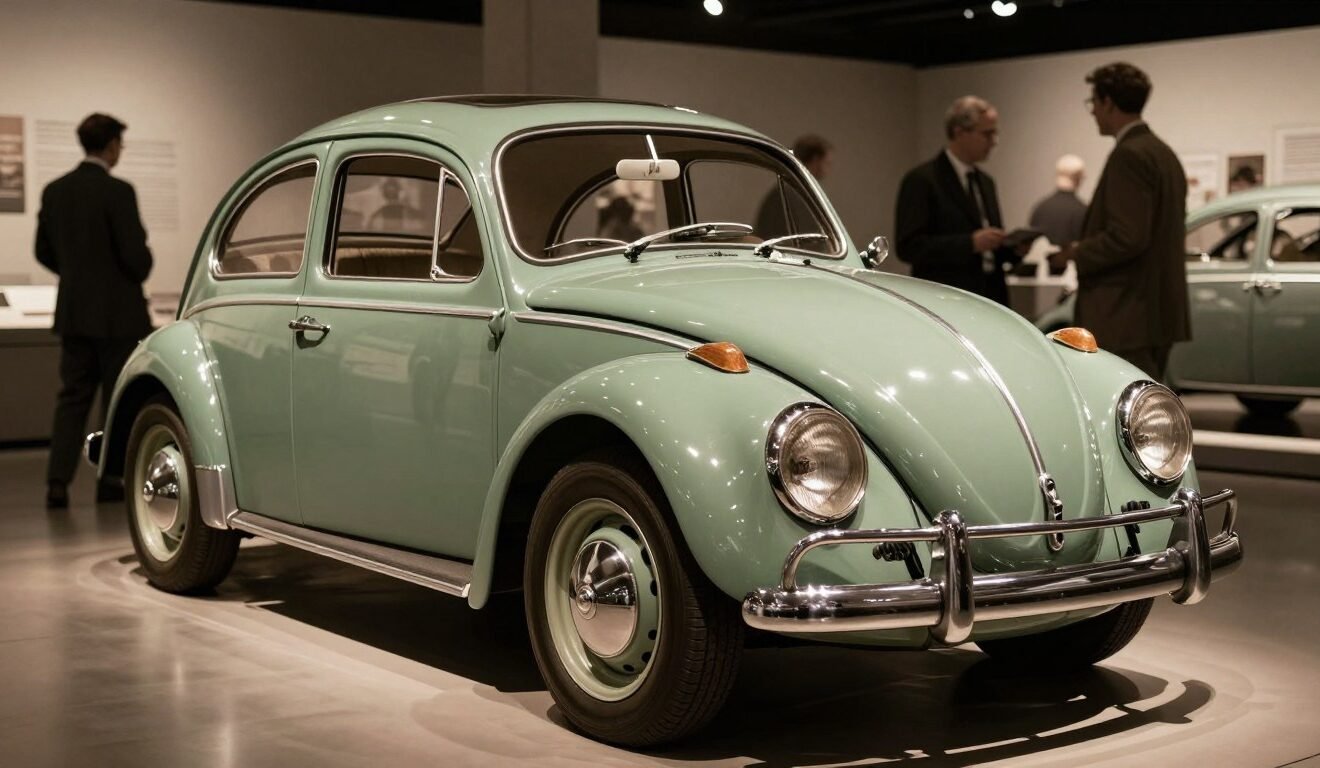
The 1938 Volkswagen Type 1 Prototype was a key vehicle that set the stage for the famous Volkswagen Beetle. It was part of the KdF-Wagen program, which aimed to make a car that everyone could afford. This prototype showed Ferdinand Porsche’s vision for engineering.

The Volkswagen Type 1 Prototype was groundbreaking. Its design and engineering set the stage for a global car icon. It had a rear-mounted engine and was shaped for efficiency, unlike cars of its time.
Key Takeaways#
- The 1938 prototype was a precursor to the postwar Volkswagen Beetle.
- It was part of the KdF-Wagen program aimed at creating an affordable people’s car.
- Ferdinand Porsche’s engineering goals were central to its development.
- The prototype featured a rear-mounted, air-cooled engine.
- Its design was focused on efficiency and affordability.
The Birth of the People’s Car#
The Nazi regime’s “Strength Through Joy” program led to the creation of the KdF-Wagen. This idea would eventually become the Volkswagen Type 1 Prototype. It was a groundbreaking concept in 1930s Germany, aiming to make cars affordable for the average citizen.
Germany’s “KdF-Wagen” Vision#
The “KdF-Wagen,” or “Strength Through Joy” car, was a key part of Nazi propaganda. It aimed to lift morale and unite Germans. The goal was to create a car that was both affordable and reliable, available through a savings plan.
“The people’s car must be a car that is not only affordable but also reliable and accessible to the masses.”
The KdF-Wagen was meant for the people, with a price that many Germans could afford. Despite its ties to the Nazi regime, its impact went beyond politics.
Ferdinand Porsche’s Engineering Brief#
Ferdinand Porsche, a famous engineer, was tasked with making the KdF-Wagen a reality. His brief was to design a car that was affordable, strong, reliable, and easy to fix. The result was a rear-engine, air-cooled design that would define the Volkswagen Type 1 Prototype.

Porsche’s design included a torsion bar suspension and a streamlined body. These features made the car both economical and durable. As Porsche himself noted, the design’s simplicity was key to its success, making it easier to produce and maintain.
The 1938 Volkswagen Type 1 Prototype Unveiled#
In 1938, Volkswagen unveiled the Type 1 Prototype. This was a big step forward in car engineering.

From Type 60 Concepts to Pre-Production Models#
The journey from the Type 60 Concepts to the pre-production models was key. The Type 60 series showed early design ideas. Many prototypes were tested and improved.
- Key features were identified and improved upon.
- Performance and reliability were enhanced through rigorous testing.
- Aerodynamics and design were fine-tuned for optimal performance.
This process made the pre-production models much better. It prepared the way for the Type 1 Prototype.
The V3 and V30 Test Vehicles#
The V3 and V30 test vehicles were vital in the Type 1 Prototype’s development. The V3 prototype was an early test model. It checked the vehicle’s performance and handling.
- The V3 prototype focused on engine performance and transmission.
- The V30 prototypes were more advanced, testing various aspects such as suspension and braking systems.
These test vehicles helped Volkswagen’s engineers fix problems. This led to a more reliable and efficient car.
Technical Specifications and Design#
The 1938 Volkswagen Type 1 Prototype was a game-changer. It had technical specs that set the Beetle apart. Let’s explore what made this vehicle so special.
Quick Specs Table: The Type 1 By Numbers#
| Specification | Detail |
|---|---|
| Engine Type | Rear-mounted, Air-Cooled Flat-Four |
| Displacement | 985 cc |
| Power Output | 24 horsepower |
| Top Speed | 100 km/h (62 mph) |
| Length/Width/Height | 4,000 mm / 1,600 mm / 1,350 mm |
Rear-Mounted Air-Cooled Flat-Four Engine#
The Type 1 Prototype had a rear-mounted, air-cooled flat-four engine. This design was simple and cost-effective. The boxer engine made the car stable and easy to handle.
The air-cooled system was a big plus. It meant no complex water cooling system was needed. This made the car reliable and easy to fix.

Streamlined Body and Compact Dimensions#
The Type 1 Prototype had a streamlined body. This design cut down on drag, making the car more fuel-efficient. It also reached higher speeds.
Its size was perfect for tight European streets. The car’s rounded shape and small size made it instantly recognizable.
Revolutionary Engineering Principles#
The 1938 Volkswagen Type 1 Prototype was a true marvel of engineering. It had several groundbreaking principles that made it successful and durable. These innovations focused on both performance and practicality.

Torsion Bar Suspension and Swing Axle Design#
The Type 1 Prototype used a torsion bar suspension system, a new idea at the time. This system made the ride smooth and improved handling by letting wheels move freely. The swing axle design also made the vehicle more stable and easy to maneuver.
Torsion bar suspension had many benefits. It was lighter and simpler than coil spring systems. This made the Type 1 more compact overall.
Cooling Philosophy and Thermal Management#
The Type 1 Prototype had an air-cooled flat-four engine, another innovative feature. This design avoided the need for liquid cooling, reducing complexity and the chance of leaks. It also made the engine more reliable and easier to maintain.
The engine’s cooling was based on maximizing airflow. The engine and bodywork were designed to ensure good cooling, even in tough conditions.
Simplicity and Serviceability Focus#
The Type 1 Prototype was designed with simplicity and serviceability in mind. Volkswagen engineers made it easy to maintain, with features that made repairs simple and affordable.
The Type 1’s design focused on using straightforward, reliable parts. This approach lowered production costs and made the vehicle more affordable for everyday people.
Prototype Testing and Refinement#
Prototype testing was key in making the Volkswagen Type 1 better. It involved many tests to see how far the vehicle could go. This made the car much stronger and more reliable.

The 1938 Test Fleet Development#
The 1938 test fleet was a pivotal moment for the Volkswagen Type 1 Prototype. It was used for detailed tests in different conditions. This helped engineers fix problems before the car was made for sale.
The test fleet was vital for checking the Type 1’s design and how it performed. It made sure the car met the high standards of its creators.
For more insights on innovative automotive designs, you can visit Ride Icons to explore the latest concept cars.
Critical Changes Between Prototype and Production#
Many important changes were made from the prototype to the production version of the Volkswagen Type 1. These changes came from the testing phase. Key modifications included better suspension, improved cooling, and stronger durability.
These updates turned the Type 1 Prototype into a reliable car for the mass market. The thorough testing and improvement were key to the Volkswagen Beetle’s success. It became a legendary car.
From KdF-Wagen to Global Icon#
The KdF-Wagen’s transformation into the Volkswagen Beetle is a tale of perseverance and creativity. It was meant to be a car for the people of Germany. But, World War II changed everything.
Wartime Disruption and Factory Repurposing#
When war came, the Volkswagen factory started making military vehicles. They made the Kübelwagen and the Schwimmwagen. This change helped the factory stay open and supported the war effort.
The skills and knowledge gained during this time were key for the Beetle’s comeback after the war.
| Vehicle | Production Period | Role |
|---|---|---|
| Kübelwagen | 1940-1945 | Military Utility Vehicle |
| Schwimmwagen | 1942-1944 | Amphibious Military Vehicle |
Post-War Revival and Production Launch#
After the war, the British took control of the Volkswagen factory. Major Ivan Hirst was key in starting Beetle production again. The first Beetle was made in 1945.
The Beetle’s strong design and simple engineering made it perfect for the post-war world. This helped it become a global hit.
The Beetle’s journey from a wartime vehicle to a global icon was remarkable. It had a big cultural impact and remained popular for years. It became known for its reliability and affordability, making it a legend in car history.
Conclusion: The Enduring Legacy of the Type 1 Prototype#
The 1938 Volkswagen Type 1 Prototype has made a lasting impact on cars. It helped shape the Volkswagen Beetle into a classic loved by many. Its design and engineering have also influenced Volkswagen’s approach to car making.
The prototype’s design made it fast and efficient. Volkswagen’s archival photos show the care put into its creation. From the early Type 60 ideas to the final models, every detail mattered.
The Type 1 Prototype’s legacy is seen in the Beetle’s lasting popularity. Its innovative features, like the rear engine and suspension, are now iconic. These ideas have shaped many Volkswagen models.
Today, the Beetle is a symbol of car innovation. The Type 1 Prototype shows the power of creative design and engineering. Its influence will be felt for many years to come.
FAQ#
What was the 1938 Volkswagen Type 1 Prototype?#
The 1938 Volkswagen Type 1 Prototype was a key vehicle. It was the start of the famous Volkswagen Beetle. It was part of the KdF-Wagen program, aiming to make an affordable car for everyone.
Who designed the Volkswagen Type 1 Prototype?#
Ferdinand Porsche designed the Volkswagen Type 1 Prototype. His vision and goals were key to its creation.
What was the KdF-Wagen program?#
The KdF-Wagen program was a big idea in Nazi Germany. It aimed to make a car that was affordable for the masses.
What were the key engineering features of the Type 1 Prototype?#
The Type 1 Prototype had a rear-mounted engine and torsion bar suspension. It also had a sleek body design. These features were new and helped make the Beetle a success.
How did the Type 1 Prototype evolve into the production Beetle?#
The Type 1 Prototype went through many tests, like the V3 and V30. These tests helped refine its design and engineering. Eventually, it became the production Volkswagen Beetle.
What was the significance of the V3 and V30 test vehicles?#
The V3 and V30 test vehicles were important in the Type 1 Prototype’s development. They allowed for the testing and improvement of its design and engineering.
How did World War II affect the production of the KdF-Wagen?#
World War II changed the KdF-Wagen’s production. The factory was used for military needs. But, the idea of the KdF-Wagen lived on and became the post-war Volkswagen Beetle.
What is the legacy of the 1938 Volkswagen Type 1 Prototype?#
The 1938 Volkswagen Type 1 Prototype’s legacy is the iconic Volkswagen Beetle. It became a cultural symbol and influenced future Volkswagen models. It remains relevant today.
What were the technical specifications of the Type 1 Prototype?#
The Type 1 Prototype had a rear-mounted engine and a specific body design. It was also compact. These details are in the Quick Specs table.
How did the engineering principles of the Type 1 Prototype contribute to its success?#
The Type 1 Prototype’s engineering, like its suspension and cooling system, made it durable. These features helped the Beetle succeed.