




1975 VW Golf GTI: The Car That Invented the Hot Hatch
1975 VW Golf GTI: The Car That Invented the Hot Hatch The Volkswagen Golf GTI changed the game by showing that speed and practicality could...
- 1975 VW Golf GTI: The Car That Invented the Hot Hatch
- The Birth of a Legend
- The Original 1975 VW Golf GTI: Technical Specifications
- Iconic Design Elements That Defined a Generation
- Driving Experience: Why the GTI Changed Everything
- Creating the Hot Hatch Revolution
- Conclusion: The GTI's Enduring Legacy and Collector Status
- FAQ
- What is the significance of the 1975 VW Golf GTI in automotive history?
- What were the circumstances surrounding the creation of the Golf GTI?
- What were the key technical specifications of the 1975 VW Golf GTI?
- What design features contributed to the Golf GTI's iconic status?
- How did the Golf GTI impact the automotive market?
- What was the driving experience like in the Golf GTI?
- Is the Golf GTI considered a collector's item?
- What was the role of the Golf GTI in saving Volkswagen's future?
- How did the Golf GTI influence the development of subsequent hot hatches?
1975 VW Golf GTI: The Car That Invented the Hot Hatch#
The Volkswagen Golf GTI changed the game by showing that speed and practicality could go hand in hand. It was unveiled at the Frankfurt Motor Show in September 1975. This marked the start of the hot hatch era.

The Golf GTI stood out with its lightweight body, fuel-injected engine, and front-wheel drive. It was a game-changer, setting a new benchmark for performance cars. It defined what a hot hatch should be.
Key Takeaways#
- The 1975 VW Golf GTI pioneered the hot hatch genre.
- It combined a lightweight body with a fuel-injected engine and front-wheel drive.
- This innovative design made it a standout performer.
- The Golf GTI proved that performance and practicality could coexist.
- It was first introduced at the Frankfurt Motor Show in 1975.
The Birth of a Legend#
In the early 1970s, Volkswagen was facing a big crisis. This crisis led to the creation of the iconic Golf GTI. The company’s dependence on the Beetle was no longer working as sales dropped and other car makers gained ground.
Volkswagen’s Post-Beetle Crisis#
Volkswagen was in trouble in the early 1970s. The Beetle’s sales were falling, and other car makers were getting stronger. The company tried to keep up but was stuck with just one model. So, Volkswagen had to find new ways to grow.
| Year | Beetle Sales | Market Share |
|---|---|---|
| 1970 | 450,000 | 20% |
| 1972 | 350,000 | 15% |
| 1974 | 250,000 | 10% |
The Secret Project: How a Small Engineering Team Created History#
A small team of Volkswagen engineers started a secret project in this tough time. They aimed to make a high-performance Golf. This project turned into a major hit in automotive history. Their hard work and creativity made the Golf GTI the legend it is today.

The Golf GTI’s creation shows the talent and determination of Volkswagen’s engineers. They dared to dream big and made a car that went beyond what was expected. This car changed the game in the automotive world.
The Original 1975 VW Golf GTI: Technical Specifications#
The 1975 VW Golf GTI is known for starting the hot hatch trend. It was built for great performance and everyday use.

The Revolutionary 1.6-Liter Fuel-Injected Engine#
The 1975 VW Golf GTI had a 1.6-liter fuel-injected engine based on the Audi 80 GTE. This engine made 110 horsepower, a big jump from earlier models. The fuel injection system made driving smoother and more efficient.
The engine’s design and tech made the Golf GTI stand out. Its fuel-injected system improved fuel use and cut emissions. This was better than carbureted engines.
Performance Metrics: 0-60 in Under 9 Seconds#
The Golf GTI could go from 0-60 mph in under 9 seconds. This was thanks to its strong 1.6-liter engine and lightweight design. It was a hit with car lovers.
The performance metrics of the Golf GTI made it exciting to drive. It offered fun without losing practicality.
Lightweight Design and Front-Wheel Drive Advantage#
The 1975 VW Golf GTI was light, making it agile and fuel-efficient. Its front-wheel drive setup improved traction and handling. It was a well-rounded car.
The lightweight construction and front-wheel drive made the Golf GTI handle better. It had an edge in driving dynamics.
Iconic Design Elements That Defined a Generation#
Giorgetto Giugiaro’s impact on the Golf GTI’s design is huge. His work at Italdesign gave the Golf GTI a unique look. It was not just about looks; it was about being functional and fast too.

The Signature Red Grille Stripe and Golf Ball Shifter#
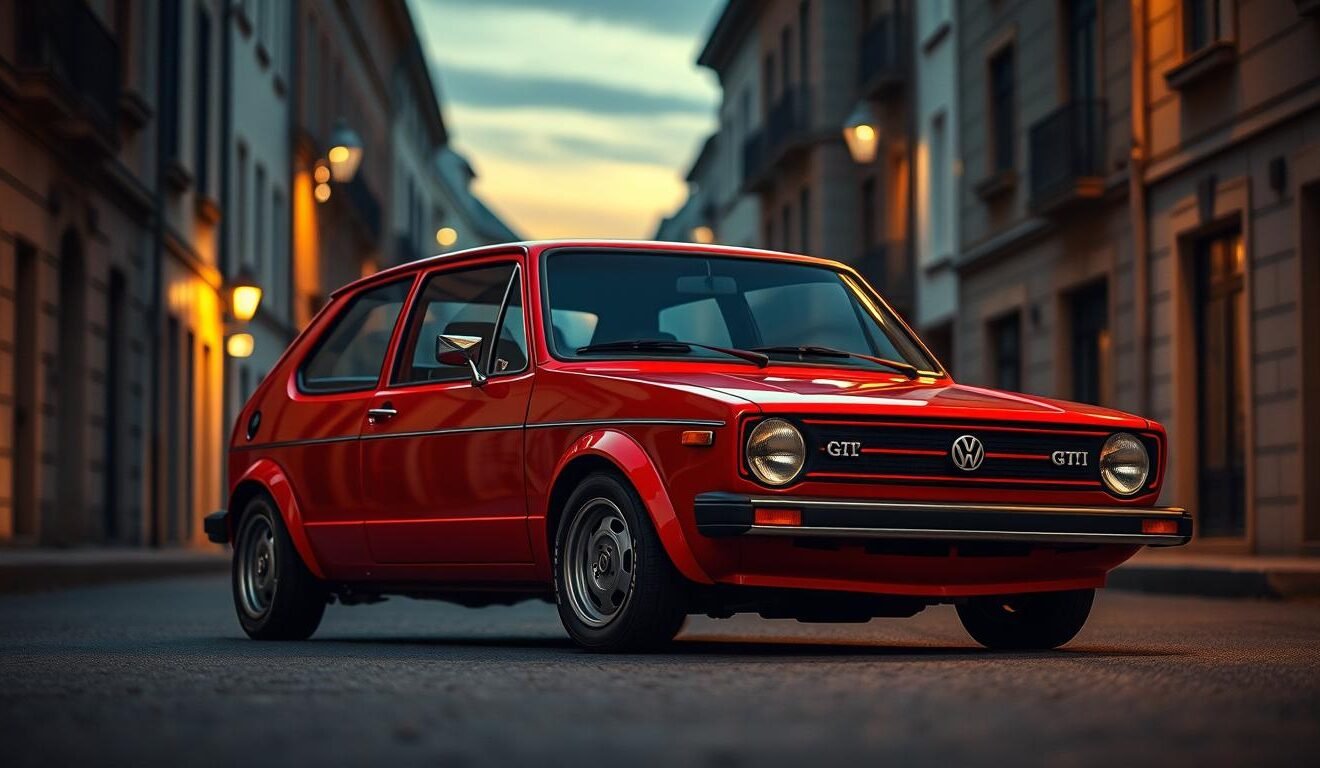
The red grille stripe made the Golf GTI easy to spot. It was paired with the golf ball shifter for a sporty feel. The golf ball shifter added fun and performance to driving.
Tartan Seats: Blending Sportiness with Practicality#
The tartan seats in the Golf GTI were a bold choice. They mixed sportiness with luxury. These seats looked good and supported drivers well, making the GTI’s interior stand out.
Boxy Aesthetics: The Perfect Balance of Form and Function#
The boxy aesthetics of the Golf GTI were a smart choice. They made the car roomy and efficient. The boxy shape also made the GTI easy to spot on the road.
Driving Experience: Why the GTI Changed Everything#
The 1975 VW Golf GTI changed the car world. It mixed sports car speed with family car practicality. This mix was groundbreaking, giving drivers the best of both.
Sports Car Performance in a Family Package#
Car critics loved the Golf GTI for its handling and speed. It could go from 0–60 mph in under 9 seconds. This was thanks to its 1.6-liter fuel-injected engine, which was powerful yet fuel-efficient.
The GTI’s ability to offer sports car thrills in a family car made it a hit. It wasn’t just fast; it made every drive exciting.
Handling and Road Dynamics That Redefined Expectations#
The Golf GTI’s handling and road feel were ahead of its time. Its front-wheel drive and lightweight design made it agile and quick to respond. Drivers loved how it cornered and braked, making every drive fun.

The GTI’s road feel was praised for its stability and predictability, even at high speeds. This made it thrilling yet safe, appealing to many drivers.
Creating the Hot Hatch Revolution#
The 1975 Golf GTI changed the game when it hit the market. It started the hot hatch trend and inspired many car lovers. This car not only boosted Volkswagen’s image but also led to more performance hatches.

Market Reception and Commercial Success#
The Golf GTI got great reviews and sold well right away. It mixed sporty performance with practicality and style, winning over many buyers. This success helped Volkswagen bounce back after the Beetle’s decline, making the Golf a key part of their lineup.
The GTI’s mix of power and everyday use made it a hit. Its fuel-injected engine and sporty suspension gave drivers a thrilling yet practical ride.
Competitors and Imitators#
Soon, other car makers followed the GTI’s lead with their own hot hatches. Cars like the Peugeot 205 GTI, Ford Escort XR3, and Renault 5 GT Turbo came out. They competed with the GTI but also grew the hot hatch market, making it lively and diverse.
The 1980s and 1990s saw more hot hatches, thanks to the GTI. As the category grew, cars got better in performance, design, and tech. This made the car world even more exciting.
How the GTI Saved Volkswagen’s Future#
The Golf GTI was key in making Volkswagen exciting again. It helped the brand move past the Beetle’s decline. The GTI also influenced future Golf models, keeping them popular.
The GTI started the hot hatch trend, saving Volkswagen and leaving a mark on cars. Its legacy lives on, showing its lasting impact on driving excitement.
Conclusion: The GTI’s Enduring Legacy and Collector Status#
The 1975 VW Golf GTI has made a lasting impact on car history. It’s celebrated by car lovers all over the world. Many collectors and restorers showcase its legacy.
Volkswagen’s bold spirit is seen in the Golf GTI. It’s a prized collector’s item, known for its performance and design. The community of Golf GTI collectors is growing, with many wanting a piece of history.
The Golf GTI’s influence goes beyond its own model. It started the hot hatch revolution, which is felt today. It set the stage for future cars, making it a key part of car history.
FAQ#
What is the significance of the 1975 VW Golf GTI in automotive history?#
The 1975 VW Golf GTI is a key car in history. It started the hot hatch genre. Its design and engine made it a top performer.
What were the circumstances surrounding the creation of the Golf GTI?#
In the early 1970s, Volkswagen faced tough times. Sales of the Beetle were down, and rivals were growing. A small team secretly worked on a high-performance Golf version.
What were the key technical specifications of the 1975 VW Golf GTI?#
The Golf GTI’s engine was a highlight. It had a 1.6-liter fuel-injected engine. This engine gave it 110 horsepower and quick acceleration.
What design features contributed to the Golf GTI’s iconic status?#
The Golf GTI’s design was both beautiful and practical. It had a red stripe, tartan seats, and a boxy shape. These features added to its sporty feel.
How did the Golf GTI impact the automotive market?#
The Golf GTI’s success inspired many hot hatches. Cars like the Peugeot 205 GTI and Ford Escort XR3 followed its lead. It set a new standard in the market.
What was the driving experience like in the Golf GTI?#
Driving the Golf GTI was unique. It offered sports car excitement in a family-friendly car. This mix was groundbreaking.
Is the Golf GTI considered a collector’s item?#
Yes, the Golf GTI is highly valued. It’s not just a car; it’s a piece of history. Car lovers worldwide seek it out, making it a prized collector’s item.
What was the role of the Golf GTI in saving Volkswagen’s future?#
The Golf GTI’s success was a turning point for Volkswagen. It helped the brand recover and become a major player in the car world.
How did the Golf GTI influence the development of subsequent hot hatches?#
The Golf GTI’s impact is clear in later hot hatches. Many manufacturers took cues from its blend of performance, practicality, and affordability.