




Early Electric Vehicles of the 1800s: The Forgotten Origins of Electric Mobility
Early Electric Vehicles of the 1800s: The Forgotten Origins of Electric Mobility
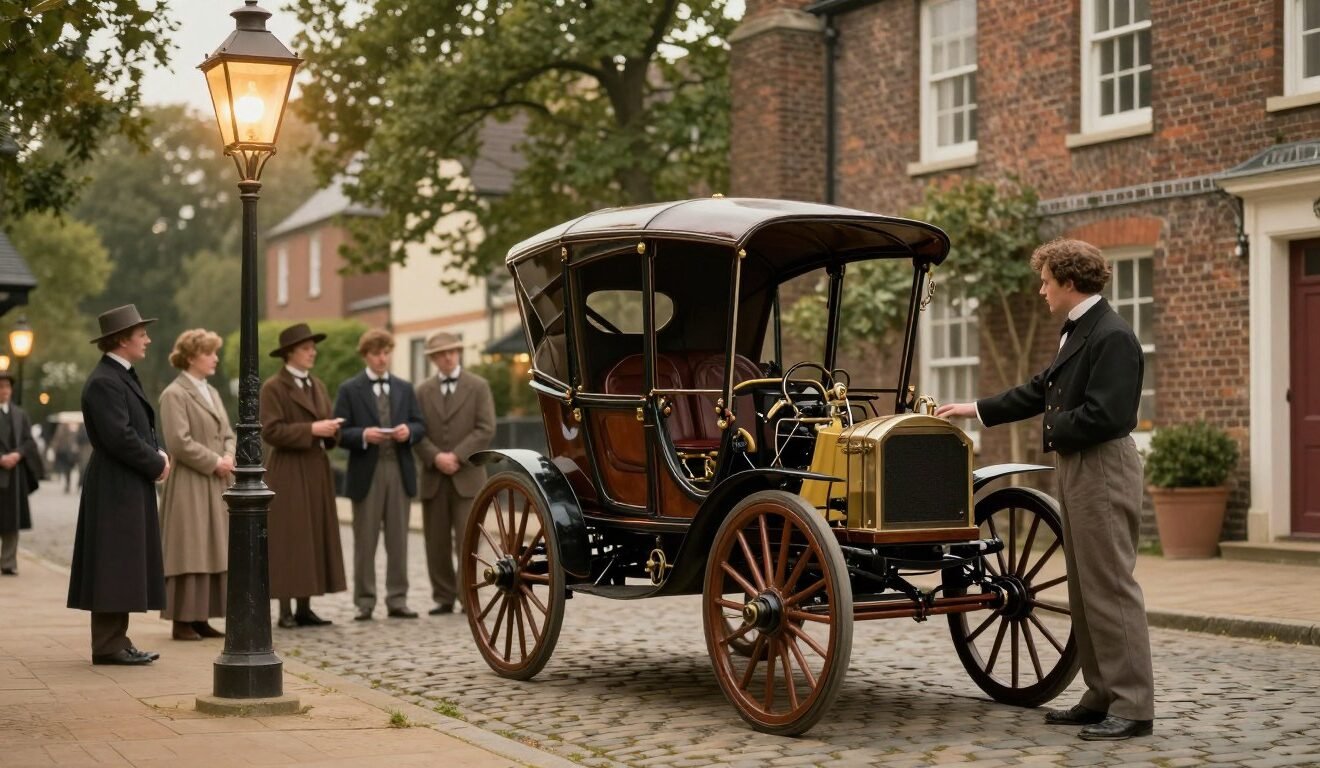
The idea of electric vehicles isn’t new. It goes back to the 19th century. Back then, inventors and makers started looking into electric mobility. They made simple electric carriages that were quiet, clean, and worked pretty well.

These early innovations set the stage for today’s electric cars. Even though they were later beaten by gas cars, their story is full of creativity and hard work.
Key Takeaways
- The first electric vehicles came out in the late 1820s and 1830s.
- By the 1890s, we had practical, electric cars for sale.
- These early cars were quiet, clean, and useful.
- The 1800s work on electric vehicles helped create today’s electric cars.
- The tale of electric cars is one of innovation and never giving up.
The Dawn of Electric Mobility
The 19th century saw a big change in how we move around. As cities grew and industries expanded, new ways to travel were needed.
Setting the Historical Context
In the 19th century, horse-drawn vehicles were everywhere. But, the mess and smell from horses were huge problems. This led people to look for better ways to get around.

Transportation Landscape of the 19th Century
The 19th century had its limits with horse-drawn carriages. But, new machines were starting to appear. Electric cars were seen as a cleaner, quieter option.
This set the stage for electric mobility. It was all about making travel better for our planet and our ears.
The Birth of Rechargeable Batteries
The invention of rechargeable batteries was a big step forward for electric cars. Before the mid-19th century, electric vehicles faced a big problem. They didn’t have good battery technology.
Volta’s Pile and Early Battery Concepts
Alessandro Volta created the voltaic pile in 1800, the first chemical battery. This started a chain of experiments and improvements. It set the stage for rechargeable batteries we use today.
Gaston Planté and the Lead-Acid Battery
In 1859, French scientist Gaston Planté made the first rechargeable battery. It was called the lead-acid battery. This invention was a big step for electric cars. Planté’s lead-acid battery had a special design that made it better.

Camille Faure’s Improvements and Commercial Viability
Camille Faure made Planté’s battery even better. He changed it to a pasted plate version. This made the battery more powerful and useful for cars.
| Inventor | Contribution | Year |
|---|---|---|
| Alessandro Volta | Voltaic Pile | 1800 |
| Gaston Planté | Lead-Acid Battery | 1859 |
| Camille Faure | Pasted Plate Improvement | Late 1800s |
The work on rechargeable batteries by Volta, Planté, and Faure was key. It helped electric cars become a real option. Their work helped the electric car industry grow in the late 19th and early 20th centuries.
Pioneering Inventors of Early Electric Vehicles
The early days of electric vehicles were shaped by brave inventors. They worked with electric motors and batteries. Their efforts helped create the electric cars we see today.
Thomas Davenport’s Electric Motor (1834)
Thomas Davenport, an American inventor, made a groundbreaking electric motor in 1834. It used a battery and showed electric power’s promise. Davenport’s invention proved electric motors could be useful.
Robert Anderson’s Crude Electric Carriage (1832-1839)
Robert Anderson, a Scottish inventor, built an early electric carriage from 1832 to 1839. His vehicle used a non-rechargeable battery. Though basic, it was a key step towards electric cars.
Charles Jeantaud and Practical Electric Carriages
Charles Jeantaud, a French inventor, made big strides in electric carriages. He improved on earlier designs with better motors and batteries.
Design Innovations
Jeantaud’s carriages were ahead of their time. They had more efficient motors and reliable batteries. These features made them better for city driving.
Performance Capabilities
Jeantaud’s carriages were quiet and smooth. This made them great for city travel.
| Inventor | Contribution | Year |
|---|---|---|
| Thomas Davenport | Built the first electric motor | 1834 |
| Robert Anderson | Developed a crude electric carriage | 1832-1839 |
| Charles Jeantaud | Created practical electric carriages | Late 1800s |

The Golden Age of Early Electric Vehicles
As cities grew, electric cars became a popular choice for city travel. This was their golden age. It was a time of big steps forward and more people using them in big cities.
Electric Cabs in European Capitals
Electric cars became popular in European capitals. London, Paris, and Berlin were leading the charge. Electric cabs changed how people moved around cities.
London’s Electric Cab Company
London’s Electric Cab Company was a key player. They introduced electric cabs that were cleaner and quieter than horse-drawn carriages. This move greatly cut down on city pollution and noise.
Paris and Berlin Implementations
Paris and Berlin also started electric cab services. This success led to more investment in electric car tech.
American Electric Vehicle Companies
In America, companies were also making big moves in electric cars. Pope Manufacturing Company, Baker Electric, and Detroit Electric were key players. They helped make electric cars more popular.
Pope Manufacturing Company
The Pope Manufacturing Company was a big name. They made many electric vehicles for cleaner travel. Their work helped pave the way for future electric car makers.
Baker Electric and Detroit Electric
Baker Electric and Detroit Electric were also important. They offered many models for different needs, from personal cars to fleets.

The work of these European and American companies started a big change towards electric cars. It set the stage for today’s electric vehicle industry.
Technical Specifications and Limitations
The early days of electric vehicles faced big technical hurdles. These issues made them hard to use widely. Pioneers were excited, but they had to solve many problems.
Early Electric Motors and Their Efficiency
Early electric motors were key but had big problems. They were big and didn’t use energy well. Improvements in motor design were needed to make electric cars better.
Battery Capacity and Range Challenges
Battery tech was a big problem. The lead-acid battery had many issues.
Lead-Acid Battery Limitations
Lead-acid batteries were heavy and didn’t hold much charge. They took a long time to charge. These issues made electric cars not good for long trips.
Weight-to-Power Ratio Problems
The weight of early batteries was a big problem. They made cars heavy and less efficient. Innovations in battery technology were needed to fix this.
| Technical Aspect | Limitation | Impact |
|---|---|---|
| Motor Efficiency | Low efficiency | Reduced overall performance |
| Battery Capacity | Limited capacity | Limited vehicle range |
| Charging Time | Long charging times | Inconvenience for users |
Charging Infrastructure in the 19th Century
There was no good charging system for electric cars. As
“the absence of a widespread charging network made it difficult for electric vehicles to gain traction beyond urban areas.”
Building a good charging system was key for electric cars to grow.
Knowing these early problems helps us see how hard it was to start electric cars. And how important the breakthroughs were for today’s electric cars.
Advantages of Early Electric Vehicles Over Competitors
Early electric vehicles had many benefits, making them a great choice compared to steam and gasoline cars. In the 19th century, electric cars stood out because of their unique advantages.
Cleanliness Compared to Steam and Coal
One big plus of early electric vehicles was how clean they were. Unlike steam cars that needed coal and made soot, electric cars didn’t pollute. This was a big plus for city dwellers worried about air quality.
Noise Reduction and Urban Suitability
Electric cars were also much quieter than steam and gasoline cars. This quietness made them perfect for city life, where noise was a problem. The quiet ride was a big draw for the wealthy who wanted a smoother driving experience.
Operational Simplicity for Drivers
Early electric vehicles were easy to use. Drivers didn’t have to worry about the hassle of manual transmissions or the dangers of hand-cranking gasoline engines.
No Hand-Cranking Required
Electric cars didn’t need hand-cranking, which was a big plus. It was both convenient and safer than gasoline cars.
Minimal Maintenance Needs
Also, electric cars needed less upkeep than other vehicles. They had fewer parts and didn’t need oil changes, making them easier to maintain.
A contemporary observer noted, “Electric vehicles are the cleanest and most manageable form of locomotion.” Many saw electric cars as a game-changer for city travel.
Urban Adoption and Social Impact
The rise of electric vehicles in cities changed how people saw them. They were seen as symbols of luxury and modernity. This change was not just about the technology itself, but also about how it was adopted and perceived by different groups within society.
Electric Vehicles as Luxury Status Symbols
Electric vehicles were marketed as luxury items. They appealed to the urban elite who valued their quiet operation and ease of use. The high cost made them accessible mainly to the wealthy, solidifying their status as luxury goods.
Owning an electric vehicle became a symbol of wealth and status.
Women Drivers and the Electric Car Movement
The electric vehicle movement saw significant participation from women. They appreciated the ease of driving and the cleanliness of electric cars. Women were among the early adopters, playing a key role in their popularity in urban areas.
Public Transportation and Commercial Applications
Beyond personal use, electric vehicles found applications in public transportation and commercial sectors. Electric cabs and buses were introduced in major cities. They offered a cleaner and quieter alternative to traditional vehicles.
This marked the beginning of electric vehicles’ role in shaping urban transportation systems.
The urban adoption of electric vehicles showed their technological appeal. It also highlighted their role in transforming urban living through reduced noise pollution and cleaner transportation. As cities grew, the role of electric vehicles in urban planning and transportation became more significant.
The Decline of 19th Century Electric Vehicles
The fall of early electric cars in the 19th century was complex. Several factors led to their decline. As electric cars became popular, challenges emerged that ended their success.
Range Limitations and Rural Accessibility Challenges
Early electric cars had a big problem: their range was short. Batteries were heavy and didn’t hold much charge. This made traveling far hard, even in cities.
In rural areas, the lack of charging spots was a huge issue. This made people worry about running out of power, or range anxiety.
The Rise of Ford’s Model T and Mass Production
The Ford Model T, introduced in 1908, changed the car world. It was cheap, reliable, and ran on gasoline. This made it a hit with buyers.
“The motor car, in its perfection, is a great servant, but a terrible master.” –
Thanks to mass production, gasoline cars became cheaper. This made them a better deal than electric cars.
Infrastructure Development Favoring Gasoline Vehicles
As gasoline cars became more popular, the roads and fuel systems changed. More roads were built, and fuel stations popped up everywhere.
Road Networks Expansion
New roads made it easier to travel long distances. This helped gasoline cars more than electric ones.
Fuel Distribution Systems
Fuel systems got better, making gasoline easier to find. This made electric cars less convenient by comparison.
| Factor | Impact on Electric Vehicles |
|---|---|
| Range Limitations | Restricted appeal to urban areas |
| Ford’s Model T | Mass production made gasoline vehicles more affordable |
| Infrastructure Development | Favored gasoline vehicles with expanded road networks and fuel distribution |
Forgotten Innovations That Shaped Modern EVs
Old experiments from the 19th century were key in making today’s electric cars. These early ideas, often forgotten, helped start the journey of electric vehicle technology.
Early Regenerative Braking Concepts
The idea of regenerative braking started in the 1800s. Back then, people tried to turn moving energy back into electricity. This simple idea is now a big part of how EVs work today.
Hybrid Vehicle Designs Before 1900
Before 1900, people also worked on hybrid vehicle designs. They mixed electric motors with gas engines to make cars more efficient. These early tries showed how to use different power sources better.
Today’s electric cars owe a lot to these old ideas. By learning from these forgotten steps, car makers keep making EVs better.
Conclusion: From Past to Present – The Electric Vehicle Renaissance
The story of electric cars starts in the 19th century. It’s important to know where electric cars came from. This history helps us understand their growth and impact today.
Early electric cars were more than just gadgets. They were a step towards a greener future. Today, electric cars are better, lasting longer, and are kinder to our planet. The past and present of electric cars are connected by a shared goal: to make transportation cleaner and more efficient.