




Honda Civic: The Evolution of a Global Icon — From 1972 Classic to 2025 Innovation
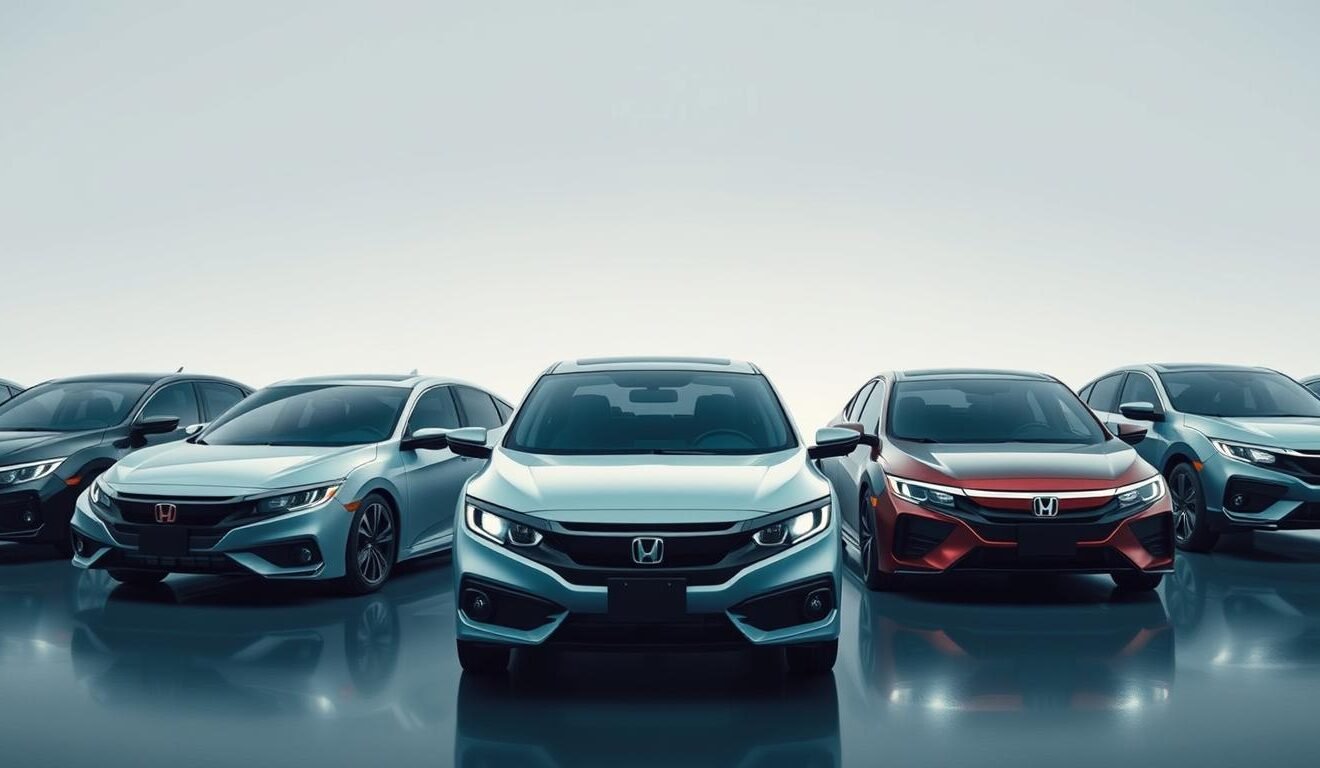
Honda Civic: The Evolution of a Global Icon — From 1972 Classic to 2025 Innovation
The Civic has been a key player in the car world for over 40 years. It started as a fuel-saving subcompact in 1972. Now, it’s a global icon known for its dependability and speed.

Over time, the Civic has changed a lot. It has kept up with what people want and new tech. From the CVCC engine in the early days to the turbocharged Type R today, each update has made it better.
Key Takeaways
- The Civic was first introduced in 1972 as a fuel-efficient compact car.
- It has evolved into a global icon known for reliability and performance.
- The Civic has seen multiple generations, each with significant technological advancements.
- The model’s timeline reflects its adaptation to consumer needs and automotive trends.
- A review of the Civic’s history reveals its impact on the automotive industry.
The Birth of a Legend (1972-1979)
The Honda Civic was introduced in 1972, changing the car world with its new design and fuel savings. This was during the 1973 oil crisis, making the Civic’s fuel-saving design very attractive.
Fuel Crisis and the CVCC Engine Revolution
The first Honda Civic had a unique engine and front-wheel drive, saving a lot of fuel. The CVCC (Compound Vortex Controlled Combustion) engine was a big step forward. It let the Civic meet emissions standards without needing a catalytic converter. The CVCC engine was a game-changer, making the Civic’s burn cleaner and more efficient.

First Generation Design and Engineering
The Civic’s design was simple and useful, with a light body that helped it save fuel. The engineers worked hard to make a car that was both reliable and long-lasting. This set the stage for the Civic’s lasting fame.
Market Reception and Initial Impact
The first Civic got great reviews from the market. People loved its fuel efficiency and dependability, making it a quick favorite. As “The New York Times” said, “The Honda Civic is a significant entry in the compact car market, with a unique mix of efficiency and performance.”
The Honda Civic’s launch in 1972 started a legacy that would grow over the years. Its first generation laid a solid foundation for its future success.
Growing Ambitions: Second Generation (1980-1983)
The second generation Honda Civic, launched in 1980, was a big step forward. It had a sleeker design and more body styles. This made it popular all over the world.

Expanded Body Styles and Global Appeal
The Civic of the 80s came in many styles, like a three-door hatchback and a four-door sedan. This made it appealing to more people. Honda fans say, “The second generation Civic’s diverse lineup helped it gain popularity worldwide.” This move into different markets boosted its reputation.
Technical Innovations and Improvements
The second generation Civic also had technical upgrades. It had more efficient engines and transmissions. The CVCC-II engine was a big step forward, improving fuel efficiency and reducing emissions. These changes made the Civic a top choice in its class.
Competition and Market Positioning
The Civic faced tough competition, but its new features and design kept it ahead. Honda balanced performance, efficiency, and reliability well. This attracted a wide range of customers.
Performance Evolution: Third Generation (1984-1987)
The third generation of the Honda Civic, made from 1984 to 1987, was a big step forward. It had better performance and features. This made it more appealing to drivers.
Introduction of the Si and Sporting Variants
The Si model was a big deal for the third-generation Civic. It had a stronger engine and sporty suspension. This made it a hit with car lovers.
- A high-performance engine that provided a significant boost in power
- Sport-tuned suspension for enhanced handling and stability
- Aerodynamic enhancements to improve overall performance and fuel efficiency
Design Language and Aerodynamic Advances
The third-generation Civic also got a new look and better aerodynamics. Its design was not just pretty but also helped with fuel and performance. The aerodynamic updates included:
- Sleek, aerodynamic body styling to reduce drag
- Improved airflow management around the vehicle
- Enhanced overall visual appeal, making the Civic more attractive to a wider audience

Global Manufacturing Expansion
Honda also grew its global manufacturing during this time. The third-generation Civic was made in many plants worldwide. This helped Honda meet demand better.
The Si model’s power, the Civic’s new design, and global production made the third-generation Civic a key moment. It paved the way for future models.
Technical Revolution: Fourth Generation (1988-1991)
The fourth-generation Honda Civic, launched in 1988, was a big step forward. It introduced many new features that changed the Civic’s path.
VTEC Technology Introduction
VTEC (Variable Valve Timing and Lift Electronic Control) was a major leap. It let the engine switch between two camshaft profiles. This boosted performance and efficiency.

Double-Wishbone Suspension Innovation
The Civic also got a double-wishbone suspension. This improved handling and ride quality. It made the Civic more fun to drive.
The Birth of the Performance Legend
VTEC and advanced suspension systems started the Civic’s legend. The Type R in Japan was the first step. For more on the Civic’s history, visit The Honda Civic Story.
Type R Origins in Japan
The Type R was first made in Japan. It had a sporty engine, suspension, and body kits.
Racing Heritage Foundations
The fourth-generation Civic also set the stage for Honda’s racing history. Its tech and performance helped shape Honda’s motorsport future.
A Complete Honda Civic History: Fifth and Sixth Generations (1992-2000)
The fifth and sixth generations of the Honda Civic, made from 1992 to 2000, were key moments in its history. These eras showed Honda’s dedication to innovation, performance, and reaching people worldwide.
Platform Versatility and Global Strategy
The fifth generation (1992-1995) had a sleeker design and more room inside, making it popular globally. The sixth generation (1996-2000) built on this, with different styles like coupe, sedan, and hatchback. This met the needs of many markets.
Platform versatility was a big reason for the Civic’s success back then. Honda’s plan to have various models and levels helped it reach more people.

The Golden Era of Civic Tuning Culture
The 1990s were the golden era for Civic tuning. Fans started making their Civics better for racing and tuning. This time saw a lot of support from aftermarket parts companies.
Technological Advancements and Refinement
These generations saw big tech leaps. Better engines, safety features, and overall quality made the Civic even more popular.
Engine Innovations
Engine tech, like VTEC, made the Civic faster and more efficient. VTEC gave the car strong low-end power and high speed.
Safety Improvements
There were also big safety steps forward. Better airbags, ABS, and stronger structures made driving safer.
| Generation | Years | Notable Features |
|---|---|---|
| Fifth | 1992-1995 | Aerodynamic design, spacious interior |
| Sixth | 1996-2000 | Variety of body styles, continued performance enhancements |
Mainstream Success: Seventh and Eighth Generations (2001-2011)
The years from 2001 to 2011 were key for the Honda Civic. The seventh and eighth generations brought hybrid tech and designs for the world. They made big steps in fuel savings and brought new looks to markets everywhere.
Hybrid Technology Integration
Honda made a big move by adding hybrid models. The Civic Hybrid mixed a regular engine with an electric motor. This combo cut down on fuel use without losing power. It won over green-minded buyers and made the Civic a top choice for eco-friendly cars.

Global Design Divergence
Honda took a global design path for the seventh and eighth Civic generations. They made designs for the US, Europe, and Asia. Each area got its own look and features. This way, Honda hit the mark with local tastes, making the Civic loved worldwide.
Critical Reception and Sales Performance
The seventh and eighth Civics got thumbs up for better performance, fuel use, and looks. Here’s a quick look at what critics said and how well they sold:
| Generation | Critical Reception | Sales Performance |
|---|---|---|
| Seventh | Praise for fuel efficiency and reliability | Strong sales in US and Asia |
| Eighth | Commended for performance and design | Continued global sales success |
Honda’s success with these Civics showed they could keep up with what people wanted. It made the Civic a big name in the car world.
Modern Reinvention: Ninth and Tenth Generations (2012-2021)
The years from 2012 to 2021 were key for the Honda Civic. It introduced the ninth and tenth generations with new features. This time brought big tech leaps and a focus on better performance.
Turbocharging Revolution and Earth Dreams Technology
The ninth and tenth Civic generations brought turbocharged engines. This was a big change in how the car performed. Honda’s Earth Dreams Technology was key in making these engines more efficient and powerful.
- Introduction of turbocharged engines for enhanced performance
- Earth Dreams Technology for improved efficiency
- Significant upgrades in engine technology
Interior Technology and Connectivity Advances
The ninth and tenth Civics also got better inside. They had new tech for entertainment and safety. This made driving more enjoyable.
Key interior advancements include:
- Advanced infotainment systems with touchscreen capabilities
- Enhanced driver assistance technologies for improved safety
- Connectivity features for seamless integration with personal devices
Return of the Type R to Global Markets
The Type R came back to the world market during this time. The FK8 Type R was a big hit for its speed and handling.
FK8 Type R Performance Benchmarks
The FK8 Type R was known for its fast acceleration and great handling. It was a standout car.
Market Reception and Enthuasiast Response

The ninth and tenth Civics made the car better and more popular worldwide. They showed Honda’s commitment to innovation and performance.
Current Excellence: Eleventh Generation (2022-2025)
Honda has once again made the Civic stand out. It combines beauty and function in a new way. The eleventh-generation Honda Civic shows Honda’s focus on innovation and speed.
Design Philosophy and Platform Evolution
The eleventh-generation Civic looks sleeker and has better aerodynamics. Its new platform makes it look better and perform better too.
Performance Variants: Si and FL5 Type R
The Civic’s performance versions, like the Si and FL5 Type R, show Honda’s commitment to speed. The Si is great for daily driving and fun driving. The FL5 Type R is for those who love extreme driving.
The Type R is special with its bold look and better performance. It’s a top choice in the hot hatch market.
Technology Integration and User Experience
The eleventh-generation Civic is also a tech leader. It has a smart infotainment system and many safety features.
Honda Sensing Suite
The Civic’s safety is boosted by the Honda Sensing suite. It includes tech to help avoid accidents and make driving safer.
Infotainment and Connectivity
The Civic also has top-notch infotainment and connectivity. Its easy-to-use system and many features make it a highlight inside the car.
In summary, the eleventh-generation Honda Civic is a big leap forward. It leads in design, performance, and technology, keeping its place as a top car.
Engineering Philosophy: What Makes the Civic Endure – 250 words
The Honda Civic’s success comes from a strong engineering philosophy. This philosophy is based on Honda’s “Man Maximum, Machine Minimum” principle. It aims to make the most of human abilities while keeping the machine’s role minimal.
Honda’s “Man Maximum, Machine Minimum” Principle
This principle sees vehicles as more than just machines. It’s about making them an extension of human skills. Honda focuses on making the Civic easy to use, efficient, and fun to drive.
The “Man Maximum, Machine Minimum” principle is seen in the Civic’s design. Every part is designed for top performance, efficiency, and reliability.
Balancing Performance, Efficiency, and Reliability
The Civic’s engineering is all about finding the right mix of performance, efficiency, and reliability. Honda uses advanced tech like VTEC and Earth Dreams. These technologies boost power while cutting emissions and fuel use.
Production Excellence and Quality Control
Honda’s dedication to production excellence and quality control has helped the Civic last long. Honda tests and inspects every Civic to ensure it meets high standards. This focus on quality has built a loyal customer base and solidified the Civic’s reputation as a reliable car.
Beyond Transportation: The Civic’s Cultural Impact – 250 words
The Honda Civic has made a big splash in popular culture. It has touched many areas of society and car culture.
Motorsport Success from BTCC to WTCC
The Honda Civic has done well in motorsports, like the British Touring Car Championship (BTCC) and the World Touring Car Championship (WTCC). It’s known for its performance and reliability. The Civic’s racing heritage has made it a legend, seen on big international tracks.
Modification Culture and Aftermarket Support
The Civic has a huge following in the tuning world. People modify their Civics for better looks, performance, and tech. This aftermarket support keeps the Civic popular with new fans.
The Civic in Media and Pop Culture
The Honda Civic has shown up in movies, TV, and music videos. It’s become a symbol of freedom, speed, and style. Its appearances in media show off its toughness and performance, making it a legend.
Conclusion: The Civic Legacy and Future Outlook – 200 words
The Honda Civic’s lasting appeal shows its big role in the car world. It’s an icon that keeps setting new standards in innovation, performance, and design.
Over the years, the Civic has changed to meet new needs, tech, and green concerns. Its success comes from being excellent, from being a fuel-saver to a high-performance car today.
Looking ahead, the Civic will keep evolving with new tech and designs. As cars move towards electric and green, the Civic will lead the way. This will make it even more loved and respected.
The Civic’s future looks bright with new ideas and a focus on being the best. It’s a symbol of quality and reliability. The Honda Civic will keep inspiring people worldwide, making its legacy even stronger.
FAQ
What is the Honda Civic’s history?
The Honda Civic was first introduced in 1972. It was a fuel-efficient subcompact car. Over time, it has become a global icon known for its reliability and performance. Each generation has brought new features and improvements.
What is the significance of the CVCC engine in the first-generation Civic?
The CVCC engine was a big innovation. It helped the Civic meet emissions standards without a catalytic converter. This made the car successful and environmentally friendly.
What are the key features of the Honda Civic Type R?
The Honda Civic Type R is a high-performance version of the Civic. It has a powerful engine, sport-tuned suspension, and an aerodynamic design. It’s a favorite among driving enthusiasts.
How has the Honda Civic’s design evolved over the years?
The Honda Civic’s design has changed a lot. It started as a subcompact car and now has sleek, aerodynamic designs. Each generation has brought new features, materials, and styling.
What is Honda’s “Man Maximum, Machine Minimum” principle?
Honda’s “Man Maximum, Machine Minimum” principle focuses on maximizing human performance. It aims to balance performance, efficiency, and reliability in their vehicles.
How has the Honda Civic impacted the automotive world?
The Honda Civic has had a big impact on the automotive world. It has won in motorsport, inspired a vibrant modification culture, and been featured in media and pop culture. It’s seen as an automotive icon.
What are the different body styles available for the Honda Civic?
The Honda Civic has been available in sedans, coupes, and hatchbacks. This gives customers a range of options to fit their preferences and needs.
What is the significance of VTEC technology in the Honda Civic?
VTEC technology is a variable valve timing system used in Honda Civic models. It improves engine performance, efficiency, and responsiveness. It enhances the driving experience.
How has the Honda Civic’s technology integration evolved?
The Honda Civic has seen big advancements in technology. It now has turbocharged engines, advanced infotainment systems, and safety features. These improvements enhance the driving experience and user convenience.
What is the future outlook for the Honda Civic?
The future looks bright for the Honda Civic. Honda is committed to excellence and ongoing innovation. They will continue to refine and improve the model with new technologies and design elements.