




How Aerodynamics Changed Car Design: From Boxy Shapes to Wind-Sculpted Machines
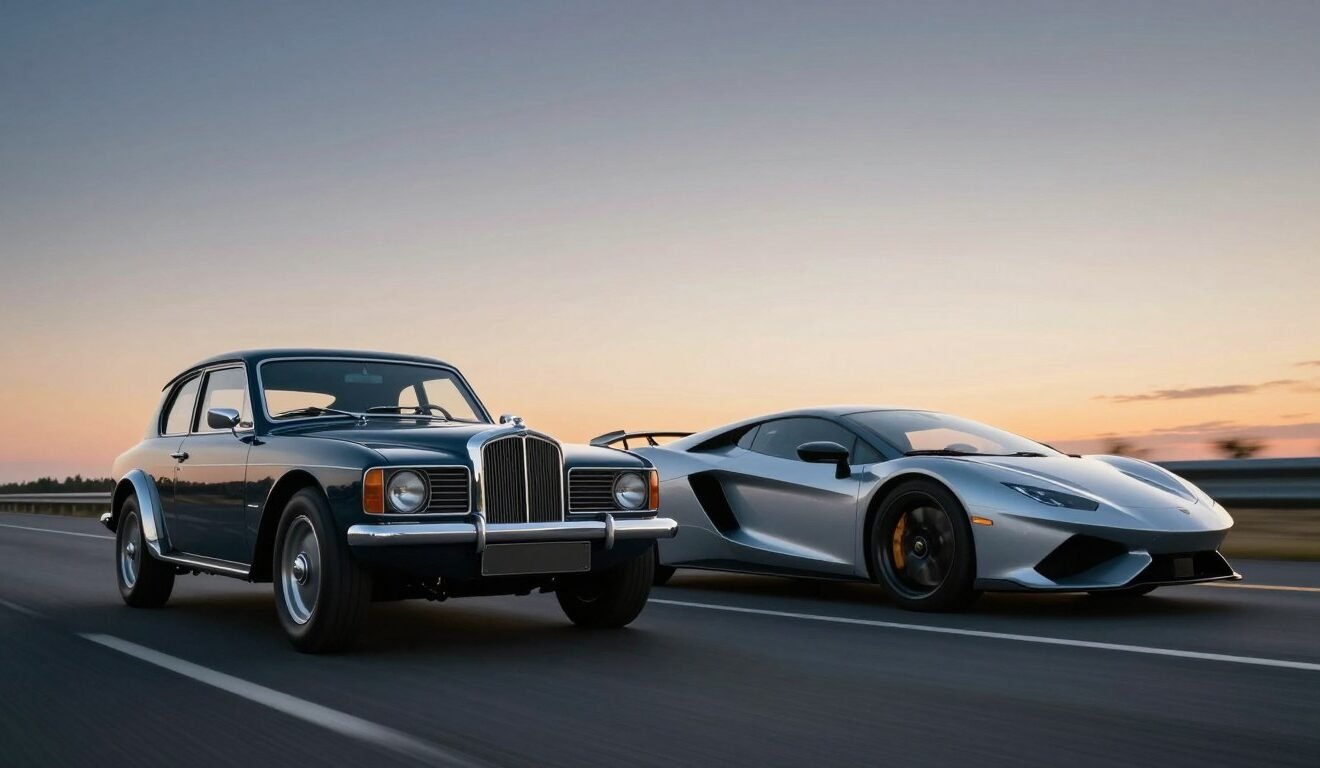
How Aerodynamics Changed Car Design: From Boxy Shapes to Wind-Sculpted Machines
For years, cars were built tall and flat, looking very boxy. But then, engineers saw how the wind was slowing them down. As cars got faster and needed to use less fuel, aerodynamics quietly reshaped the automobile.

Wind tunnels and sleek designs changed car design. Now, cars look and move differently on our roads. The first cars looked more like horse-drawn carriages than fast machines.
Key Takeaways
- The shift from boxy to aerodynamic designs was driven by the need for efficiency and speed.
- Aviation and motorsport significantly influenced the adoption of aerodynamic principles in car design.
- Wind-tunnel experiments played a critical role in understanding and improving airflow around vehicles.
- Modern car designs prioritize aerodynamics for better performance and fuel efficiency.
- The evolution of aerodynamics has redefined the automotive industry’s approach to vehicle design.
The Early Days: Boxy Designs and Aerodynamic Ignorance
In the early days of car making, looks weren’t the main focus. Cars were built to get people from one place to another, not to look good while doing it.

Function Over Form: Early Automobile Design Priorities
Car makers focused on making cars that worked well and lasted long. Aerodynamics was not a priority because they didn’t understand how air moved around cars yet.
Resistance to Aerodynamic Thinking in the Automotive Industry
People thought aerodynamics was only for planes, not cars. They didn’t see how air could affect a car’s performance.
Early Pioneers Who Challenged Convention
Paul Jaray and Carl Breer were among the first to try new things. They used teardrop shapes and wind tunnel tests to improve car design. Their work started the trend for aerodynamic cars we see today.
Their work included:
- Streamlining vehicle shapes to reduce drag
- Conducting wind tunnel tests to measure aerodynamic efficiency
- Applying aviation-inspired design principles to cars
These early tests changed how cars are designed and made. They made cars faster and more efficient.
Understanding the Science: Car Aerodynamics History and Basic Principles
Car aerodynamics is about the forces that affect a vehicle’s speed, efficiency, and stability. It’s key to modern car design. It helps a car go faster, travel more efficiently, and stay stable at high speeds.
Drag, Lift, and Downforce Explained
Drag, lift, and downforce are vital for vehicle performance. Drag is the force that slows a vehicle down, caused by air resistance. It depends on the vehicle’s shape, size, and speed.
Lift acts sideways, which can reduce traction by lifting the vehicle. But downforce pushes the vehicle down, improving traction and stability, mainly at high speeds.

How Airflow Affects Vehicle Performance
Airflow around a vehicle greatly impacts its performance. The air flow over and under the vehicle affects its aerodynamic efficiency. This affects fuel consumption, top speed, and handling.
Good airflow reduces drag, improving fuel efficiency and cutting wind noise. Spoilers and air dams help manage airflow, boosting downforce. This enhances stability and cornering.
Measuring Aerodynamic Efficiency: The Drag Coefficient
The drag coefficient measures a vehicle’s aerodynamic efficiency. It shows how much drag a vehicle experiences in the air. A lower coefficient means better aerodynamics, saving energy by reducing air resistance.
Car makers aim for a low drag coefficient. They use wind tunnels and computer simulations to design the best aerodynamic shape for their vehicles.
The Turning Point: When Aerodynamics Became Essential
The turning point in automotive aerodynamics came when aviation, motorsport, and economic pressures merged. This moment changed how car makers designed cars, making aerodynamics key for performance and efficiency.
Aviation’s Influence on Automotive Design
The impact of aviation on car design is huge. By the 1930s, car makers started using aerodynamic ideas from planes. They made cars sleeker and more aerodynamic, changing how cars looked.
Some key aerodynamic features from aviation include:
- Sleek, curved body shapes
- Air dams and spoilers to manage airflow
- Venturi tunnels to enhance downforce
Motorsport as an Aerodynamic Laboratory
Motorsport has always been a place for aerodynamic innovation. Racing’s competitive nature pushed makers to try new aerodynamic designs. These innovations often made it to production cars.
Some big aerodynamic wins from motorsport include:
- The development of ground-effect aerodynamics
- The use of wind tunnel testing to optimize airflow
- The introduction of advanced materials for lightweight aerodynamic components
The Oil Crisis and the Push for Efficiency
The 1970s oil crisis made saving fuel a top priority. As fuel prices went up, everyone wanted to use less. Aerodynamics helped a lot, as better aerodynamics means better fuel efficiency aerodynamics. Makers made cars more aerodynamic to use less fuel.
The industry’s response included:
- Redesigning vehicle bodies for lower drag coefficients
- Implementing aerodynamic aids like spoilers and air dams
- Developing more efficient engine technologies
In conclusion, the mix of aviation, motorsport, and the oil crisis led to a new era in car design. This shift improved car performance and efficiency, marking a big automotive innovation aerodynamics milestone.
The Evolution of Aerodynamic Design Techniques
Advances in aerodynamics have greatly shaped today’s cars. As the car world grows, so do the ways to make cars more aerodynamic.
Wind Tunnel Testing and Development
Wind tunnel testing is key in making cars better aerodynamically. It lets car makers test models in a controlled space. They can see how air moves around the car.
Wind tunnel testing offers many benefits:
- It accurately measures how air affects the car.
- It shows how air flows around the car.
- It checks if design changes work well.
Thanks to wind tunnel testing, cars can move more efficiently and with less drag.
Computational Fluid Dynamics Revolution
Computational Fluid Dynamics (CFD) has changed aerodynamics a lot. It uses complex algorithms to simulate air flow around cars. This way, car makers can test designs without making real models.
CFD brings many benefits:
| Advantage | Description |
|---|---|
| Reduced costs | It cuts down on the need for real models and wind tunnel tests. |
| Increased speed | Simulations are much quicker than real tests. |
| Improved accuracy | CFD can accurately mimic complex air flows. |
Design Compromises: Balancing Aesthetics, Practicality, and Airflow
Making a car that looks good and moves well is hard. Car makers have to meet many needs to create a car that’s both efficient and practical.
Important things to consider are:
- How well the car moves through air.
- How it looks.
- How easy it is to use (like space inside).
By finding the right balance, car makers can make cars that are both efficient and attractive.
Modern Aerodynamics: Beyond Speed to Efficiency and Range
Aerodynamics is key in car design today. It’s not just about speed anymore. It’s about making cars more efficient and lasting longer.
Aerodynamics in Everyday Vehicles
Aerodynamics now means better fuel use and less pollution. Cars today have sleek shapes and active grille shutters to cut through air better.
Many cars have air curtains to smooth airflow around wheels. This makes cars go farther on less fuel and perform better.
Electric Vehicle Range and the Critical Role of Air Resistance
Electric cars need to cut through air well to go far. A study shows a 10% less drag means 5% more range.
“Aerodynamics plays a critical role in electric vehicle efficiency. Better aerodynamics means longer range.”
Here’s a table showing drag coefficients of popular electric cars:
| Vehicle Model | Drag Coefficient (Cd) |
|---|---|
| Tesla Model S | 0.23 |
| Hyundai Kona Electric | 0.29 |
| Audi e-tron | 0.28 |
Future Trends: Where Aerodynamic Design Is Heading
The future of car design will use computational fluid dynamics (CFD) and artificial intelligence (AI). These tools will make cars even more efficient and green.
As cars keep changing, aerodynamics will become even more important. Better design means faster, more efficient, and greener cars.
Conclusion: The Lasting Impact of Aerodynamics on Automotive Design
The way cars are designed has changed a lot because of aerodynamics. Now, cars are sleek and fast, not just boxes on wheels. This change has made cars go faster and use less fuel, which is great for electric cars too.
Designing cars has come a long way, thanks to aerodynamics. At first, designers didn’t think about how air moved around cars. But now, they use advanced tech to make cars better. This keeps improving as new ideas come along.
Aerodynamics is key for cars today, making them better in many ways. It helps electric cars go farther on a single charge. As cars get more advanced, aerodynamics will keep playing a big role in making them better.
Today’s cars show how much aerodynamics has changed things. With new tech, cars will keep getting faster and more fuel-efficient. This means we’re heading towards a future where cars are even better.