

How to Spot a Clean Title and Avoid Odometer Fraud (Collector Checklist) + Winter Driving Addendum
How to Spot a Clean Title and Avoid Odometer Fraud (Collector Checklist) + Winter Driving Addendum
When you’re buying a collector car, a clean title and correct odometer reading are key. A clean title means the car is in good shape, without major damage. But, scammers try to trick buyers by hiding these facts.

It’s important to know the difference between a clean title and others like salvage or rebuilt. Also, knowing about title washing in different states can save you from trouble. For those buying collector cars, checking the title and mileage is a must. This is even more important in areas with tough winters that can damage cars.
Key Takeaways
- Understand the importance of a clean title for collector cars.
- Recognize the risks associated with odometer fraud.
- Learn how to verify title status and mileage.
- Be aware of title washing practices.
- Consider winter driving conditions when purchasing a vehicle.
Understanding Vehicle Titles and Their Significance
A vehicle’s title is more than a piece of paper. It’s a window into the vehicle’s history. Knowing about the title is key when buying a car. It tells you about the car’s past, legal status, and any possible issues.
What Is a Clean Title?
A clean title means the vehicle has no major problems listed on its title. This includes accidents, floods, or salvage history. It shows the vehicle is likely safe and has no big issues. But, remember, a clean title doesn’t mean the car is perfect.

Common Branded Titles Explained
Branded titles are for vehicles with big issues or accidents. Knowing about these titles helps you make a smart choice when buying.
Salvage Titles
A salvage title is for vehicles that are too damaged to drive. Insurance companies decide this. It means the car needs a lot of repairs.
Rebuilt/Reconstructed Titles
After fixing a salvage title car, it gets a rebuilt title. This shows it’s safe to drive again. But, it keeps the salvage history on the title.
Flood Damage Titles
Flood damage titles are for cars that got wet. This can harm the electrical and mechanical parts. Even fixed, these cars might not be reliable for long.
Lemon Law/Manufacturer Buyback Titles
Lemon law or buyback titles are for cars that were bought back by the maker. This is because of ongoing problems. It warns of possible future issues.
Theft Recovery Titles
Theft recovery titles are for cars that were stolen and found. They might not be damaged but could have hidden problems.
Knowing about these titles helps you avoid cars with hidden problems. Always check the title and use vehicle history reports for a full picture of the car’s past.
The Dangers of Title Washing: A Growing Concern
Title washing is a scam that can harm your car buying experience. It means changing or hiding a car’s title history to lie about its state or worth.
How Title Washing Works
It happens when a car’s title is “washed” clean of its past by moving it to states with different rules. This trick makes a damaged car seem new, fooling buyers.
Key steps in title washing include:
- Transferring the vehicle to a state with lenient title laws
- Re-titling the vehicle to omit previous branding
- Selling the vehicle to an unsuspecting buyer

States with Weaker Title Laws
Some states have softer rules for car titles, attracting scammers. These places don’t strictly mark cars with past problems, letting them be sold as clean.
Interstate Title Fraud Tactics
Scammers use state law differences by moving cars across borders. They might change a car’s title many times to hide its bad history. To stay safe, check a car’s title through trusted sources like the National Motor Vehicle Title Information System (NMVTIS).
Knowing how title washing works and which states are at risk helps you avoid interstate title fraud.
Essential VIN Verification Steps
Checking the VIN is easy and can reveal a lot about a car’s history. It’s key to check the VIN to make sure a used car is real.
Locating and Checking Multiple VIN Plates
A car’s VIN is found in many spots, and checking them can spot tampering. Look in these places:
- Dashboard VIN: Find it through the windshield on the driver’s side.
- Door Jamb VIN: Check the driver’s side door jamb.
- Engine Bay VIN: Some cars have a VIN plate on the engine or in the engine bay.
- Frame VIN: The VIN might be stamped on the frame.

The dashboard VIN is easy to see through the windshield on the driver’s side. Make sure it matches the VIN on the car’s papers.
Door Jamb VIN
Look for a VIN sticker or plate on the driver’s side door jamb. It should match the other VINs.
Engine Bay VIN
Some cars have a VIN plate or sticker in the engine bay. Check that it matches the other VINs.
Frame VIN
The VIN might be stamped on the car’s frame. Check for this, if other VINs seem off.
Signs of VIN Tampering
Watch out for signs of VIN tampering, like:
- VIN plates that are loose or seem recently replaced.
- Mismatched or altered VIN numbers.
- VIN stickers or plates that look out of place or don’t match the car’s age.
Checking the VIN and knowing these signs can help you avoid buying a car with a fake history.
How to Spot Odometer Fraud: Key Warning Signs
Odometer fraud is becoming more common. It’s important to know how to spot it. Look out for signs of tampering in both digital and mechanical forms.
Digital vs. Mechanical Odometer Tampering
Digital tampering changes the vehicle’s computer to show less mileage. Mechanical tampering physically alters the odometer. Both can be tricky to detect, but there are clues.
For example, the ECU (Engine Control Unit) might show a different mileage than the odometer. This could mean tampering.

Physical Wear Inconsistencies
One clear sign of odometer fraud is when the vehicle’s mileage doesn’t match its wear. Look at:
Pedal, Steering Wheel, and Seat Wear
Worn pedals, steering wheel, and seats often point to higher mileage. For instance, a worn driver’s seat might suggest more driving than the odometer shows.
Interior Condition vs. Claimed Mileage
Inspect the interior for wear. Look for worn carpets, faded trim, or cracked leather. If the interior looks worn, it might not match a low mileage reading.
Component Date Code Analysis
Examining component date codes can confirm a vehicle’s mileage. Check the:
Tire DOT Codes
Tire DOT codes tell when the tires were made. New tires with low mileage might mean the tires were replaced to hide higher mileage.
Glass and Headlight Date Stamps
Glass and headlight date stamps show when they were made or replaced. If these dates don’t match the odometer reading, it’s a warning sign.
Quick Flip Red Flags
Be wary of vehicles sold quickly with low mileage. Deals that seem too good might be scams. Sellers pushing for a fast sale could be hiding something.
Vehicle History Reports: Beyond the Basics
A detailed vehicle history report can make a big difference. It’s key to look beyond the basics when buying a used car. This helps avoid bad investments.
Comparing Carfax, AutoCheck, and NMVTIS
Vehicle history report providers offer different levels of detail. Carfax and AutoCheck are well-known, while NMVTIS is a government database. Here’s how they compare:
| Provider | Data Sources | Title Information | Odometer Readings |
|---|---|---|---|
| Carfax | Multiple sources including state DMVs and auctions | Yes | Yes |
| AutoCheck | Experian database, includes auctions and dealerships | Yes | Yes |
| NMVTIS | State DMVs and other government agencies | Yes | Limited |
Interpreting Mileage Timeline Discrepancies
Mileage discrepancies can mean odometer tampering. Look for odd patterns in the mileage timeline. A sudden drop or irregular pattern may show fraud.
“A vehicle history report is only as good as the data it’s based on. Discrepancies can indicate possible issues.”
Ownership History Analysis
Looking at a vehicle’s ownership history can reveal patterns. Many short-term owners might suggest problems with the car.

Reported Accidents vs. Title Status
It’s important to compare reported accidents with the title status. A car with a clean title but many accidents might have hidden damage.
By carefully examining vehicle history reports and understanding the differences, you can make a better choice when buying a used car.
Cross-Referencing Mileage Records
Checking mileage records is key when buying a vehicle. It helps you spot fraud. Make sure to check the mileage in different documents to be sure.
Service Records Verification
Service records are a top way to check a vehicle’s mileage. Looking at service records shows when the vehicle was serviced. Check the mileage at each service to see if it matches.
Inspection Stickers and Registration Documents
Inspection stickers and registration papers also help verify mileage. Inspection stickers show the mileage at inspection time. Make sure these match the odometer reading.
| Document Type | Mileage Reading | Date |
|---|---|---|
| Service Record | 30,000 | 01/2022 |
| Inspection Sticker | 30,500 | 02/2022 |
| Registration Document | 31,000 | 03/2022 |
Emissions Test History
Emissions tests also record mileage. Getting emissions test records can confirm the vehicle’s mileage. This ensures it matches other records.
“Verifying a vehicle’s mileage through multiple sources is key to avoiding odometer fraud. It’s a step you shouldn’t skip when buying a used vehicle.”
OBD System Mileage Checks
Modern cars have OBD systems that keep mileage data. An OBD scanner can show the vehicle’s computer mileage. Comparing OBD mileage with the odometer can spot issues.

By checking mileage in service records, stickers, documents, emissions tests, and OBD systems, you can trust the vehicle’s mileage. This careful check is vital for a smart purchase.
Electronic Verification: ECU and Instrument Cluster Analysis
When you buy a used car, checking the odometer is key. Today’s cars use electronics, making it easy to spot tampering or fraud. You can use electronic checks to find out if the odometer is right.
Signs of Cluster Replacement or Tampering
Look for signs of odometer tampering, like a replaced or messed-with instrument cluster. Check the dashboard for odd screws, wiring changes, or a cluster that doesn’t fit. These are clues that something’s off.

ECU Mileage vs. Displayed Mileage
Another important step is to compare the ECU mileage with the odometer reading. If they don’t match, it might mean someone has messed with it. Use special tools to check the ECU mileage against the odometer.
| Verification Method | Purpose | Indicators of Tampering |
|---|---|---|
| ECU Mileage Check | Compare stored mileage with displayed mileage | Discrepancies between ECU and odometer readings |
| Diagnostic Scan Tool | Retrieve and verify mileage data | Error codes or inconsistent readings |
| Instrument Cluster Inspection | Check for signs of tampering or replacement | Mismatched components, recent adjustments |
Diagnostic Scan Tool Verification
Diagnostic scan tools are great for checking a car’s mileage and spotting problems. They can pull mileage data from the ECU and other systems. Look for error codes or data that doesn’t add up to see if someone has tampered with it.
Using these electronic checks can help you avoid buying a car with a faked odometer. It makes sure you’re making a smart choice when buying a used car.
Essential Documentation Checklist for Buyers
Having the right paperwork is key when buying a vehicle. It helps avoid future problems. As a buyer, make sure you check all the necessary documents to protect your investment.
Bill of Sale Requirements
A bill of sale is a must-have document. It proves the sale happened. It should list the vehicle’s details, price, and the names of both sides. Make sure it’s filled out and signed by everyone involved.
Title Documentation (Front and Back)
Check the title documentation carefully. Look at both sides for any tampering or changes. The title should match the vehicle’s info and have no unexpected liens.
Maintenance Records
Maintenance records are very important. They show the vehicle’s history and condition. Look for records of maintenance, repairs, and inspections. These can help you understand the vehicle’s state and spot any issues.
Seller Disclosure Statements
Seller disclosure statements are key. They tell you about the vehicle’s condition and any known problems. Make sure the seller gives you a full disclosure to avoid surprises later.
Lien Verification
Do a lien verification to make sure the vehicle is clear of loans or liens. Check with the right authorities to confirm there are no financial obligations on the vehicle.
By using this checklist, you can safeguard your investment and make the buying process smoother.
Pre-Purchase Inspection Focus Areas
Getting a detailed pre-purchase inspection is key for any serious buyer. It’s important to find out the vehicle’s real condition. This helps spot any issues that might cost a lot to fix later.
A pre-purchase inspection starts with a professional mechanical inspection. A skilled mechanic checks the vehicle’s overall health. They look for wear, needed repairs, and safety risks.
Professional Mechanical Inspection
This inspection looks at the engine, transmission, brakes, and suspension. It’s essential to know how well the vehicle works and if it’s reliable.
Structural and Frame Examination
Checking the vehicle’s structure and frame is critical. It helps find any damage or rust. This check can show if the vehicle was in a big accident or has hidden structural problems.
Electrical System Testing
The electrical system is key for the vehicle’s operation. Testing the battery, alternator, and starter helps find electrical problems.
Wear Points vs. Claimed Mileage
Comparing wear on parts to the claimed mileage is important. If the wear doesn’t match the mileage, it might mean the odometer was tampered with or there are hidden issues.
By focusing on these areas in a pre-purchase inspection, you can make a better choice. This can help you avoid expensive surprises later.
Winter Driving Addendum: Special Considerations
Winter brings unique challenges for vehicles, like those in snowy and salted areas. These cars face risks that can shorten their life and performance.
Salt Region Rust Assessment
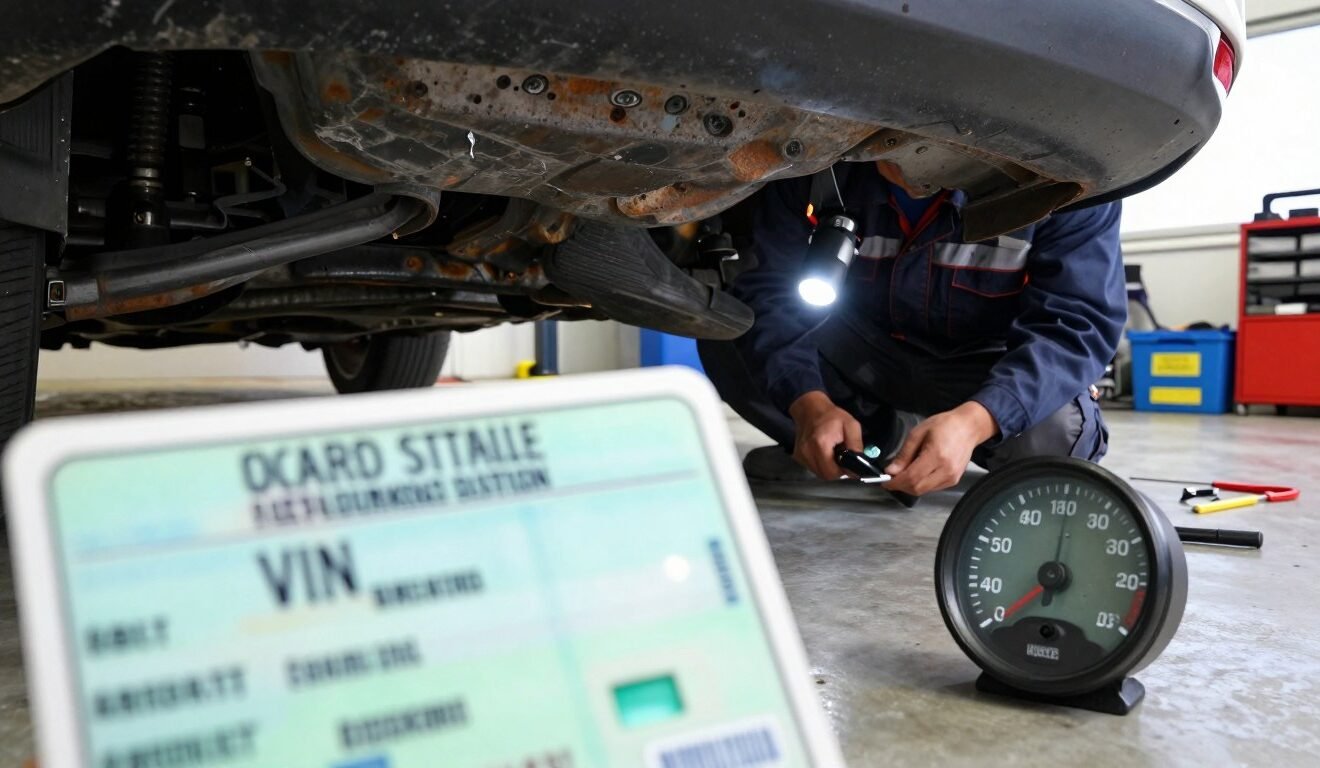
Cars in the “salt belt” are at risk of rust from road salt. It’s key to check the undercarriage for rust. Look for flaking metal, rust spots, or weakened structures.
Snowmelt and Storm Flood Risks
Driving through floods or deep snowmelt can hide moisture issues. Check for damp carpets or waterlines in compartments.
Underbody Inspection Focus Areas
Inspect the underbody of winter-used vehicles closely. Look for rust, damage to suspension, and exhaust system condition.
| Inspection Area | Potential Issues | Recommended Action |
|---|---|---|
| Undercarriage | Rust, corrosion | Treat rust spots, apply protective coating |
| Suspension Components | Damage, wear | Replace damaged parts |
| Exhaust System | Leaks, rust | Repair or replace damaged sections |
Detecting Hidden Moisture and Condensation
Hidden moisture can cause rust and electrical problems. Look for condensation in headlights, taillights, and under carpets.
How “Winter Beater” Usage Can Mask Problems
“Winter beaters” might hide issues with low mileage or neglect. Be careful of these signs, as they can hide bigger problems.
Knowing these winter driving tips helps you understand vehicle conditions better. This way, you can make smarter choices when buying.
Conclusion: Protecting Your Investment
Buying a collector car is complex. You need to pay close attention to details and do your homework. Knowing about clean titles, title washing, and odometer fraud is important.
Checking the Vehicle Identification Number (VIN) and mileage records is key. Also, look at electronic verification data. Reviewing vehicle history reports and doing pre-purchase inspections can spot problems.
By following these steps, you can protect your investment. This way, you can enjoy your car without worry. Remember, verifying everything is essential for a good buy.
FAQ
What is a clean title, and why is it important?
A clean title means a vehicle has not been in a major accident or flooded. It also means there are no outstanding liens. This is important because it affects the vehicle’s value and your buying decision.
What are branded titles, and how do they impact a vehicle’s value?
Branded titles, like salvage or rebuilt, show a vehicle has had big problems. These titles can lower a vehicle’s value a lot. They might also affect its insurability and resale value.
How does title washing work, and which states are more susceptible to it?
Title washing hides a vehicle’s true history. States with loose title laws are more at risk. It’s key to check a vehicle’s title history with services like Carfax or AutoCheck.
Where can I find the VIN on my vehicle, and why is it important to verify it?
The VIN is on the dashboard, driver’s side door jamb, engine bay, and frame. Checking the VIN ensures it matches everywhere. This helps spot any tampering.
What are the signs of odometer fraud, and how can I detect it?
Odometer fraud signs include uneven wear and date code mismatches. You can spot it by checking mileage in service records and OBD systems. Look for any mileage differences.
How do I interpret vehicle history reports, and what should I look for?
When looking at vehicle history reports, watch for mileage and ownership history mismatches. Compare reports from Carfax, AutoCheck, and NMVTIS for a full picture.
What documents should I verify when buying a used vehicle?
Key documents to check include the bill of sale, title, maintenance records, and seller statements. Make sure all documents match the vehicle’s history.
Why is a pre-purchase inspection important, and what areas should be examined?
A pre-purchase inspection checks the vehicle’s mechanical and structural condition. It looks at electrical systems and wear points. A professional can find hidden issues.
How do winter driving conditions affect vehicle purchasing decisions?
Winter driving can damage a vehicle, like from salt and floods. Check for rust and electrical system issues. “Winter beater” vehicles might hide problems.
What is the significance of verifying the ECU mileage vs. displayed mileage?
Checking ECU mileage against the displayed one can show odometer tampering. A difference means fraud. It’s important to investigate further.
How can I detect hidden moisture and condensation in a vehicle?
Look for water damage, rust, or musty smells in the underbody, trunk, and interior. Check for corrosion under seats and metal parts.