



Military Vehicle Innovation During World War II: How War Accelerated Automotive Engineering
Military Vehicle Innovation During World War II: How War Accelerated Automotive Engineering
The urgent needs of wartime led to big changes in automotive engineering in the mid-20th century. As the world war grew, making tough, flexible, and many military vehicles was key.

Car makers in Detroit, known for their American cars, had to go beyond what they thought possible. They focused on making vehicles that could handle rough terrain, were reliable, and could be made fast. These changes not only helped in the war but also changed the car industry forever.
Key Takeaways
- The war effort accelerated the development of durable and versatile military vehicles.
- Automotive engineering saw significant innovations in off-road capability and reliability.
- Mass production techniques were rapidly advanced to meet wartime demands.
- The innovations had a lasting impact on post-war civilian automobiles and global manufacturing practices.
- Wartime necessities drove technological advancements in vehicle engineering.
The Wartime Catalyst: Urgent Military Demands
World War II was a turning point for military vehicle technology. The war pushed for quick improvements in many vehicle types. This included tanks, transport trucks, armored vehicles, amphibious vehicles, and reconnaissance cars.

Pre-War Automotive Technology Status
Before World War II, cars had seen big improvements in design and making. But the war showed the need for even bigger changes. The era before the war saw stronger engines, better suspension, and new making methods. These were the first steps towards the fast growth of military vehicles.
The Mobilization of Automotive Industries
The United States called itself “The Arsenal of Democracy” during World War II. Car makers stopped making civilian cars to focus on military needs. They made tanks, aircraft engines, and other war items.
- They changed their production lines for military vehicles.
- They worked harder to meet military needs.
- They came up with new tech to make vehicles better.
This change helped the war effort and pushed car tech forward.
Strategic Imperatives Driving Innovation
The war’s needs for mobility, toughness, and reliability pushed for new military vehicles. The military wanted vehicles that could work in different places and handle combat well. They focused on:
- Stronger engines and better fuel use.
- Improved suspension for tough terrain.
- New drivetrain tech like four-wheel and all-wheel drive.
- Better materials and making methods for durability.
These changes helped the war and also shaped the future of civilian cars.
World War II Military Vehicles: A Revolution in Design and Purpose
World War II pushed the limits of military vehicle design. It led to a variety of vehicles that were key in many battles. These vehicles had to be tough, able to handle rough terrain, and made in large numbers.

The Diversity of Military Vehicle Requirements
The war needed many types of military vehicles. There were armored vehicles like tanks and cars, military trucks for moving supplies, and amphibious vehicles for crossing water. Each vehicle was made for a specific job, from fighting at the front to supporting troops in the back.
From Civilian to Military: Repurposing Automotive Knowledge
Turning civilian cars into military vehicles was a big challenge. The car industry had to make cars stronger, better for off-road use, and reliable in tough conditions. Their ability to change and improve was key to success.
International Approaches to Vehicle Development
Every country had its own way of making military vehicles. They used what they had, their skills, and technology. For example, the U.S. made the DUKW “Duck” for crossing water. This variety helped advance military automotive innovation worldwide.
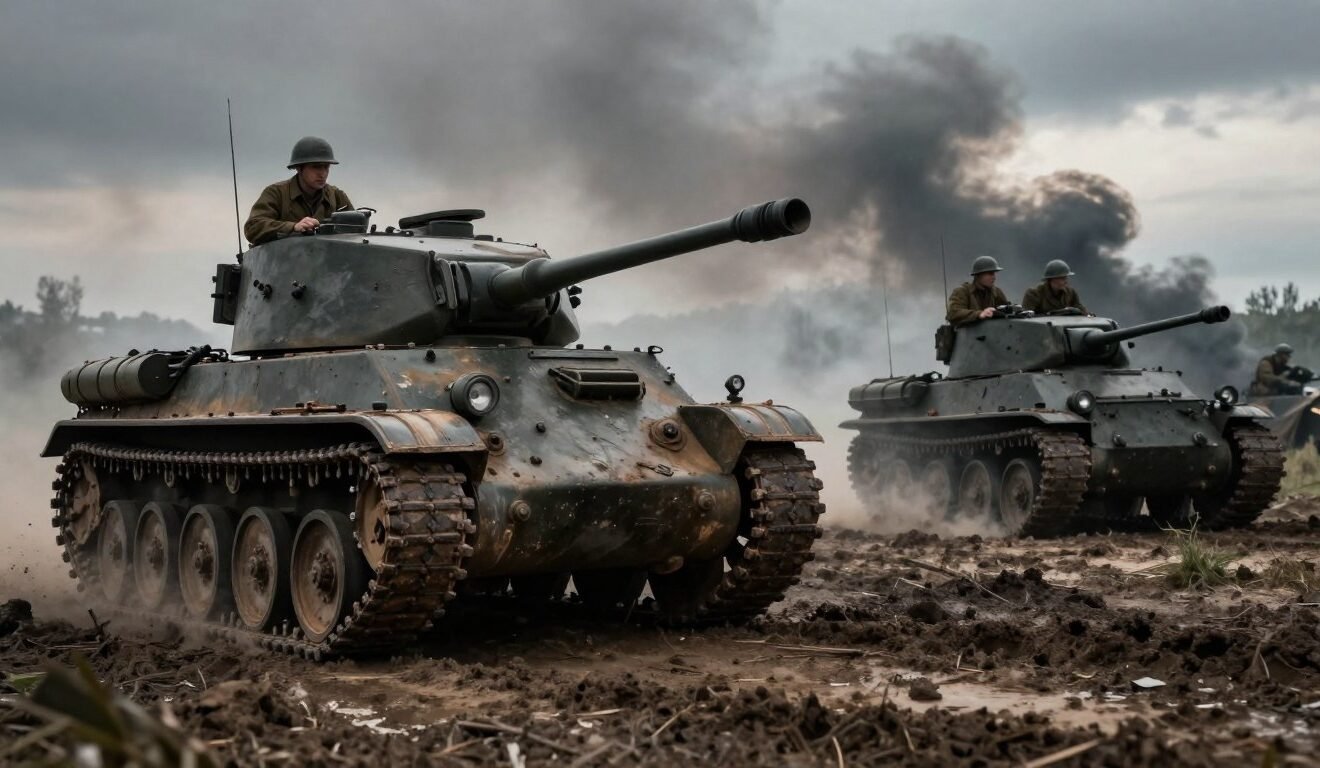
Tank Development: Armored Warfare Drives Innovation
Tank development in World War II was key to military progress. It was driven by the need for strong armored vehicles. This led to big steps forward in design, technology, and making tanks.
Light, Medium, and Heavy Tank Evolution
World War II saw the creation of many tank types. Light tanks were for scouting and supporting infantry, known for their speed and thin armor. Medium tanks, like the M4 Sherman, had good firepower, armor, and speed, making them useful on the battlefield. Heavy tanks, such as the German Tiger, focused on strong firepower and armor, but were less mobile.
Balancing Firepower, Protection, and Mobility
Designers faced a big challenge: balancing a tank’s firepower, protection, and speed. Improving one area often meant losing in another. For example, adding more armor made tanks heavier, which hurt their speed.
| Tank Model | Firepower (mm) | Armor (mm) | Mobility (km/h) |
|---|---|---|---|
| M4 Sherman | 75 | 63 | 38 |
| German Tiger | 88 | 100 | 38 |
| Soviet T-34 | 76.2 | 45 | 53 |
American Sherman vs. German Tiger: Contrasting Design Philosophies
The M4 Sherman and the German Tiger showed two different approaches. The Sherman was made for mass production, aiming for a good mix of firepower, armor, and speed. The Tiger, on the other hand, focused on heavy armor and firepower, but was harder to make and keep running.
Soviet T-34: Revolutionary Simplicity and Effectiveness
The Soviet T-34 was a standout tank of World War II. It was known for its simple design, toughness, and balance of firepower, armor, and speed. Its success showed the value of practicality and making tanks efficiently in armored warfare.
Transport and Logistics Vehicles: The Backbone of Military Operations
Transport and logistics vehicles were key in World War II. They made sure supplies and equipment reached troops on time. These vehicles were vital for keeping military operations going in different parts of the war.
The Iconic GMC CCKW “Deuce and a Half” and Other Transport Trucks
The GMC CCKW “Deuce and a Half” truck is famous for its role in World War II. It was reliable and could handle tough terrains. It helped supply troops and equipment. Other trucks, like the Dodge WC series, also played big roles in the war.
Standardization and Mass Production Techniques
The war pushed the auto industry to standardize and mass-produce. Car makers used the same designs and parts to make vehicles fast. This was key to meeting the military’s needs.
Fuel and Supply Delivery Innovations
New ways to deliver fuel and supplies were also important in World War II. Special tanker trucks and supply vehicles made sure troops got what they needed. These changes helped the logistics field a lot.
After the war, these military vehicles influenced civilian cars. Car makers used similar tech and methods. This led to big improvements in civilian cars.
| Vehicle | Role | Notable Features |
|---|---|---|
| GMC CCKW “Deuce and a Half” | Logistics and Supply | Reliability, Versatility, 2.5-ton capacity |
| Dodge WC Series | Transport and Communication | Durability, Four-Wheel Drive |
Amphibious Vehicle Breakthroughs: Conquering Land and Sea
World War II led to the creation of special vehicles like the DUKW and LVTs. These vehicles could go on land and in water. This was a big challenge for engineers.
DUKW “Duck” Development and Innovation
The DUKW “Duck” was a truck that could go on land and in water. It was used for moving supplies during World War II. To work in both places, it needed special innovations in drivetrains, suspension, and materials.
This truck was very useful for the military because it could move easily from water to land.
Landing Vehicles Tracked (LVTs) and Amphibious Tanks
LVTs and amphibious tanks were also important during World War II. They were made for amphibious assaults and to fight in both water and on land. Their creation pushed the limits of armor technology and propulsion systems.
Engineering Challenges of Dual-Environment Operation
Going from water to land was a big challenge. Engineers had to make the vehicles resistant to corrosion and waterproof. They also needed strong suspension systems.
These challenges led to big steps forward in automotive engineering.
Reconnaissance and Light Armored Vehicles: Speed Meets Protection
Reconnaissance and light armored vehicles were key in World War II. They mixed speed with safety. These vehicles were vital for gathering intel, doing reconnaissance, and supporting infantry.
Willys MB Jeep: Birth of a Legend
The Willys MB Jeep is a legend of World War II. It’s famous for its ability to go off-road and its reliability. Its creation was a big step in car engineering, needed for a light, tough, and dependable military vehicle.
Key Features of the Willys MB Jeep:
- Exceptional off-road capability
- Lightweight and compact design
- Reliable engine performance
British Daimler and American M8 Greyhound Armored Cars
Other important vehicles were the British Daimler and the American M8 Greyhound armored cars. They combined firepower, speed, and protection. This made them very useful in battle.
The British Daimler was known for its strong build and firepower. The American M8 Greyhound was praised for its quickness and easy handling. Both were important in their battles.
German Reconnaissance Vehicle Innovations
Germany also made many reconnaissance vehicles during WWII. They showed different ways to design and engineer vehicles. These vehicles could handle various places, from cities to open fields.
Innovations in German Reconnaissance Vehicles:
- Advanced suspension systems for better mobility
- Lightweight armor for enhanced protection without losing speed
- Innovative engine designs for better performance and fuel use
The work on reconnaissance and light armored vehicles in WWII led to big changes in car engineering. These changes affected both military and civilian cars for many years.
Engineering Priorities: Durability, Reliability, and Performance
World War II pushed military engineering to new heights. The focus was on making vehicles durable, reliable, and high-performing. This was essential for vehicles to work well in tough environments.
Off-Road Capability Requirements
Off-road ability was key for military vehicles in WWII. Engineers worked on four-wheel drive and better suspension. This made vehicles move better on rough ground.
The GMC CCKW “Deuce and a Half” truck is a great example. It was known for being reliable and good at moving troops and supplies over hard terrain.
Battlefield Durability Innovations
Making vehicles last longer in battle was a big goal. They were built to take damage and keep going. New materials and designs helped vehicles stay in action even when hit.
Maintenance and Repair Considerations in Combat Zones
Keeping vehicles running in combat was vital. Engineers created field maintenance kits and used modular design for quick fixes. They also made parts interchangeable for fast repairs.
Field Maintenance Kits and Modular Design
Field maintenance kits had all the tools and parts needed for repairs. Modular design made it easy to swap out parts. This cut down on downtime and kept vehicles ready to go.
Interchangeable Parts Strategy
The use of interchangeable parts made repairs easier. It helped standardize parts across different vehicles. This made maintenance simpler and faster during WWII.
| Engineering Priority | Innovation | Benefit |
|---|---|---|
| Off-Road Capability | Four-Wheel Drive Systems | Enhanced Mobility |
| Battlefield Durability | Robust Materials | Damage Resistance |
| Maintenance and Repair | Modular Design and Interchangeable Parts | Reduced Downtime |
Technological Breakthroughs in Vehicle Components
World War II pushed the limits of innovation in military vehicle parts. It changed the car world forever. The war made vehicles stronger, more powerful, and able to handle tough battle conditions.
Engine Advancements for Military Applications
Engine development was key during World War II. Makers worked hard to create engines that were stronger, more efficient, and reliable. The introduction of multivalve engines and fuel injection systems greatly boosted engine performance.
Suspension Systems for Rough Terrain
Suspension systems saw big improvements too. Vehicles needed to move over rough ground, so new, stronger, and flexible systems were made. Christie suspension, for example, was famous for its ability to handle tough terrain while keeping the vehicle stable.
Drivetrain Innovations: Four-Wheel and All-Wheel Drive
The introduction of four-wheel drive (4WD) and all-wheel drive (AWD) systems was a game-changer. These innovations let vehicles move better over hard terrain, giving them a big tactical edge.
Materials Science and Metallurgical Advances
Advances in materials science and metallurgy were vital for making military vehicles better. Two main areas were armor plating and using lightweight alloys.
Armor Plating Development
Creating better armor plating was key for protecting vehicles. New materials and ways of making armor made it stronger and lighter.
Lightweight Alloys and Alternative Materials
Using lightweight alloys and other materials helped make vehicles lighter without losing strength. This was great for saving fuel and improving vehicle performance.
| Innovation | Description | Impact |
|---|---|---|
| Multivalve Engines | Improved engine performance through better airflow | Increased power and efficiency |
| Christie Suspension | Enhanced vehicle stability on rough terrain | Improved mobility and tactical advantage |
| 4WD/AWD Systems | Enhanced drivetrain capability for challenging terrain | Increased vehicle versatility and effectiveness |
The Engineers Behind the Innovations: Human Ingenuity Under Pressure
World War II pushed military and civilian engineers to work together. They created new vehicle innovations. These advanced vehicles were key in the war.
Military and Civilian Engineering Collaboration
Together, military and civilian engineers made big strides. They combined their skills in vehicle design and function. Civilian engineers brought their auto tech knowledge. Military engineers shared what the armed forces needed.
“The war effort required the automotive industry to produce vehicles that were not only durable and reliable but also capable of withstanding the harsh conditions of the battlefield.”
Notable Automotive Engineers and Their Contributions
Many automotive engineers made big impacts during World War II. For instance, Delmar “Del” Jensen at Willys-Overland was key in the Willys MB Jeep’s development.
| Engineer | Contribution |
|---|---|
| Delmar “Del” Jensen | Development of the Willys MB Jeep |
| Henry Ford | Mass production of military vehicles |
Rapid Problem-Solving and Adaptation
Quick problem-solving and adapting were vital in wartime engineering. Engineers had to be creative and flexible. They had to meet the military’s changing needs.
The innovations from this time influenced post-war cars. Many technologies from then were used in civilian vehicles.
Mass Production Revolution: Manufacturing at Unprecedented Scale
World War II led to a huge need for military vehicles. This need sparked a big change in how things were made. The war pushed for making lots of vehicles fast, leading to new ways of making things.
Assembly Line Innovations
The Ford Willow Run plant was a key place for making things fast during the war. It made B-24 Liberator bombers quickly. Assembly line innovations helped make complex things like planes and tanks faster and better.
Standardization of Parts and Components
Standardizing parts was key for mass production. It made making things simpler, cheaper, and faster. This way, parts could be easily fixed or replaced, keeping vehicles ready to go.
The Role of American Industrial Might
American industry was huge in making military vehicles. The U.S. had a big industrial base and new ways to make things. This helped make lots of military gear.
International Manufacturing Adaptations
Other countries also changed how they made things for the war. For example, the British and Soviet industries changed to make military stuff. They helped a lot with the Allied forces.
| Country | Major Production Contributions | Innovations |
|---|---|---|
| United States | B-24 Bombers, Tanks, Trucks | Assembly Line Production |
| United Kingdom | Tanks, Aircraft | Standardized Parts |
| Soviet Union | T-34 Tanks, Trucks | Simplified Production Processes |
The mass production changes during World War II changed the future of making things. It changed the car and manufacturing worlds forever.
Post-War Impact: Military Innovation Transforms Civilian Vehicles
The post-war period was a time of big change in the car industry. This was thanks to the tech advancements from military vehicles. Features like four-wheel drive and off-road skills started showing up in cars for everyone, changing the game.
Four-Wheel Drive and Off-Road Vehicle Development
Four-wheel drive systems, first used in the military during World War II, soon became common in cars. This tech made off-road vehicles and trucks much better at handling tough terrain.
SUVs and Trucks: Military Heritage
SUVs and trucks became popular after the war, thanks to their military roots. The war’s innovations, like better suspension and stronger engines, were used in these cars. This made them more reliable and capable.
Manufacturing Techniques Adopted by Civilian Industry
The car industry learned from the war’s mass production methods. This led to making cars faster and cheaper. More people could now afford to buy cars.
Global Influence on Automotive Design Philosophy
The focus on toughness, reliability, and performance from military vehicles influenced car design worldwide. Car makers around the globe used these ideas in their cars. This led to a new era of stronger and more capable cars.
| Innovation | Military Application | Civilian Adoption |
|---|---|---|
| Four-Wheel Drive | Enhanced mobility in combat zones | Improved off-road capability in SUVs and trucks |
| Mass Production Techniques | Efficient manufacturing of military vehicles | Adopted by civilian automotive industry for cost-effective production |
| Standardization of Parts | Simplified logistics and maintenance in the field | Reduced production costs and improved reliability in civilian vehicles |
Conclusion: The Enduring Legacy of WWII Vehicle Engineering
World War II brought big changes to cars. Military vehicles sped up tech growth. They also changed how cars were made for civilians after the war.
Today, we see WWII’s mark on cars. Innovations from then keep shaping car design and making. Things like durability, reliability, and new materials have made cars better.
Looking at old war vehicles teaches us a lot. They show how cars evolved during WWII. The tech from then is now part of our car world.