




The 1970s Oil Crisis and the Cars It Created: Fuel Economy, Downsizing, and the “Malaise Era” Explain
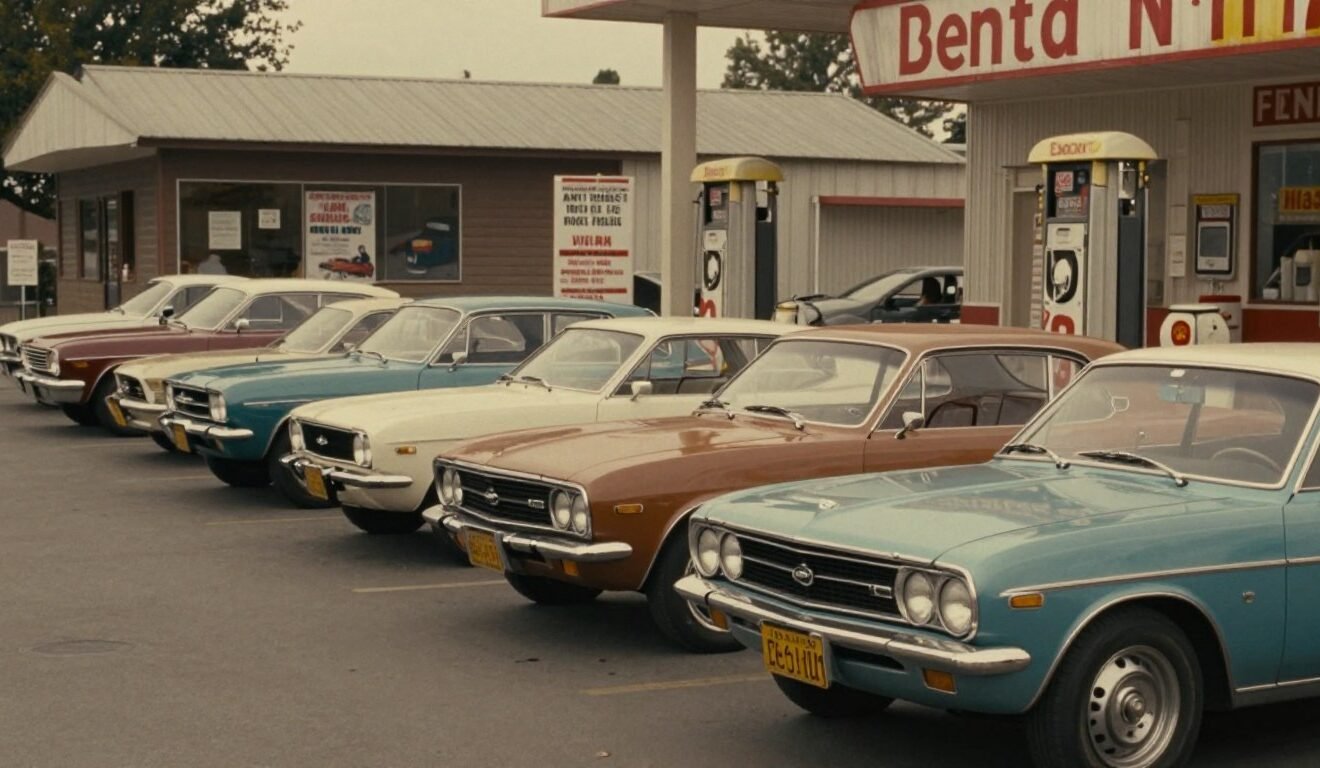
The 1970s Oil Crisis and the Cars It Created: Fuel Economy, Downsizing, and the “Malaise Era” Explain
The 1973 and 1979 energy crises changed the car world forever. Fuel lines wrapped around city blocks, forcing a big change. The era of big V8 “land yachts” ended, and cars became more fuel-efficient.

The oil embargo of 1973 and the Iranian Revolution in 1979 raised fuel prices. This changed how people bought cars and how they were made. Automakers had to focus on fuel economy and downsizing to meet new rules.
Key Takeaways
- The 1973 and 1979 energy crises led to a significant shift in the automotive industry.
- Fuel economy and downsizing became key priorities for automakers.
- New emissions regulations and CAFE standards were implemented.
- The era of big V8 “land yachts” came to an end.
- Consumer behavior changed in response to increased fuel prices.
The Perfect Storm: Understanding the 1970s Oil Crisis
A mix of political tensions and economic issues led to the 1970s oil crisis. This time was marked by two big events: the 1973 OPEC oil embargo and the 1979 Iranian Revolution.
The 1973 OPEC Oil Embargo: Causes and Immediate Effects
The 1973 OPEC oil embargo was a reaction to the Yom Kippur War. Arab oil-producing countries cut off oil to nations backing Israel. This move made oil prices jump four times, causing big economic problems.
Right away, people saw long lines at gas stations and fuel prices went up a lot.
The 1979 Iranian Revolution and Second Oil Shock
The 1979 Iranian Revolution was the second big oil shock of the decade. The fall of the Shah of Iran cut down oil production a lot. This made the global oil shortage worse.
This event also had big political effects, adding to the economic troubles.
Economic Impact: Inflation, Stagflation, and Consumer Panic
The oil crisis had a big impact on the economy. It led to high inflation and stagflation, a rare mix of slow growth and high prices. People were scared of fuel shortages and rising costs.
The table below shows the key economic signs of that time.
| Year | Inflation Rate (%) | Unemployment Rate (%) | Oil Price (USD/barrel) |
|---|---|---|---|
| 1973 | 3.3 | 4.9 | 3.56 |
| 1979 | 11.3 | 5.8 | 18.23 |
| 1980 | 13.5 | 7.1 | 35.69 |
The 1970s oil crisis had deep effects on the economy and changed global energy policies. Knowing about this time helps us understand today’s energy and politics.

America’s Car Culture Meets Reality: Gas Lines and Changing Priorities
The 1970s oil crisis changed America’s car culture. Gas lines and fuel shortages made muscle cars less popular. People began to look for cars that used less gas.
From Muscle to Economy: Shifting Consumer Preferences
People started choosing smaller, more fuel-efficient cars. The need for economy cars grew as gas-guzzlers lost favor. This change was due to the high cost of gas and the need for better fuel use.

The Gas Station Experience: Rationing, Odd-Even Days, and Shortages
Going to the gas station became a hassle. Long lines and odd-even rationing made things worse. This chaos pushed people towards cars that used less gas.
Public Reaction and the New Focus on Fuel Efficiency
The public felt frustrated, anxious, and adapted to the oil crisis. They began to value fuel efficiency more. The car industry then made more economical cars, changing America’s car culture.
The 1970s Oil Crisis Cars: How Government Policies Shaped the Industry
In the 1970s, the U.S. government made big changes to the car industry. They wanted to make cars use less fuel, pollute less, and fit the new energy world.
The National Maximum Speed Limit: 55 MPH America
The oil crisis led to a 55 MPH speed limit across the country. This was to cut down on fuel use by slowing down cars. It changed how people drove and saw cars, focusing on saving fuel over speed.
CAFE Standards and Their Impact on Automakers
The Corporate Average Fuel Economy (CAFE) standards were set to make cars more fuel-efficient. Car makers had to hit certain fuel targets, leading to new engine and design ideas. This push made cars use less fuel.

Emissions Regulations and the Catalytic Converter Mandate
In the 1970s, stricter emissions rules came in, making catalytic converters common. These converters cut down on bad emissions from cars. They also meant cars had to run on unleaded gas, changing the industry more.
The Shift to Unleaded Gasoline
Catalytic converters needed unleaded gas to work right, as leaded gas harmed them. This change in gas meant a big shift in how fuel was made and sold. It cut down on lead emissions and made the air cleaner.
| Policy | Impact |
|---|---|
| National Maximum Speed Limit | Reduced fuel consumption by limiting highway speeds to 55 MPH |
| CAFE Standards | Drove innovation in engine technology and vehicle design for better fuel efficiency |
| Emissions Regulations | Led to the adoption of catalytic converters, reducing harmful emissions |
| Shift to Unleaded Gasoline | Reduced lead emissions and improved air quality |
Detroit’s Scramble: How American Automakers Responded
The oil crisis hit Detroit hard, changing the car world forever. General Motors, Ford, and Chrysler had to act fast. They faced fuel shortages and high gas prices.
Downsizing Strategies Across the Big Three
The automakers made their cars smaller and lighter to save fuel. They used new designs and lighter materials to do this.

General Motors was first to downsize with new designs. Ford started by tweaking old models. Chrysler, struggling financially, had to get creative.
Platform Engineering: Lighter Materials and Space Efficiency
Platform engineering was key in downsizing. Automakers used aluminum and high-strength steel to cut weight. They also made interiors smaller and cars more compact.
Engine Development: Lower Compression and Smaller Displacements
Engine development was another focus. Automakers made engines use less fuel by lowering compression and size. This was a big change from the big, powerful engines before.
The Death of the Muscle Car Era
The oil crisis ended the muscle car era. High-performance cars were no longer practical with high fuel costs. The last muscle cars were made in the early 1970s, ending an era.
Technological Experiments Born from Necessity
The 1970s energy crisis pushed car makers to find new ways to save fuel. They looked for ways to make cars more efficient without losing power. This led to many new ideas and technologies.
Early Turbocharging Attempts: Performance with Efficiency
Turbocharging was a big step forward during this time. It forced more air into engines, boosting power while keeping engines small. This helped cars run better and use less fuel, setting the stage for future improvements.

The Diesel Experiment: Oldsmobile’s Troubled V8 and Import Alternatives
The 1970s also saw a comeback for diesel engines. Oldsmobile tried a diesel V8, but it had problems. Yet, Mercedes-Benz and others showed that diesel could work well, guiding the industry’s path.
Fuel Injection Development and Carburetor Refinements
Fuel injection technology got a big boost in the 1970s. New electronic systems made engines more efficient and powerful. This change was a big leap towards today’s fuel systems.
Weight Reduction Techniques and Material Innovation
Car makers also focused on making cars lighter. Using new materials and designs helped cut down on weight. This made cars more fuel-efficient and better for the environment.
The Rise of Japanese Imports During the Energy Crisis
In the 1970s, the oil crisis made American cars seem too thirsty. People started looking at Japanese cars for a better option. These Japanese cars were known for being fuel-efficient.
Honda, Toyota, and Datsun: The Fuel-Efficient Alternatives
Honda, Toyota, and Datsun became popular in the US for their fuel-saving cars. The Toyota Corolla, Honda Civic, and Datsun 240Z were known for being both economical and reliable.

Design Philosophy Differences: Japan vs. Detroit
Japanese car makers focused on simple designs, fuel efficiency, and reliability. American car makers, on the other hand, emphasized power and style.
This difference in design led many to choose Japanese cars for their practicality.
Market Share Shifts and Dealer Networks
Japanese imports started to take over the market. They grew their dealer networks across the US. This made their cars more available to more people.
| Year | Japanese Import Market Share | Major Models |
|---|---|---|
| 1975 | 9.3% | Toyota Corolla, Honda Civic |
| 1980 | 21.1% | Datsun 240Z, Toyota Celica |
Consumer Perception of Import Quality vs. American Cars
At first, Americans thought Japanese cars were more reliable and saved more fuel. They saw Japanese cars as better than many American models.
This led to a loyal customer base for Japanese car makers in the US. They began to challenge American car makers’ dominance.
Defining the “Malaise Era” in American Automobiles
The “Malaise Era” in American car history was a time of big changes. It happened in the 1970s and was marked by less power, more problems driving, and less attractive designs.
Performance Decline: From Horsepower to “Naderpower”
During the “Malaise Era,” cars got less powerful. This was because of new rules for better gas mileage. The strong muscle cars of the past were replaced by cars that were more fuel-efficient but less powerful.

Drivability Issues: Carburetion, Chokes, and Cold Starts
Driving problems became a big issue during this time. Cars had trouble starting, and issues with carburetors and chokes made driving hard. These problems came from trying to meet new safety and emissions rules.
Build Quality Challenges and Reliability Concerns
Quality and reliability of cars also went down during the “Malaise Era.” Companies were in a rush to follow new rules and save money. This led to cars that were less reliable and needed more repairs.
Aesthetic Compromises: 5-MPH Bumpers and Safety Features
Looks were also affected during the “Malaise Era.” Cars got 5-MPH bumpers and safety features that made them less pretty. These changes were for safety, but they didn’t help the car’s looks.
| Characteristics | Pre-“Malaise Era” | “Malaise Era” |
|---|---|---|
| Performance | High horsepower, powerful engines | Lower horsepower, emphasis on fuel efficiency |
| Drivability | Smooth, responsive | Issues with carburetion, chokes, and cold starts |
| Build Quality | Generally reliable, durable | Reliability concerns, maintenance issues |
| Aesthetics | Sleek, powerful designs | Compromised designs due to safety features and bumpers |
Timeline: Key Events That Transformed the American Automotive Landscape
A mix of oil embargoes, higher fuel costs, and new consumer tastes changed the American car scene in the 1970s.
1970-1973: Pre-Crisis and Early Warning Signs
Before the oil crisis, the car industry was booming with muscle cars and big sedans. But, signs of trouble were showing up, like higher insurance and worries about fuel use.
- 1970: EPA established to regulate emissions
- 1971: Nixon administration imposes wage and price controls
- 1973: OPEC oil embargo begins
1973-1975: First Oil Shock and Immediate Response
The 1973 OPEC oil embargo caused fuel shortages and long gas lines. It also made people want cars that used less fuel.
1976-1978: Adaptation Period and New Model Development
Car makers started to make cars that used less fuel and were smaller. They had to meet new rules and what people wanted.
1979-1981: Second Crisis and Accelerated Transformation
The 1979 Iranian Revolution led to another oil shock. This made the American car industry change even faster.
Before and After: Comparing Pre-Crisis and Post-Crisis Cars
The 1970s oil crisis changed cars a lot. They went from big gas guzzlers to cars that save fuel. This change came from new laws, what people wanted, and new tech.
Full-Size American Sedans: 1970 vs. 1980 Models
Full-size American sedans changed a lot from 1970 to 1980. In 1970, they were big, powerful, but used a lot of gas. By 1980, they were smaller, used less gas, and looked better.
Performance Cars: The Muscle Car to Efficiency Transition
The muscle car days ended as makers focused on saving gas. Cars got better at using fuel and handling, but lost some power.
The Rise of the Compact and Subcompact Segments
More people wanted cars that used less gas. So, compact and subcompact cars became popular. They were cheaper to run and better for the wallet.
Technical Specifications Comparison: Weight, Power, and Efficiency
Looking at the specs, we see big changes. Post-crisis cars were lighter and used less gas. For example, American cars lost 20% of their weight and got 50% better gas mileage from 1975 to 1985.
The 1970s oil crisis changed cars forever. It led to today’s cars, which are all about saving gas, being safe, and performing well.
Engineering Bright Spots: Innovation Amid Constraints
The 1970s oil crisis pushed American car makers to get creative. They had to make cars that used less fuel and produced fewer emissions. This led to some big engineering wins.
Chrysler’s Turbine Research and Early K-Car Development
Chrysler started working on a car powered by a turbine. It was a bold move, but it showed the company’s openness to new ideas. They also began working on the K-Car, a key part of their future lineup.
Ford’s European-Influenced Small Car Strategy
Ford took a page from Europe and focused on making smaller, more fuel-efficient cars. This move helped them quickly meet the needs of the market. It also helped them tap into the growing demand for smaller vehicles.
GM’s Downsizing Leadership and X-Body Platform
General Motors was at the forefront of making American cars smaller. They introduced the X-Body platform, which was lighter and used engines more efficiently. This made cars more fuel-friendly without losing space inside.
AMC’s Resource-Limited Creative Solutions
AMC, despite being smaller, found ways to overcome the oil crisis. They used light materials and designed cars to cut through the air better. These moves helped them stay competitive in a fast-changing market.
| Manufacturer | Innovation | Key Features |
|---|---|---|
| Chrysler | Turbine Research & K-Car | Turbine engine, compact design |
| Ford | European-Influenced Small Cars | Compact size, fuel efficiency |
| GM | X-Body Platform | Front-wheel drive, efficient engines |
| AMC | Lightweight Materials & Aerodynamics | Reduced weight, improved aerodynamics |
The 1970s oil crisis led to some amazing engineering feats. These innovations not only helped car makers get through tough times. They also paved the way for future car tech.
Conclusion: The Long-Term Legacy of the 1970s Energy Crisis
The 1970s energy crisis deeply changed the automotive industry. It made cars more fuel-efficient and changed how they were designed. This crisis made people care more about saving fuel and money.
American car makers had to change too. They made cars smaller and added new tech to save fuel. Today’s cars are a result of these changes, focusing on saving fuel and cutting down on emissions.
This crisis also led to new ideas in car making. Car companies started using turbochargers, diesel engines, and better fuel systems. These steps helped create the cars we see today.
The 1970s energy crisis taught the car industry a big lesson. It showed how important it is to be ready for changes and focus on saving fuel. As cars keep getting better, the lessons from back then will keep guiding the industry’s future.