




The Evolution of Automotive Engines Explained: From Steam to Internal Combustion and Beyond
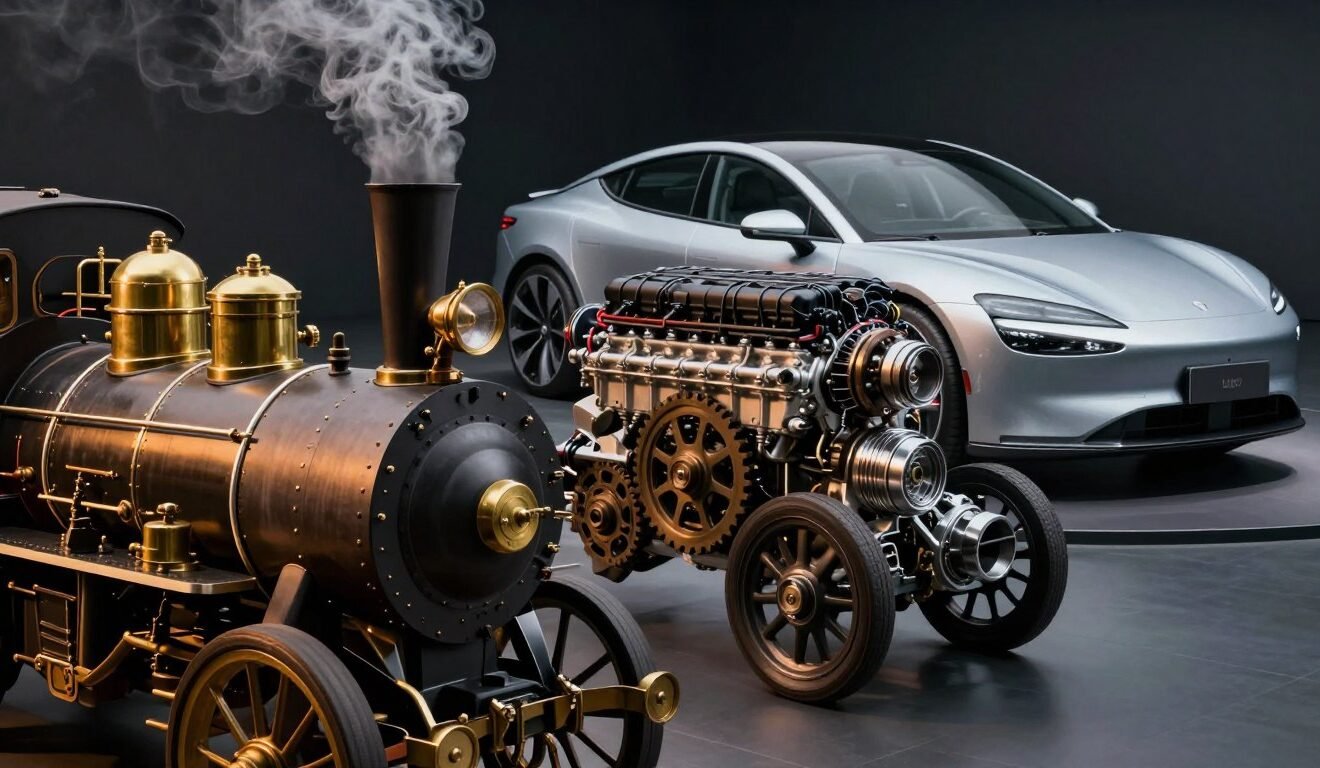
The Evolution of Automotive Engines Explained: From Steam to Internal Combustion and Beyond
The history of car engines is filled with innovation and change. For over a century, the development of car engines has led the auto industry forward.
From the first steam-powered machines to today’s advanced internal combustion engines, each step has changed how cars perform, use fuel, and last.

The journey started with the Watt Steam Engine. It was a game-changer that set the stage for today’s engines.
Key Takeaways
- The shift from steam to internal combustion engines was a big leap.
- Early breakthroughs set the stage for today’s car engine tech.
- The evolution of car engines has boosted performance and efficiency.
- New tech keeps shaping the future of how cars move.
- The story of car engines shows our creativity and drive for progress.
The Dawn of Automotive Power: Steam Engines
The history of cars started with steam power. Early tests with steam engines helped create better engine tech.

Early Steam-Powered Vehicles
In the late 1700s, the first steam cars came out. People like Nicolas-Joseph Cugnot made these early vehicles. They were big and slow but started car travel.
These cars were used to carry heavy loads and people.
Limitations of Steam Technology
Steam cars had big problems. They took a long time to start, needed water all the time, and were dangerous. These issues made them not good for daily driving.
| Aspect | Description | Impact |
|---|---|---|
| Startup Time | Long time required to generate steam | Limited practicality for daily use |
| Water Supply | Need for frequent water refills | Restricted travel range |
| Safety Concerns | Risk of boiler explosions | Public perception and regulatory hurdles |
Legacy of Steam in Automotive Design
Steam engines helped later car tech, like better engines and new ways to move. Even though they were replaced by gas engines, they were key in car design.
Steam cars were a big step in car tech. They led to new engine designs and car engineering.
Early Internal Combustion Engines
The evolution of internal combustion engines changed transportation. They offered a more efficient and compact option than steam engines. This big change in the late 19th century started the modern car industry.
The Invention of the Four-Stroke Cycle
Nicolaus August Otto patented the first successful gas engine, the Otto cycle, in 1876. The four-stroke cycle engine, with intake, compression, power, and exhaust, was a key innovation. This technology made engines more efficient and smaller, perfect for cars.
Otto and Benz: Pioneers of Gasoline Engines
Karl Benz, a German engineer, created a reliable two-stroke gas engine in the late 1870s. Around the same time, Nicolaus Otto worked on his four-stroke cycle. Their work together set the stage for gasoline engines that would lead the car industry for years. Benz also made the first practical car, a three-wheeled vehicle with his engine.
Early Engine Configurations and Designs
Early internal combustion engines had different designs, like inline and V-type. Here’s a look at some early engine types:
| Engine Type | Cylinders | Characteristics |
|---|---|---|
| Inline | 2-4 | Compact, straightforward design |
| V-Type | 4-8 | More compact than inline for higher cylinder counts, smoother operation |
| Single Cylinder | 1 | Simple, less powerful, used in early vehicles |

The early engine designs were key to the future of car engineering. As technology improved, makers could create more efficient, powerful, and smaller engines.
The Automotive Engine Evolution Through Mass Production
The mass production era was a key moment in engine development history. Manufacturers started using assembly lines, making standard and efficient engines essential.
Ford’s Model T and Engine Standardization
Ford’s Model T, introduced in 1908, changed car making and engine design. Its engine was simple and reliable, setting a new standard. Standardization made cars more efficient and cheaper, making them available to more people.
V-Engines and Increased Cylinder Configurations
Engine design got better as manufacturers tried new things. V-engines and more cylinders made engines run smoother and stronger. This was key for cars that needed more power.
Material Innovations in Engine Manufacturing
New materials and ways to make them were big in engine development. For example, using aluminum made engines lighter and more fuel-efficient.
| Material | Advantages | Impact on Engine Development |
|---|---|---|
| Aluminum Alloys | Lightweight, corrosion-resistant | Improved fuel efficiency, reduced engine weight |
| High-Strength Steel | Durable, high tensile strength | Enhanced engine longevity, improved performance |
| Advanced Ceramics | High-temperature resistance, low friction | Increased efficiency, reduced wear on engine components |
Standardization, new engine designs, and better materials greatly helped engine evolution during mass production.
Fuel Delivery Systems: From Carburetors to Injection
Fuel delivery systems have changed a lot, from old carburetors to new fuel injection. This change has made engines more efficient, perform better, and emit less pollution.
The Carburetor Era
The carburetor was the main way to get fuel to early car engines. It mixed air and fuel for burning, using the Venturi effect to pull fuel into the air. Even though carburetors worked well back then, they had some big drawbacks.
Key characteristics of carburetors include:
- Simple mechanical design
- Limited precision in fuel metering
- Prone to icing and vapor lock
Mechanical Fuel Injection Development
Mechanical fuel injection systems were a big step up from carburetors. They gave more control over fuel, making engines run better and more efficiently. These systems were great for high-performance cars.
- Increased precision in fuel delivery
- Improved engine performance
- Better adaptability to various engine conditions
Electronic Fuel Injection and Engine Management
Electronic fuel injection (EFI) changed engine management a lot. It made fuel delivery even more precise and controlled. EFI uses sensors and actuators to adjust fuel based on engine speed, load, and temperature.
The advantages of EFI include:
| Feature | Benefit |
|---|---|
| Precise fuel metering | Improved engine efficiency and performance |
| Real-time adjustments | Enhanced adaptability to driving conditions |
| Integration with engine management systems | Better emissions control and diagnostics |
In conclusion, moving from carburetors to electronic fuel injection has greatly improved engines. It has made them more efficient, perform better, and pollute less. This change has been key in making modern car engines what they are today.
Power Enhancement: Turbocharging and Supercharging
Forced induction systems, like turbocharging and supercharging, are key in modern cars. They boost engine efficiency by pushing more air into the cylinders. This lets more fuel burn, increasing power.
Early Forced Induction Systems
The idea of forced induction started in the early 1900s, in aircraft engines. The first turbochargers were made to solve engine power loss at high altitudes. These early systems were simple but laid the groundwork for today’s tech.
Turbocharging Technology Evolution
Turbocharging has come a long way, thanks to better materials and designs. Modern turbochargers offer a big power boost with less loss in efficiency. The invention of wastegate technology is key in managing boost pressure and avoiding engine damage.
Modern Twin-Turbo and Variable Geometry Systems
New advancements include twin-turbo setups and variable geometry turbochargers (VGT). Twin-turbo systems use two turbochargers to cut down on turbo lag. VGTs adjust turbine blades for better performance at different engine speeds, boosting efficiency and power.
| Technology | Description | Benefits |
|---|---|---|
| Turbocharging | Uses exhaust gases to drive a turbine, compressing air into the engine. | Increased power, improved efficiency |
| Twin-Turbo | Employs two turbochargers for enhanced responsiveness. | Reduced turbo lag, improved performance |
| Variable Geometry Turbochargers | Adjusts turbine blade angles for optimal performance. | Better efficiency, enhanced power delivery |
Diesel Engine Development
The story of diesel engines is one of constant improvement. It started with Rudolf Diesel’s invention and has grown to today’s clean diesel technologies. This journey was driven by the need for engines that are more efficient and powerful, mainly for heavy-duty use.
Rudolf Diesel’s Innovation
Rudolf Diesel’s creation of the diesel engine in the late 19th century was a major breakthrough. His design used compression ignition, which made engines more efficient and powerful. The first diesel engine was patented in 1893, marking the beginning of more efficient engines.
Key features of Diesel’s innovation included:
- Compression ignition technology
- Improved fuel efficiency
- Higher torque output
Commercial and Passenger Vehicle Applications
Diesel engines quickly became popular in commercial vehicles like trucks and buses. They were chosen for their high torque and efficiency. Later, they also became common in passenger cars, mainly in Europe, where diesel is cheaper and more available. Their use in cars is due to their fuel efficiency and long-lasting nature.
Modern Clean Diesel Technologies
Today’s diesel engines use advanced tech to cut emissions and boost performance. These include better fuel injection systems, exhaust gas recirculation (EGR), and selective catalytic reduction (SCR). These advancements have made diesel engines more environmentally friendly, suitable for many uses.
The future of diesel engines will focus on reducing emissions and increasing efficiency. As the auto industry keeps growing, diesel engines will likely stay a key part of our powertrain options.
Emissions Controls and Environmental Regulations
The need to reduce environmental impact has led to big changes in car engineering, mainly in emissions control. As governments set stricter rules, the car industry came up with new tech to cut down emissions a lot.
The Catalytic Converter Revolution
The 1970s saw the start of the catalytic converter era. This tech turns bad pollutants into safer stuff like carbon dioxide and water vapor. Over time, it’s gotten better and is now a must-have in cars.
Key advancements in catalytic converter technology include:
- Development of three-way catalysts that cut down nitrogen oxides, carbon monoxide, and unburnt hydrocarbons at once.
- Improvements in materials and coatings to make it work better and last longer.
Emission Standards and Their Impact on Design
Tough emission rules have pushed car makers to get creative and change engine designs. These rules have led to better burning of fuel, new fuel injection systems, and smart engine control systems.
| Emission Standard | Year Implemented | Key Requirements |
|---|---|---|
| Euro 1 | 1992 | Introduced emissions testing for vehicles |
| Euro 6 | 2014 | Significantly reduced NOx and particulate emissions |
Engine Management for Environmental Compliance
Today’s engine management systems are key to keeping cars green. They use smart sensors and software to make engines run better, cut emissions, and save fuel.
Key features of advanced engine management systems include:
- Real-time monitoring of engine parameters to optimize combustion.
- Adaptive control strategies that adjust to driving conditions.
Hybrid and Alternative Powertrain Systems
Hybrid and alternative powertrain systems are key in car tech evolution. They come from environmental worries and rules. These systems mix engines and electric motors for better fuel use and less pollution.
Early Hybrid Concepts and Implementations
The idea of hybrid cars started in the late 19th century. But, the first modern hybrids came out in the late 1990s. The Toyota Prius, for example, showed hybrids could work well. It helped make more advanced hybrid systems possible.
Toyota Prius and Mainstream Hybrid Adoption
The Toyota Prius, launched in 1997, was a big step for hybrids. It made hybrids popular by showing they could save fuel and cut emissions. Its success made other car makers create their own hybrids, growing the market.
Plug-in Hybrids and Range Extenders
Plug-in hybrids and range extenders are new and exciting. Plug-in hybrids can charge from outside, making them go further on electric. Range extenders use a small engine to charge an electric motor, letting cars go longer without needing to recharge.
These new powertrain systems are important for car engineering’s future. They offer a mix of power, efficiency, and green benefits.
Conclusion: The Future of Automotive Engines
The automotive engine has changed a lot over time. It’s all about getting better performance, being more efficient, and being kind to the environment. Today, we see big changes like going electric, making engines smaller, and looking into new fuels.
The history of engine development is key to understanding what’s next. It shows how far we’ve come in making engines better. Thanks to new materials, designs, and tech, engines are now more efficient and strong.
The story of the automotive engine is not just about the past. It’s also about what’s to come. As car makers keep improving engine tech, they’ll keep working on making engines cleaner and more efficient. This is what drives innovation in engines.