




Turbocharging: From Racing Innovation to Daily Driving Performance
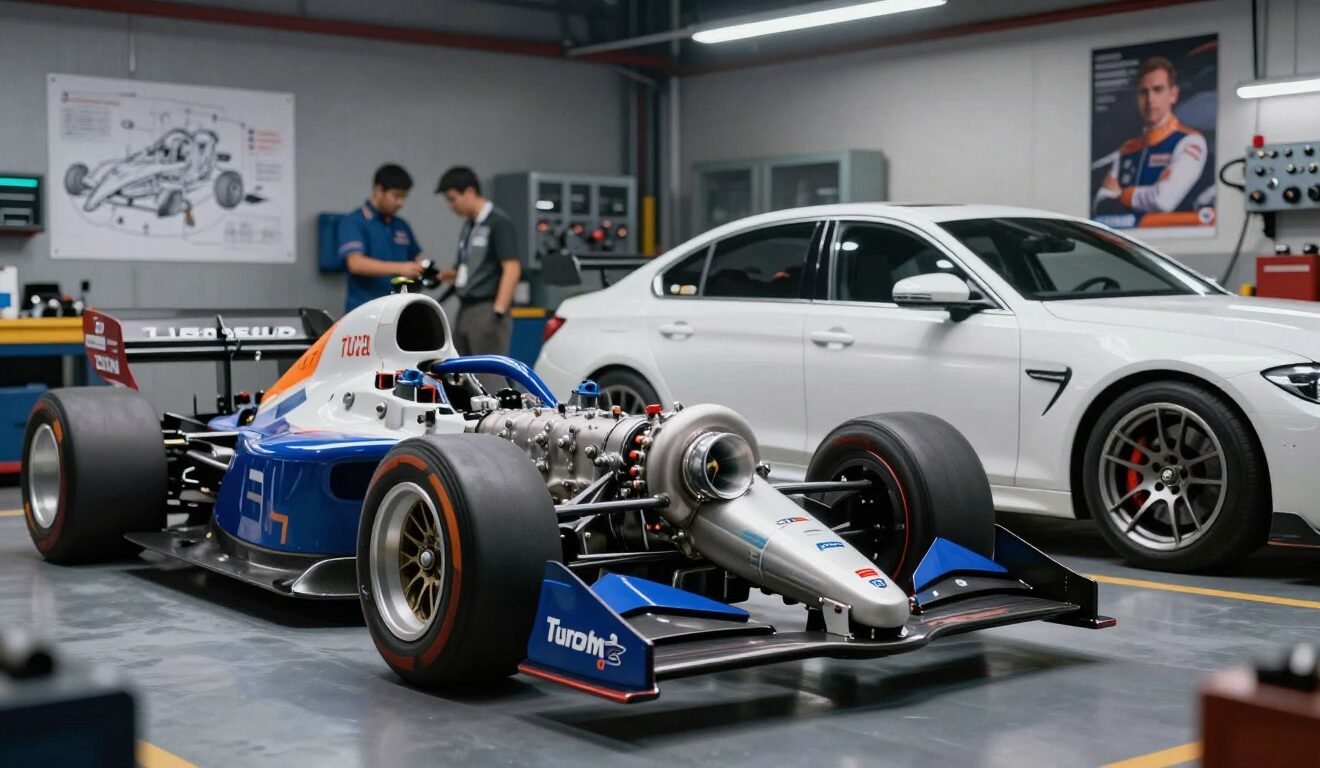
Turbocharging: From Racing Innovation to Daily Driving Performance
For nearly 70 years, companies like Garrett Motion have led in forced induction tech. They’ve changed the car world. Turbocharger tech was born for speed and efficiency in tough conditions.

At first, turbocharging was for race tracks and high-performance cars. Now, it’s a key part of modern cars. It mixes power, fuel savings, and less emissions. This shows racing tech can also improve our daily drives.
Key Takeaways
- The concept of turbocharging started in aviation and motorsport.
- Turbocharger tech has become common in cars.
- Forced induction has greatly improved engine performance and efficiency.
- Companies like Garrett Motion have been leaders in turbocharging tech.
- The use of turbocharging has made driving better every day.
The Birth of Forced Induction: Early Turbocharging Origins
The need for power at high altitudes led to the innovation of turbocharging in aviation. At high elevations, engines lose power due to lower air pressure and oxygen levels. Turbocharging was developed to solve this problem.
Aviation Roots: High-Altitude Performance Solutions
Turbocharging first found a big use in aviation, mainly in military planes during World War I and World War II. It helped planes keep their power and performance at high altitudes. This gave them a big advantage.
Alfred Büchi’s Original Patent and Concept
Alfred Büchi patented the turbocharger in 1905. His invention used exhaust gases to drive a turbine. This turbine compressed air and forced it into the engine, boosting power.
World War II Aircraft Applications
In World War II, turbochargers were key for military planes, letting them fly higher and faster. The tech was vital in the war, with both sides using turbocharged engines in their planes.
| Year | Event | Significance |
|---|---|---|
| 1905 | Alfred Büchi patents turbocharger | Marks the beginning of forced induction technology |
| 1910s-1940s | Turbocharging in aviation | Enables high-altitude flight, critical for military aircraft |
| 1955 | First Garrett turbo developed | Expands turbocharging beyond aviation to industrial uses |

Turbocharging History: The Racing Revolution
The turbocharging revolution changed the game in motorsport. It made cars more powerful and efficient. This shift changed racing forever.
Formula 1’s Turbo Era: Pushing the Boundaries
In the 1980s, Formula 1 cars got turbocharged. This led to the most powerful cars in history. The turbo era was a time of great engine innovation.
The 1500-Horsepower Monsters
These cars could make over 1500 horsepower. This was a huge leap in power for racing.
Technical Innovations Born from Competition
Formula 1’s fierce competition led to new tech. This included better materials and engine management. These advancements also helped production cars.
Rally Racing: Turbocharging in Extreme Conditions
Rally racing was tough for turbo tech. Cars faced harsh conditions on rough courses. This pushed turbo engines to their limits.
Group B: The Golden Age of Turbo Power
Group B rally cars were the peak of turbo power. Cars like the Audi Quattro S1 became legends. They were known for their speed and handling.
Lessons Learned from Dirt and Gravel
Rally racing taught makers how to make turbo systems better. These lessons helped make turbocharging reliable for everyday cars.
| Motorsport | Turbocharging Innovation | Impact on Production Cars |
|---|---|---|
| Formula 1 | Advanced engine management | Better fuel efficiency |
| Rally Racing | Robust turbo systems | Increased durability |

The Technical Fundamentals of Turbocharging
Turbocharged engines use exhaust gases to boost power. This tech is key in modern cars, making engines more efficient without growing them.
How Turbochargers Work: Harnessing Exhaust Energy
Turbochargers use exhaust energy to drive a turbine. This turbine powers a compressor to push more air into the engine. This boost in air lets the engine make more power.
Compressor and Turbine Wheel Dynamics
The compressor and turbine wheels are vital. They spin fast, with the turbine driven by exhaust and the compressor by air. Their speed is key for the turbocharger to work well.
Boost Pressure Explained
Boost pressure is the turbo’s air push into the engine. It’s measured in PSI or bar. This pressure is what boosts the engine’s power.
Turbocharging vs. Supercharging: Key Differences
Turbocharging and supercharging increase engine power. But they work differently. Turbochargers use exhaust gases, while superchargers are engine-driven. This affects their efficiency and how they work in different engines.
Early Challenges: The Growing Pains of Turbo Technology
When turbocharging first came around, it brought a lot of problems. These issues made it hard for car makers to get the tech right. They struggled with both how well the car performed and how reliable it was.
The Battle Against Turbo Lag
One big problem was turbo lag. This meant the car would slow down before speeding up. It happened because the turbocharger took time to get up to speed.
The Physics of Spool-up Time
The spool-up time was affected by the turbo’s weight and the exhaust’s energy. It was a tough issue to solve, needing new ideas to cut down the delay.
Early Driver Adaptations
Drivers had to change how they drove to deal with turbo lag. They learned to guess when they needed more power. This was different from driving cars without turbochargers.
Heat Management and Reliability Issues
Another big problem was heat management. Turbochargers made a lot of heat, which could cause engine knock or pinging. The materials used back then couldn’t handle the high temperatures and stress.
Material Limitations and Failures
The materials used in early turbochargers couldn’t handle the extreme conditions. This led to many failures. New, stronger materials were needed.
Cooling System Challenges
Good cooling systems were key to dealing with the heat. Car makers had to create better cooling systems to make turbochargers more reliable.
Thanks to better materials and cooling systems, turbochargers are now a key part of car engines. The work on turbo technology keeps changing the car world.
Iconic Turbocharged Race Cars That Changed Motorsport
Turbocharging has changed motorsport in big ways. It led to some of the most famous race cars. These cars not only won races but also showed new levels of performance and innovation.
Porsche 917/30: The Can-Am Dominator
The Porsche 917/30 is a legend in turbocharged race cars. It raced in the Can-Am series and showed what turbocharging could do. With its 1,100 horsepower engine, it was almost unbeatable, winning many championships and making Porsche a top name in racing.
Renault RS01: Formula 1’s Turbo Pioneer
The Renault RS01 was the first turbocharged car in Formula 1. It started a new era in Grand Prix racing. At first, it had reliability problems, but it showed turbocharging could work in F1, leading others to follow.
Audi Quattro: Rally’s Turbo Revolution
The Audi Quattro was a game-changer in rally racing. It had an all-wheel-drive system and a turbocharged engine. This made it a top contender, winning many World Rally Championships.
The impact of these iconic cars is felt in motorsport today. Their innovations in turbocharging have helped improve racing and production cars alike.
- Dominance in their respective racing categories
- Innovations in turbocharging technology
- Lasting impact on production car design
The First Wave of Production Turbo Cars
As turbocharging technology improved, it began to show up in cars. This big change in the car world marked a new era. Car makers started using turbocharging to boost performance.
Chevrolet Corvair Monza and Oldsmobile Jetfire: America’s Turbo Pioneers
The Chevrolet Corvair Monza and Oldsmobile Jetfire were the first American cars with turbochargers. They came out in the early 1960s. These cars showed how turbocharged engines could work in everyday cars.
But, they also had issues with reliability and turbo lag.
Porsche 911 Turbo: The Widowmaker
The Porsche 911 Turbo, introduced in the 1970s, became a legend in turbocharged cars. Known as the “Widowmaker” for its fast speed, it was a powerful car. Its success helped make Porsches known for their speed.
Saab 99 Turbo: Bringing Forced Induction to the Masses
The Saab 99 Turbo, launched in 1978, was a game-changer. It made turbocharging popular with more people. Saab showed that turbocharging could make cars better for daily driving, not just for racing.
These early turbo cars set the stage for today’s turbocharged cars. They showed how turbocharging could make cars faster and more fuel-efficient. This led to more innovation in the car world.
Engineering Breakthroughs: Making Turbos Practical for Daily Use
Turbochargers have become a key part of modern cars. They were once only for racing, but now they boost power and efficiency in everyday driving.
Intercooling Innovations: Taming the Heat
One big challenge with turbochargers is the heat they produce. New cooling technologies have helped solve this problem.
Air-to-Air vs. Water-to-Air Systems
There are two main types of cooling systems for turbochargers. Air-to-air systems use outside air to cool the air. Water-to-air systems use a coolant for better cooling in some situations.
Efficiency Gains Through Cooling
Cooling the air makes turbochargers more efficient and powerful. It helps the air-fuel mix burn better, improving how well the engine works.
Wastegate and Boost Control Evolution
New technologies in wastegate and boost control have made turbochargers more useful.
From Mechanical to Electronic Control
The switch to electronic control has made boost control more precise and reliable. Electronic systems can adjust boost pressure on the fly, improving performance and reducing lag.
Precision Boost Management
Precision boost management helps engines run at their best. It balances power, efficiency, emissions, and fuel use.
Materials Science: Building More Durable Turbos
New materials and methods have made turbochargers last longer. This means less maintenance and more reliability for drivers.
| Engineering Breakthrough | Impact on Turbocharging |
|---|---|
| Intercooling Innovations | Increased efficiency and power output |
| Wastegate and Boost Control Evolution | Improved precision and reliability |
| Advances in Materials Science | Enhanced durability and reduced maintenance |
The Efficiency Revolution: Turbocharging Meets Emissions Regulations
Turbocharging became key in the quest for better fuel efficiency and lower emissions. The world faced the oil crisis and strict emissions rules. Turbocharging was a major solution.
The Oil Crisis and the Push for Fuel Economy
The 1970s oil crisis showed the need for fuel-efficient cars. Government rules and changing consumer wants drove this change.
Government Mandates and Corporate Average Fuel Economy
Government rules, like the Corporate Average Fuel Economy (CAFE) in the U.S., pushed for fuel-efficient cars. Turbocharging helped meet these standards without losing power.
Consumer Demand Shifts
People started wanting cars that were fuel-efficient but powerful. Turbocharging met this need by boosting performance while keeping fuel use low.
Emissions Standards and the Turbo Solution
Turbocharging was also key in meeting emissions standards. It allowed engines to be smaller but just as powerful, reducing emissions.
Catalytic Converters and Turbocharging Compatibility
Combining turbocharging with technologies like catalytic converters improved emissions reduction. Turbocharging worked well with these technologies, boosting their effect.
Reducing Carbon Footprint Through Forced Induction
Forced induction through turbocharging helped cut down on carbon emissions. It made engines more efficient, reducing emissions per mile.
Turbocharging played a big role in the efficiency revolution. It helped the auto industry meet emissions rules while keeping cars powerful. This technology has shaped today’s cars.
Engine Downsizing: The Modern Turbo Approach
Engine downsizing through turbocharging is key in modern car design. It balances power and fuel efficiency. This method is popular as makers try to meet strict emissions rules without losing performance.
Replacing Displacement: Small Engines, Big Power
Using smaller, turbocharged engines instead of big ones is now common. This change helps cut emissions and boost fuel economy.
The 2.0-Liter Turbo Revolution
The 2.0-liter turbocharged engine is a hit in many cars. It mixes power with fuel efficiency well. Its wide use shows downsizing’s success.
Power-to-Weight Advantages
Turbocharged engines give big power-to-weight benefits. They help cars go faster and respond quicker. This is great for smaller cars where less weight is key.
The Performance-Efficiency Balance
Engine downsizing aims for a mix of power and efficiency. Turbocharging is key here. It boosts fuel economy without losing power.
Real-World Fuel Economy Benefits
In everyday driving, turbocharged engines save a lot on fuel. Drivers see better mileage and lower fuel bills over time.
Meeting Consumer Expectations
People want cars that are both strong and fuel-savvy. Turbocharged engines meet this need. They offer a mix of power and economy.
Challenges like turbo lag and heat issues have been solved with new tech. Today’s turbocharged engines are more efficient and reliable. They’re a big part of modern cars.
Advanced Turbo Technologies in Modern Vehicles
The car world is on the verge of a big change with new turbo tech. Today’s cars use smart turbo systems to boost performance and save fuel.
Twin-Scroll and Variable Geometry Turbochargers
Twin-scroll turbos are a big leap in turbo tech. They split exhaust pulses to cut down on turbo lag and make cars more responsive.
Eliminating Lag Through Design
The design of twin-scroll turbos naturally cuts down on lag. This is because they reduce the clash between exhaust pulses, leading to quicker boost.
Broadening the Power Band
Variable geometry turbos change the turbine blade angle to work better at all engine speeds. This widens the power range.
Electric Turbochargers and Hybrid Assistance
Electric turbos and hybrid tech are changing turbo performance. They make cars more efficient and cut down on emissions.
E-Turbo Technology
E-turbo tech uses an electric motor to power the turbocharger. This means no lag and instant boost. It’s great for hybrid and electric cars.
Integration with Hybrid Powertrains
Pairing electric turbos with hybrid engines makes cars more efficient and powerful. It lets for better control over the turbo, improving both power and fuel use.
As cars keep getting better, these advanced turbo techs will be key. They help make cars more efficient, cut emissions, and improve how they drive. They mark a big step in car engineering.
Turbocharging’s Impact on Everyday Driving Experience
Turbocharged engines have changed how we drive. They offer better performance and save fuel. This tech makes driving more fun and efficient.
Power Delivery and Drivability Improvements
Turbocharging has made engines more powerful and easier to drive. Modern turbo engines give power smoothly, without the old lag.
From On/Off Power to Linear Delivery
Now, turbo engines give power smoothly, not in big jumps. This makes driving feel more natural and fun.
NVH Considerations and Solutions
Noise, Vibration, and Harshness (NVH) matter a lot in driving. Turbo engines brought new NVH issues. But, new tech has solved these problems, making rides quieter and more comfy.
The Democratization of Performance
Turbocharging has made fast car speeds available in everyday cars. This change has made people think differently about car performance.
Economy Cars with Sports Car Acceleration
Now, even economy cars can go as fast as sports cars. This has made more people want to drive fast cars.
Consumer Perception Shifts
With turbo engines in common cars, people expect more from their vehicles. They want fast cars, no matter the type.
| Feature | Pre-Turbocharging | Post-Turbocharging |
|---|---|---|
| Power Delivery | Abrupt and Laggy | Smooth and Linear |
| Drivability | Less Responsive | More Engaging |
| NVH | Generally Quieter | Managed with Technology |
Conclusion: Turbocharging’s Enduring Legacy and Future
Turbocharging has come a long way from its early days in aviation and motorsports. Now, it’s a common feature in today’s cars. It has greatly improved engine performance and helped meet strict emissions rules.
The future of turbocharging is bright, thanks to ongoing improvements in materials and design. These advancements will keep making engines more efficient and powerful. As cars become more eco-friendly, turbocharging will play a big role in this change.
Turbocharging is now found in many types of cars, from small ones to sports cars. Looking ahead, it will work even better with new technologies like hybrids and electric cars. This will make cars more efficient and better for the environment.