




Why the Ford Model T Changed Manufacturing Forever and Shaped the Modern World
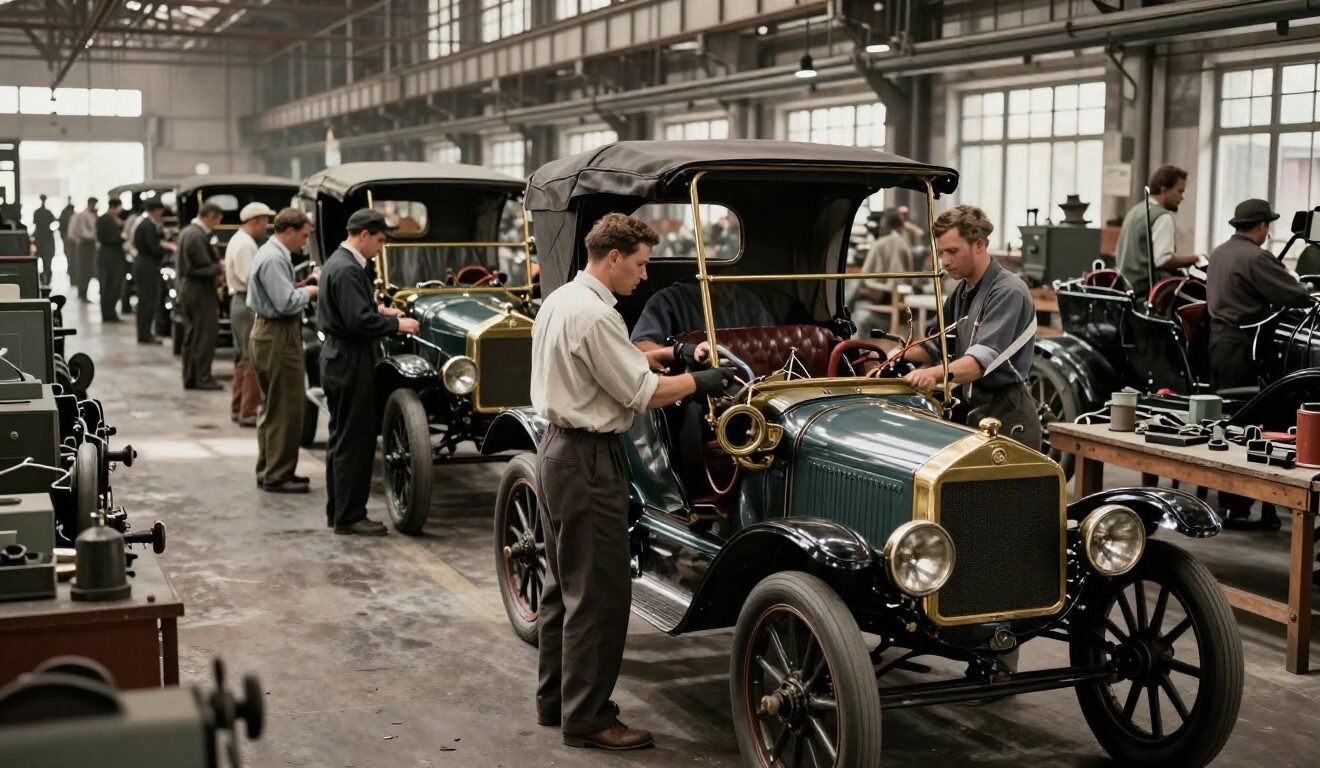
Why the Ford Model T Changed Manufacturing Forever and Shaped the Modern World
The Ford Model T changed the game in automotive manufacturing. It made cars affordable for many Americans. This change didn’t just improve transportation. It also changed how things are made on a large scale.

Henry Ford brought new ideas to making cars. He used an assembly line to make cars cheaper. This made driving a car possible for more people.
This big change affected many areas. It changed how factories work, jobs, and how people buy things. It had a big impact all over the world.
Key Takeaways
- The Ford Model T was the first mass-affordable automobile.
- Henry Ford’s assembly line production revolutionized manufacturing.
- The Model T made car travel available to middle-class Americans.
- Ford’s innovations had a significant impact on global manufacturing.
- The changes brought about by the Model T reshaped consumer culture.
The Birth of an Automotive Revolution
The early 20th century in America was on the verge of a big change. People were moving from horse-drawn carriages to cars. This change was going to affect how things were made and how people lived.
America Before the Model T
Before the Model T, cars were rare, pricey, and often broke down. Only the rich could afford them. Cars were made one at a time, making them very expensive.
This made cars hard for most Americans to get.
Looking back, we see how much the car world changed after the Model T came out.
| Characteristics | Pre-Model T Era | Post-Model T Era |
|---|---|---|
| Production Method | Handcrafted | Assembly Line |
| Price | Expensive | Affordable |
| Accessibility | Limited to the wealthy | Mass market |
Henry Ford’s Vision for Mass Mobility
Henry Ford wanted a car for everyone, big enough for families but small enough for one person to handle. He thought making cars cheaper and more reliable could change how people moved around. Ford’s dream was to make cars a part of everyday life.

Ford’s new way of making cars made them affordable for many. This changed the car world forever.
Henry Ford’s Manufacturing Philosophy
Henry Ford’s vision for mass production changed the face of manufacturing forever. His approach was multifaceted, involving significant shifts in production methods, workforce management, and supply chain control.
From Craftsman to Industrialist
Henry Ford’s journey from being a craftsman to an industrialist was marked by his adoption of new manufacturing technologies and techniques. He recognized the power of machinery and assembly lines to boost productivity and cut costs.
The Pursuit of Efficiency and Standardization
Ford’s pursuit of efficiency and standardization led to the introduction of interchangeable parts and the assembly line production method. This not only reduced production time but also made automobiles more affordable for the average consumer.

| Year | Production Method | Production Time |
|---|---|---|
| 1908 | Craftsmanship | 12 hours |
| 1913 | Assembly Line | 2.5 hours |
Vertical Integration Strategy
Ford implemented a vertical integration strategy, controlling various stages of production, from raw materials to final assembly. This approach allowed Ford to reduce costs, improve quality, and increase efficiency.
By integrating manufacturing processes, Ford was able to achieve a significant reduction in production costs. This made the Model T more affordable for the masses.
The Ford Model T Manufacturing Revolution
With the Model T, Ford changed how cars were made. It started in 1908 and brought new ways to make cars. These new methods made cars cheaper and more available.
Breaking with Traditional Production Methods
The Model T changed car making by using groundbreaking techniques. These made making cars faster and cheaper. Before, making cars took a lot of time and needed skilled workers.
But the Model T’s production line was different. It was designed for efficiency. It used simple tasks that anyone could do.
The Highland Park Factory: America’s Manufacturing Laboratory
The Highland Park Factory was where the Model T was made. It was a place of innovative manufacturing techniques. Henry Ford and his team worked there to make the car-making process better.
The factory was known as “America’s Manufacturing Laboratory.” It was a place to test new ways to make cars.
Scientific Management Principles in Practice
Ford’s car making followed scientific management principles. These principles aimed to make work more efficient. Time and motion studies helped make each task better.
Workers were trained for specific jobs. This made car making faster and more efficient. It also cut down on waste and made more cars.
These changes made the Model T cheaper and more available. This changed the car industry and beyond.
Standardized Parts: The Foundation of Mass Production
Standardized parts were key to the Ford Model T’s success. They made assembly simpler and cheaper. This led to better quality and consistency in mass production.

Interchangeable Components
The use of interchangeable components changed manufacturing. It made parts identical and easy to swap. This cut down assembly time and made repairs simpler for owners.
Precision Engineering and Quality Control
Precision engineering was vital for making these parts. Ford spent a lot on machines that made parts exactly right. They also had strict quality control to ensure every part was perfect.
Materials Innovation and Sourcing
Success with standardized parts also came from materials innovation and sourcing. Ford worked with suppliers to find new materials and methods. This led to parts that were stronger and lasted longer, making the Model T better.
By using standardized parts, precision engineering, and new materials, Ford made the Model T a huge success. This changed the car industry and influenced manufacturing everywhere.
The Moving Assembly Line: Engineering Efficiency
Henry Ford’s moving assembly line changed the game in the automotive world. It made cars cheaper and more available to everyone. This big change happened at the Highland Park Factory.
From Stationary to Moving Production
Switching to a moving assembly line was a big step up. It made the factory work better by not needing workers to move around. This made the whole process more organized and efficient.

Reducing Assembly Time from Hours to Minutes
The moving assembly line cut down the time it took to make a Model T. Before, it took hours; now, it was just minutes. This huge time cut was thanks to the line’s efficiency.
“The assembly line was a natural outgrowth of the principles of interchangeability and the division of labor.”
Continuous Improvement of the Line
Ford kept making the assembly line better. He used time and motion studies to find ways to improve. This never-ending effort kept Ford ahead in the fast-changing car world.
Time and Motion Studies
Time and motion studies were key to making the line better. Ford looked at each task and cut out unnecessary steps. This table shows how these studies helped:
| Task | Original Time | Optimized Time |
|---|---|---|
| Engine Assembly | 2.5 hours | 1.2 hours |
| Chassis Assembly | 3 hours | 1.5 hours |
| Final Assembly | 4 hours | 2.5 hours |
The moving assembly line and time and motion studies changed manufacturing. They made making cars faster and better. This big change didn’t just help cars; it changed how things are made all over.
Labor Specialization and the Division of Work
The division of labor was key in creating the modern manufacturing world. Henry Ford broke down big tasks into smaller ones. This made his production lines much more efficient.
Breaking Down Complex Tasks
By splitting tasks into simple steps, Ford made his workers’ jobs easier. This way, he could cut down production time and costs. It made the Model T cheaper for everyone.
Training and Workforce Management
With tasks simplified, Ford started a strict training program. This ensured workers could do their jobs well. Good workforce management was key to keep the assembly line running smoothly.
Worker Turnover and Monotony Challenges
But, Ford faced issues with worker turnover and boredom. The repetitive tasks made workers unhappy, leading to many leaving. To keep workers, Ford raised their wages to $5 a day.
| Aspect | Benefits | Challenges |
|---|---|---|
| Labor Specialization | Increased Efficiency | Worker Monotony |
| Division of Work | Reduced Production Time | High Worker Turnover |
| Workforce Management | Improved Productivity | Training Requirements |

In summary, labor specialization and dividing work were vital for the Ford Model T’s success. It had its downsides like worker turnover and boredom. But, the gains in efficiency and lower costs were huge.
The Economics of Model T Production
The Model T changed the car industry a lot. It was because of how Ford made it, which made cars cheaper over time. This wasn’t just a trick to sell more cars. It was because of new ways to make things and manage costs.
Dramatic Cost Reduction Strategies
Ford used smart ways to cut costs. They used the same parts for all cars, had a moving assembly line, and made each job simpler. These steps made making cars faster and cheaper. For example, making the car’s frame used to take 12 hours. Then, it took only 2.5 hours with the new line.
Key cost reduction strategies included:
- Standardization of parts
- Division of labor
- Mechanization of processes
Making Automobiles Affordable for the Masses
By cutting costs, Ford made the Model T cheaper. This made owning a car possible for many people. It was a big change for Americans.
Price Trends and Market Penetration
The Model T’s price went down a lot, from $850 in 1908 to $260 in 1925. This big drop in price helped more people buy cars.
The $850 to $260 Price Revolution
| Year | Price |
|---|---|
| 1908 | $850 |
| 1913 | $550 |
| 1925 | $260 |
The big drop in price helped Ford sell more cars. It also changed the car industry a lot. The Model T made cars affordable, helping suburbs grow and changing American life.

The Five Dollar Day: Revolutionizing Industrial Labor
On January 5, 1914, Henry Ford introduced a groundbreaking wage structure. He doubled the average wage to $5 a day. This move changed industrial labor forever.
It had big effects on Ford’s workers and the whole industry.
Ford’s Wage Reform Shock
Ford’s $5 day wage shocked the industrial world. Many thought it would hurt Ford’s profits. But Ford believed it would boost worker productivity and cut down on turnover.
This change was a game-changer for workers. It gave them more money and better lives.
Creating Consumers from Workers
Ford wanted to make workers into consumers. He doubled their wages so they could buy Ford cars. This move helped Ford’s sales and boosted the economy.

Social Engineering and the Sociological Department
Ford created the Sociological Department to help workers. It looked into their living conditions and taught them about finance, health, and hygiene. This was part of Ford’s social engineering plan.
The department helped workers adjust to their new wages. It ensured they made the most of the $5 day wage.
Global Impact of Ford’s Manufacturing Methods
The Ford Model T changed the game worldwide, not just in the United States. Henry Ford’s new ways of making things were adopted everywhere. This changed how goods were made and sold.
International Adoption of Assembly Line Production
Soon, companies all over the world started using Ford’s assembly line method. This was true in Europe, Asia, and other places. It made making things faster and cheaper.
This big change in how things were made helped mass production grow globally.
Fordism as a Global Industrial Philosophy
Fordism, based on Ford’s ideas, became a big deal in the world of work. It was all about making things the same way, using machines to work better. Fordism wasn’t just for cars; it changed many industries.
Competing Manufacturing Systems
But Fordism wasn’t the only game in town. Other ideas, like Lean Manufacturing from Toyota, came along.
Toyota and Lean Manufacturing Evolution
Toyota’s Lean Manufacturing aimed to cut waste and work better. It was a new way to make things, responding to the world’s changing needs.
| Manufacturing Philosophy | Key Features | Primary Focus |
|---|---|---|
| Fordism | Standardization, specialization, assembly line production | Mass production, efficiency |
| Lean Manufacturing | Minimizing waste, just-in-time production, continuous improvement | Flexibility, quality, efficiency |
The rise of Lean Manufacturing shows Ford’s ideas keep shaping the world of work. As we keep making things better, knowing where these ideas came from is key.
Beyond Automobiles: The Model T’s Cross-Industry Influence
The Ford Model T changed the world, not just cars. It made a big impact on how things are made and sold. This change was seen in many areas, making products and services better for everyone.
How Other Industries Adopted Ford’s Methods
Many industries, like making consumer goods and furniture, followed Ford’s lead. Companies like General Electric and Westinghouse Electric used assembly lines to save time and money. Even service industries started to work smarter, thanks to Ford’s ideas.
From Consumer Goods to Military Production
In World War II, Ford’s methods helped make war materials fast. Factories that made cars turned to making planes, tanks, and more. This showed how Ford’s ideas could be used for many things, not just cars.
Modern Mass Production Descendants
Today, we see the Model T’s impact in how things are made. The idea of mass production has grown, with new tech and automation. Now, we have lean manufacturing and just-in-time systems, making things more efficient and less wasteful.
Digital Manufacturing and Industry 4.0 Connections
The latest industrial change, Industry 4.0, owes a lot to Ford. Digital manufacturing and smart systems have made production better. The link between the Model T and today’s Industry 4.0 shows Ford’s lasting impact.
Conclusion: The Enduring Legacy of the Model T in Modern Manufacturing
The Ford Model T has made a lasting impact on modern manufacturing. It changed how goods are made and sold. Its influence is seen in many areas today.
The Model T introduced the assembly line, standardized parts, and specialized labor. Henry Ford’s ideas are now key to making things on a large scale. This has made products cheaper and more accessible.
Now, the Model T’s legacy is felt in many fields, from everyday items to military equipment. Ford’s focus on efficiency and worker care is important today. It shows how his ideas are used in making things now.
The Model T’s story teaches us about the value of new ideas and adapting to change. Henry Ford’s vision has shaped how we make things. His ideas continue to guide us in the fast-changing world of manufacturing.